4swap is a privacy-first crypto exchange using atomic swaps on the Mixin Network. No liquidity pools, no middlemen-but also no speed or ease. Learn who it's really for and whether it's worth the complexity.
Atomic Swap Crypto: How Peer-to-Peer Crypto Exchanges Work Without Middlemen
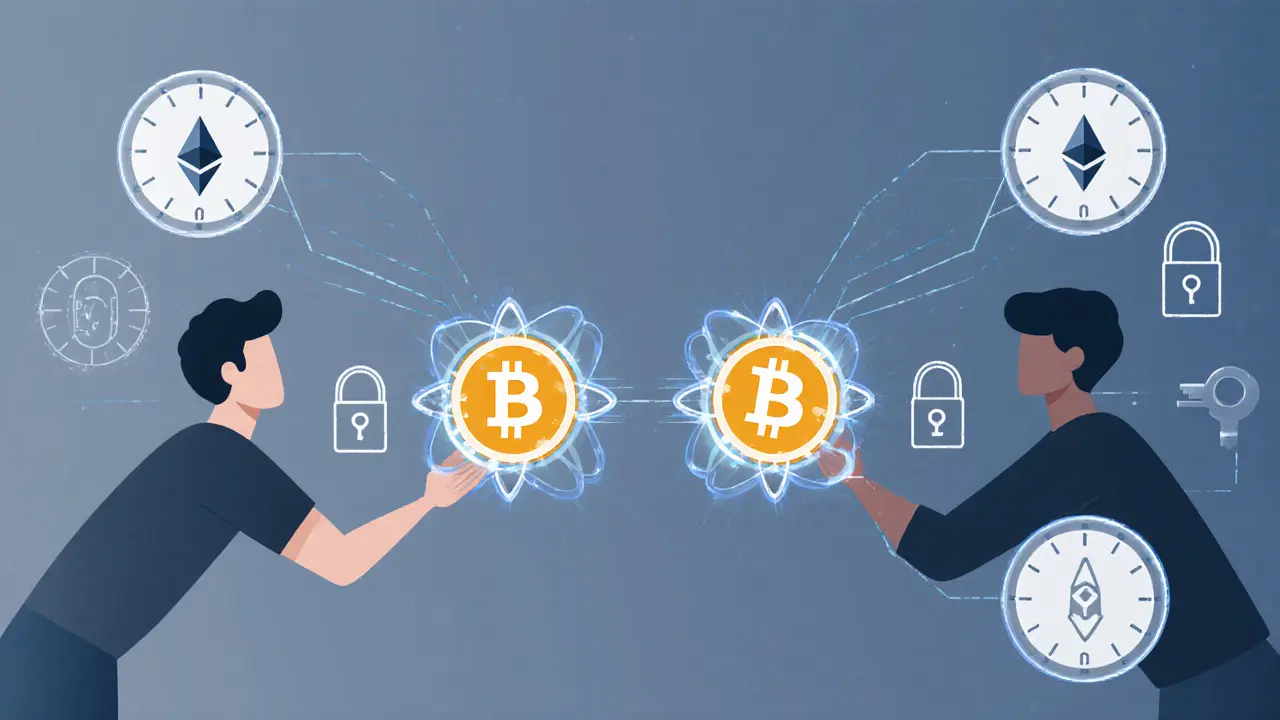
When you trade crypto without an exchange, you’re not trusting a company with your money—you’re using atomic swap crypto, a technology that lets two people exchange different cryptocurrencies directly, with no middleman, and no risk of one party cheating. Also known as cross-chain atomic swaps, it’s the closest thing crypto has to cash: you give me Bitcoin, I give you Ethereum, and if one of us doesn’t deliver, the whole deal cancels itself. This isn’t theory—it’s built into real wallets and protocols, and it’s been working since 2017. No KYC. No deposit. No waiting for a third party to approve your trade.
Atomic swaps rely on smart contracts, self-executing code that locks funds until both parties fulfill their side of the deal. If one side doesn’t complete their part within the time limit, the funds automatically go back to the original owner. This eliminates counterparty risk, which is why exchanges like Binance or Coinbase still hold your coins while you trade. With atomic swaps, your coins never leave your wallet. That’s why privacy-focused networks like Litecoin and Decred were early adopters—they needed a way to trade without exposing their users to centralized platforms. Today, projects like Komodo, a blockchain platform built specifically for atomic swaps. Also known as KMD, it’s one of the few that still actively supports cross-chain trading between dozens of coins. Other chains like Bitcoin and Ethereum now support atomic swaps through Layer 2 tools and sidechains, making it easier than ever to trade, say, BTC for SOL without going through an exchange.
But here’s the catch: atomic swaps aren’t perfect. They require technical know-how, matching liquidity between chains, and compatible wallets. Most users still stick to exchanges because they’re easier—even though they’re less secure. That’s why the posts below cover real-world examples: how a failed swap left someone stranded, how a DeFi protocol made atomic swaps simple enough for beginners, and why some airdrops and DEXs now build atomic swap features into their apps. You’ll also find reviews of platforms that tried to make this tech mainstream, and warnings about scams pretending to offer "easy swaps"—because if it sounds too simple, it’s probably a phishing site stealing your seed phrase.