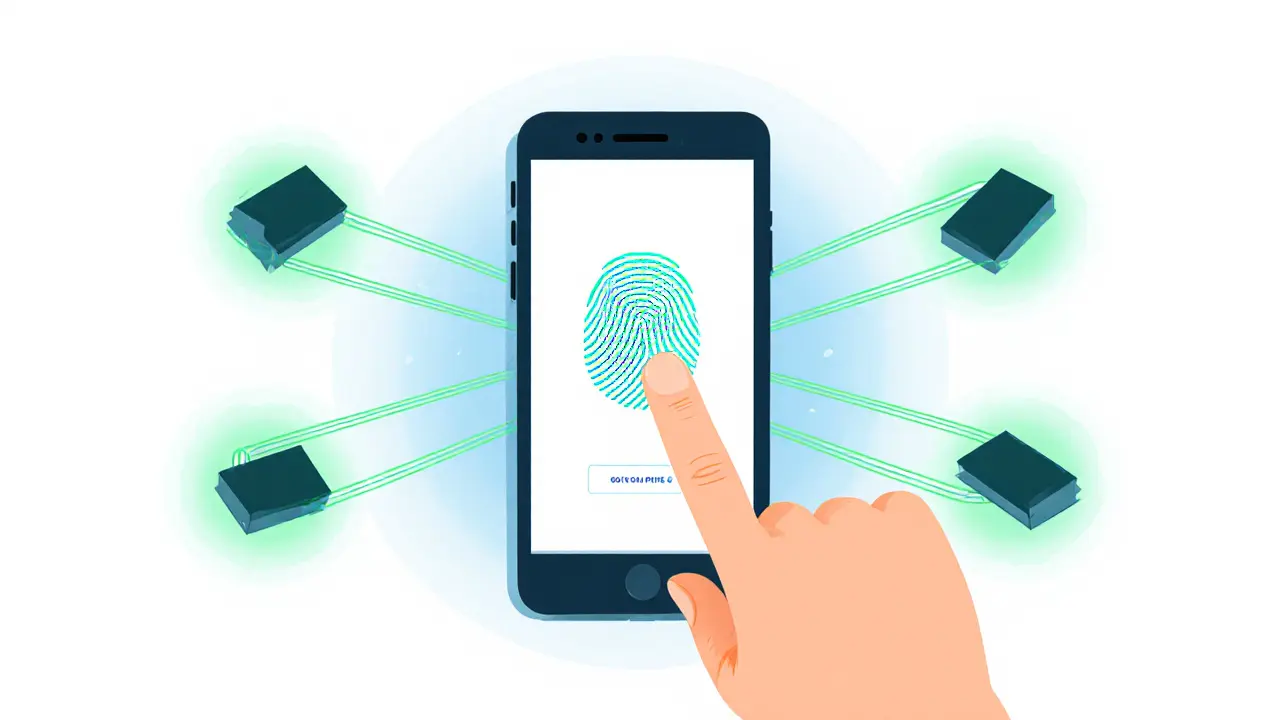
Archethic (UCO) is a Layer 1 blockchain that replaces private keys with fingerprint authentication. Learn how it works, why its price crashed, and whether its biometric tech could change crypto forever.
Biometric Blockchain: How Identity Tech Is Changing Crypto Security
When you think of biometric blockchain, a system that uses fingerprint, facial recognition, or iris scans to secure blockchain transactions and digital identities. Also known as biometric identity verification on blockchain, it solves one of crypto’s biggest problems: who really owns the wallet? If your seed phrase gets stolen, you lose everything. But what if your wallet could only unlock with your face—or your thumbprint? That’s the promise of biometric blockchain.
This isn’t science fiction. Real projects are already testing it. biometric authentication, the process of verifying a person’s identity using unique biological traits is being built into crypto wallets like those from Worldcoin and Civic. These systems don’t store your face on a server—they turn your biometric data into a one-way encrypted hash, then lock it to your blockchain address. Even if someone hacks the system, they can’t reverse-engineer your fingerprint from the hash. That’s why blockchain identity, a decentralized, user-owned digital identity anchored on a blockchain is starting to replace passwords and KYC forms. No more uploading your driver’s license to five sketchy exchanges. Just scan your eye, sign a transaction, and go.
But it’s not perfect. Biometric data, once leaked, can’t be changed like a password. That’s why the best systems never store the raw data anywhere. They use zero-knowledge proofs to prove you’re you—without revealing anything about you. And because blockchain is immutable, every login attempt or transaction tied to your biometric ID gets permanently recorded. That means if someone tries to spoof your face to steal your crypto, the fraud shows up on-chain—and you can prove it.
Right now, most users still rely on seed phrases and SMS codes. But as scams get smarter and AI deepfakes get harder to spot, the old ways are crumbling. Biometric blockchain isn’t about convenience—it’s about survival. The projects listed below don’t just talk about it. They’re building it. You’ll find real case studies on how airdrops used biometric checks to prevent bots, how exchanges cut fraud by 80% after switching to facial login, and why some crypto wallets now require both your fingerprint and a blockchain signature to move funds. This isn’t the future. It’s already here—and if you’re still using a 12-word phrase to protect $10,000, you’re already behind.