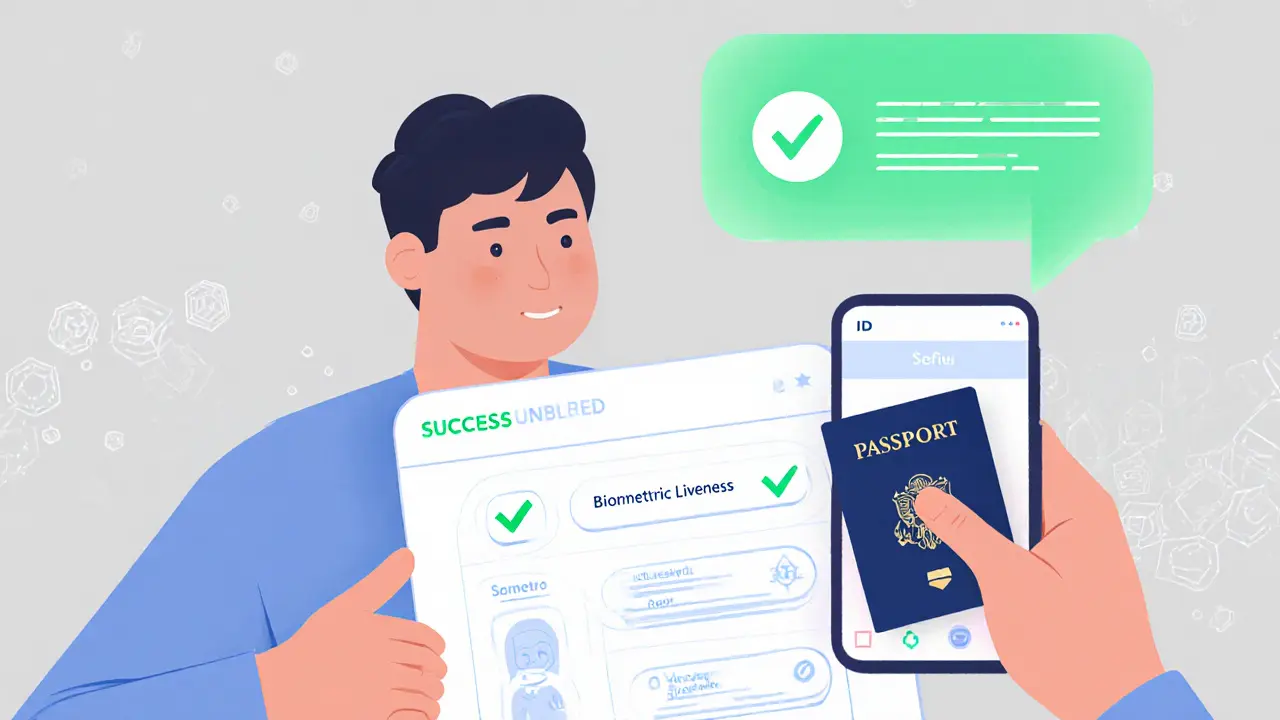
Learn how to complete KYC verification for crypto platforms quickly and successfully. Understand the required documents, common rejection reasons, and how to avoid delays. Essential for anyone using blockchain exchanges.
Blockchain KYC: What It Is, Why It Matters, and How It Affects Your Crypto
When you sign up for a crypto exchange, you’re often asked to upload a photo of your ID and a selfie. That’s blockchain KYC, the process of verifying your identity on a blockchain-based platform to comply with anti-money laundering rules. Also known as know your customer, it’s not optional—it’s the gatekeeper between you and most major crypto services. Without it, you can’t trade Bitcoin on Binance, stake Ethereum on Coinbase, or even claim many airdrops. But why does this exist? Because governments and regulators now treat crypto like traditional finance, and they demand proof that you’re not laundering drug money or funding terrorism.
Blockchain KYC isn’t just about uploading documents. It’s tied to deeper systems like AML crypto, anti-money laundering protocols that track suspicious transactions across blockchains, and crypto exchange compliance, the legal framework exchanges must follow to avoid shutdowns or fines. These systems work together. If you skip KYC, you’re stuck on decentralized exchanges with low liquidity and high risk—like Bamboo Relay or Serum DEX, where anonymity comes at a cost. But even those aren’t completely free of oversight. New rules like CARF and DAC8 mean your crypto activity will soon be shared automatically between countries, making fake identities useless.
Some people hate KYC because it feels invasive. But here’s the truth: if you want to cash out your crypto to fiat, or use a regulated exchange, you have no choice. And if you’re trying to claim an airdrop like the Flux Protocol FLUX token giveaway or the GEMS NFT drop, most require KYC to prevent bots and fraud. Even projects that start anonymous—like Archethic’s biometric blockchain—eventually need to tie identities to wallets for legal reasons. The future isn’t fully anonymous crypto. It’s verified, traceable, and compliant.
What you’ll find in these posts isn’t just a list of airdrops or exchange reviews. It’s a map of how KYC shapes everything—from why the FEAR token airdrop failed (no real user verification) to why Coinrate and Position Exchange are scams (they pretend to skip KYC). You’ll see how real platforms like Coincall and Bitpin build trust by being transparent about compliance, while fake ones vanish overnight. This isn’t about bureaucracy. It’s about survival in a space where regulators are watching, and your wallet’s safety depends on who you are—and how you prove it.