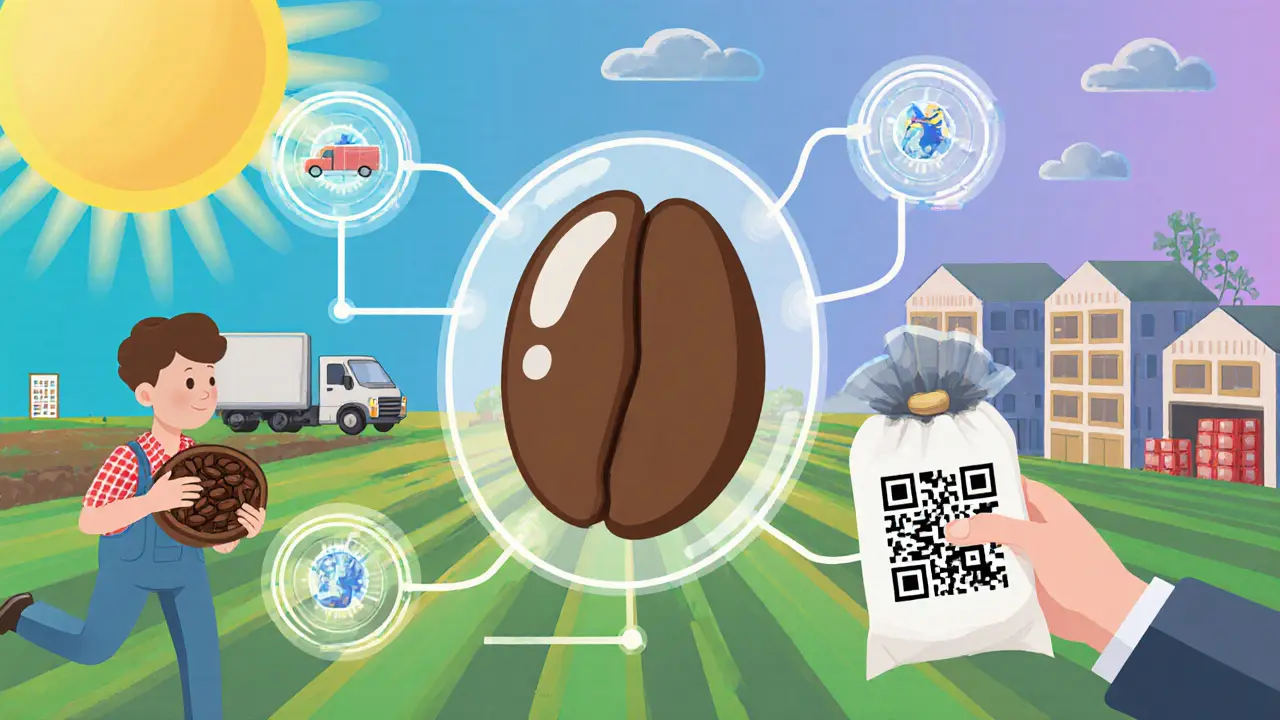
Blockchain for supply chain transparency creates tamper-proof records of every product movement, from raw materials to consumers. It cuts fraud, speeds up recalls, and builds trust with customers-no more guesswork.
Blockchain Supply Chain: How Decentralized Ledgers Are Changing Logistics
When you think of blockchain supply chain, a transparent, tamper-proof ledger that tracks goods from origin to delivery. Also known as decentralized supply chain tracking, it’s not just hype—it’s already cutting out middlemen, reducing fraud, and saving companies millions. Every time a product moves—whether it’s coffee beans from Colombia or a smartphone part from Taiwan—this system records it on a public, unchangeable ledger. No single company owns it. No one can delete a record. And everyone in the chain, from farmer to retailer, sees the same truth.
This isn’t theoretical. Real companies use blockchain logistics, the practical application of blockchain to move goods with verifiable history to fight counterfeits in pharma, prove ethical sourcing in mining, and cut delays in food shipping. The decentralized ledger, a distributed database where every participant holds a copy and updates happen only with consensus removes the need for paper bills, manual audits, and trust-based handoffs. If a shipment gets stuck at customs, the entire path is visible in seconds—not days. And if something’s fake? The system flags it instantly.
But here’s the catch: most blockchain supply chain projects fail because they’re built for show, not function. The ones that work? They start small. One supplier. One product. One clear problem—like proving organic certification or tracking cold-chain temps. They don’t try to replace the whole system overnight. They just make one broken step better. And that’s what you’ll find in these posts: real examples of what’s working, what’s dead, and what’s just a scam pretending to be innovation. You’ll see how tokens like LON and RDNT tie into logistics, why fake airdrops pretend to be supply chain tools, and how platforms like RWA tokenization are quietly reshaping how physical goods are tracked on-chain. No fluff. No buzzwords. Just what actually moves the needle in logistics today.