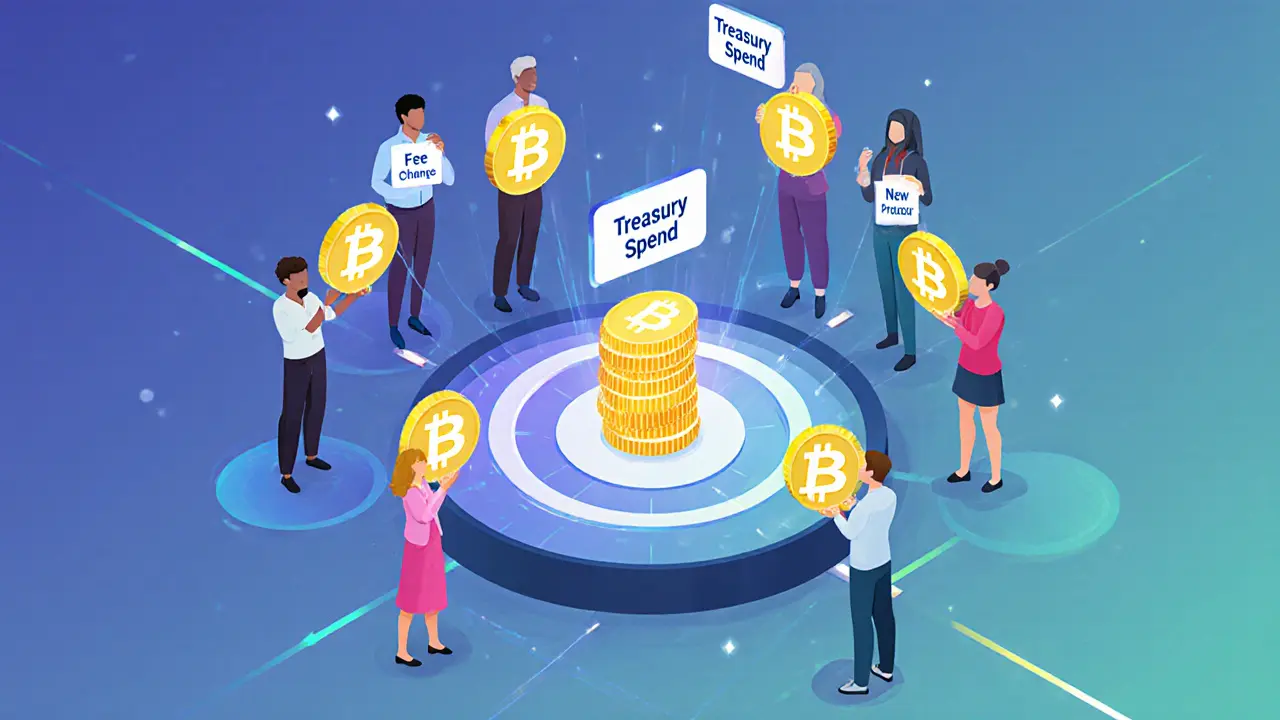
Governance tokens let token holders vote on key decisions in DAOs, turning economic stake into political power. Learn how they work, who really controls them, and why most people don't vote-even when it matters.
Blockchain Voting: How Decentralized Systems Are Changing Democracy
When you think of blockchain voting, a system that records votes on a public, unchangeable digital ledger to prevent fraud and ensure transparency. It’s not science fiction—it’s already being tested in real elections, from small town referendums to national pilot programs. Also known as digital democracy, it removes middlemen like ballot counters and paper trails, putting control directly into the hands of voters through cryptographic identity. Unlike traditional voting, where results can be questioned due to human error or manipulation, blockchain voting creates a permanent, verifiable record that anyone can audit without revealing who voted for what.
This isn’t just about elections. blockchain governance, the way decentralized communities make decisions using token-based voting. It’s how projects like Ethereum and Solana let holders vote on upgrades, treasury spending, or protocol changes without needing a CEO or board. Your token isn’t just an investment—it’s your vote. And when you combine this with crypto voting, using digital wallets to cast votes securely without revealing identity. it becomes a powerful tool for communities that want to avoid censorship or centralized control.
Real-world examples are limited but growing. Estonia experimented with blockchain voting for its citizens abroad. Switzerland’s Zug ran a municipal pilot where residents voted on local spending using a blockchain app. Even DAOs—decentralized organizations—are using it daily to approve budgets, hire developers, or change rules. But it’s not perfect. Technical barriers, voter anonymity concerns, and the risk of Sybil attacks (fake identities) are still hurdles. That’s why most systems now blend blockchain with identity verification, like KYC checks or hardware wallets, to keep things secure without sacrificing accessibility.
What you’ll find in this collection aren’t theoretical essays—they’re real breakdowns of projects that tried blockchain voting, failed, or quietly succeeded. You’ll see how airdrops were used as incentives to boost participation, how fake voting schemes tricked users into giving up wallet access, and why some tokens became voting power instead of currency. Some posts expose scams pretending to be voting platforms. Others show how real systems work behind the scenes, like how validator rewards tie into governance decisions or how NFTs are being tested as voting credentials. This isn’t about hype. It’s about what’s actually working, what’s broken, and what you need to know before you ever cast a vote on a blockchain.