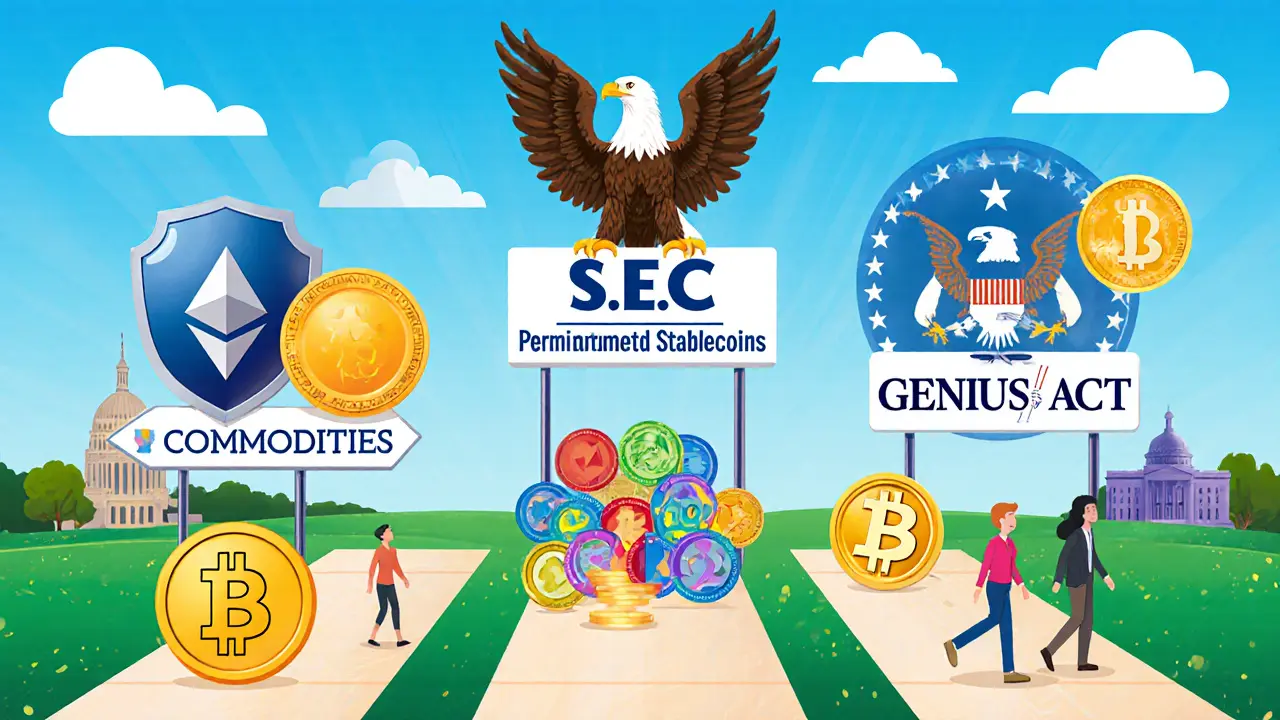
The Investment and Securities Act 2025 ended years of crypto regulatory chaos by classifying digital assets into three clear categories. Now Bitcoin and Ethereum are legal commodities, stablecoins are federally licensed, and trading platforms can operate without fear of SEC crackdowns.
CLARITY Act: What It Is and Why Crypto Projects Need It
When you hear CLARITY Act, a proposed U.S. legislative framework designed to define and regulate digital assets with clear rules for issuers, exchanges, and users. Also known as Crypto Clarity Act, it’s not about banning crypto—it’s about stopping the guesswork that’s been hurting investors and startups alike. Right now, if you launch a token, you don’t know if the SEC will call it a security, a commodity, or just a meme. That’s not innovation—that’s legal roulette. The CLARITY Act tries to fix that by giving clear categories, disclosure rules, and safe harbors for projects that play by the rules.
It’s not just about rules—it’s about trust. Projects like Tokenlon (LON), a decentralized exchange token that gives users governance rights and better trade pricing, or Radiant Capital (RDNT), a cross-chain lending protocol that lets you deposit on one chain and borrow on another, would benefit from a defined legal path. Right now, they’re stuck between two worlds: the freedom of DeFi and the pressure of regulators who don’t know how to classify them. The CLARITY Act would give them a map. It also helps users. If you’re staking RDNT, a token that earns rewards through lending and borrowing across blockchains, or holding UCO, a blockchain that replaces private keys with biometric authentication, you deserve to know if your asset is legally protected—or if tomorrow’s news could wipe out its value.
What you’ll find below isn’t a list of political debates. It’s a collection of real-world stories from the crypto trenches. You’ll see how fake airdrops like the Position Exchange Times Square billboard or Sonar Holiday thrive in the gray zones the CLARITY Act wants to close. You’ll read about exchanges like Bitpin and Coincall that are already building compliance into their systems—because they know the future isn’t unregulated chaos. And you’ll learn why tokens like BUILT or BOYS with zero volume and no team are exactly the kind of projects this law was meant to sideline. This isn’t about stopping crypto. It’s about cleaning it up. The posts here show you what happens when there’s no clarity—and what’s possible when there is.