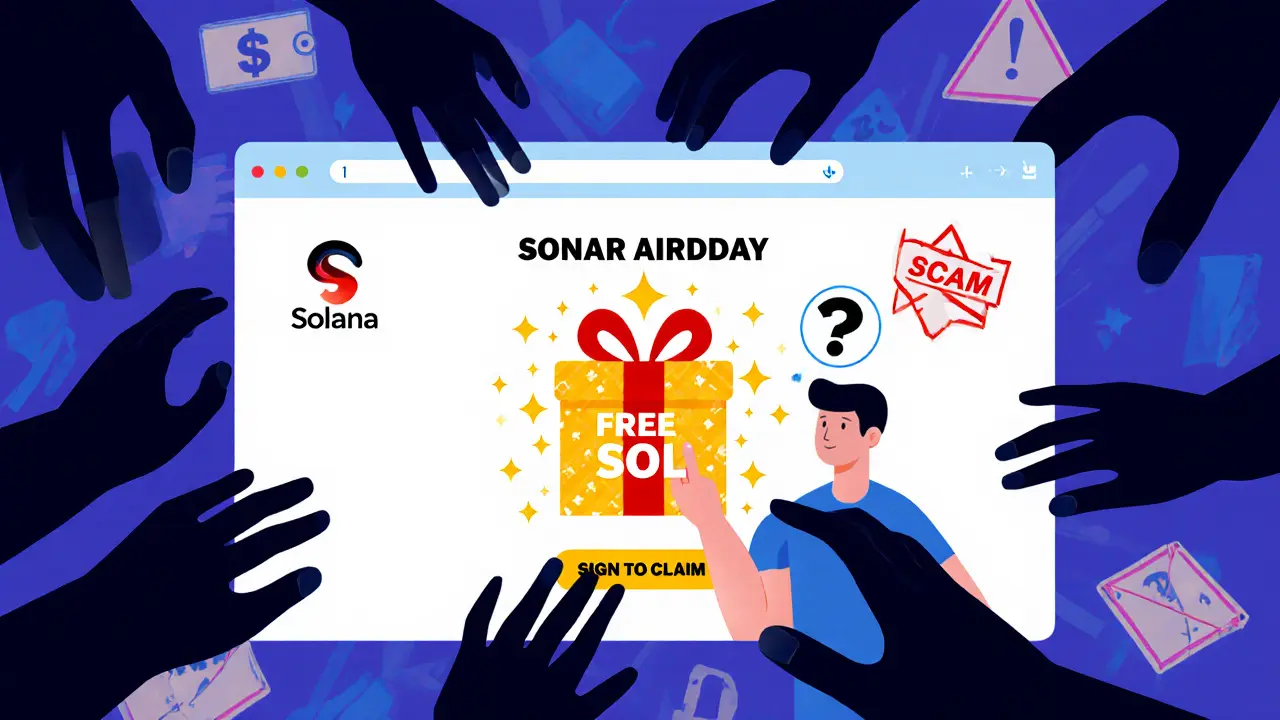
There is no Sonar Holiday airdrop-it's a scam. Learn how fake crypto airdrops work, how to spot them, and which real Solana airdrops to watch in 2025. Protect your wallet before it's too late.
Crypto Airdrop Scam: How to Spot Fake Free Crypto Offers
When you hear crypto airdrop scam, a fraudulent scheme pretending to give away free cryptocurrency to steal your private keys or personal data, it’s not just noise—it’s a trap designed to look like a gift. These scams aren’t rare. They’re everywhere: fake Twitter accounts promising $1,000 in tokens, fake CoinMarketCap pop-ups, even fake billboards in Times Square. The goal? Get you to connect your wallet, enter your seed phrase, or pay a "gas fee" to claim something that doesn’t exist. Real airdrops don’t ask for your private key. They don’t need your email or phone number. And they definitely don’t require you to send crypto first.
Behind every crypto phishing, a deceptive attempt to trick users into revealing sensitive information like wallet passwords or seed phrases is a copycat website that looks just like the real one. Look at the URL. Is it coinmarketcap-airdrop.com? That’s not CoinMarketCap. That’s a scammer. Real projects use their own domain—like tokenlon.network or radiant.finance. And if you see a fake airdrop, a counterfeit token distribution campaign designed to harvest user data or funds tied to a project that shut down years ago—like FEAR token or PolkaWar—don’t fall for it. Just because it’s trending doesn’t mean it’s real. Many of these scams reuse old names to ride on past attention.
You’ll also see crypto scam 2025, a modern variation of fraud leveraging AI-generated content, deepfake videos, and fake celebrity endorsements to appear legitimate tactics that use AI voices, cloned social media profiles, and fake news sites. Someone might send you a video of a "crypto influencer" telling you to claim your free tokens. But that’s not them. It’s a deepfake. Even if the site looks professional, if it asks you to connect your wallet to get started, walk away. No legitimate airdrop will ever ask for that. Real ones just ask you to follow a Twitter account or join a Telegram group—and even then, you should verify the official links first.
Some scams even pretend to be tied to real platforms. The Position Exchange billboard scam? There’s no way a billboard can distribute crypto. That’s not how blockchain works. Same with fake CoinMarketCap airdrops that don’t appear on CoinMarketCap’s official site. If it’s not listed on their official announcements page, it’s fake. And if a project has no team, no whitepaper, no GitHub, and zero trading volume—like Boys Club or Built Different—it’s not an airdrop. It’s a graveyard.
The worst part? These scams don’t just steal your crypto. They steal your trust. You start doubting every free token offer—even the real ones. That’s what the scammers want. But you don’t have to fall for it. Check the project’s official website. Look for verified social accounts. Search for recent updates. If no one’s talking about it in the last six months, it’s dead. And if the airdrop claims to be "limited time" but’s been running for two years? That’s not urgent. That’s a trap.
Below, you’ll find real examples of what went wrong—why FEAR token vanished, why TRO airdrop never existed, and how a fake billboard fooled hundreds. You’ll also see how to spot the red flags before you click. No fluff. No hype. Just what you need to know to keep your wallet safe.
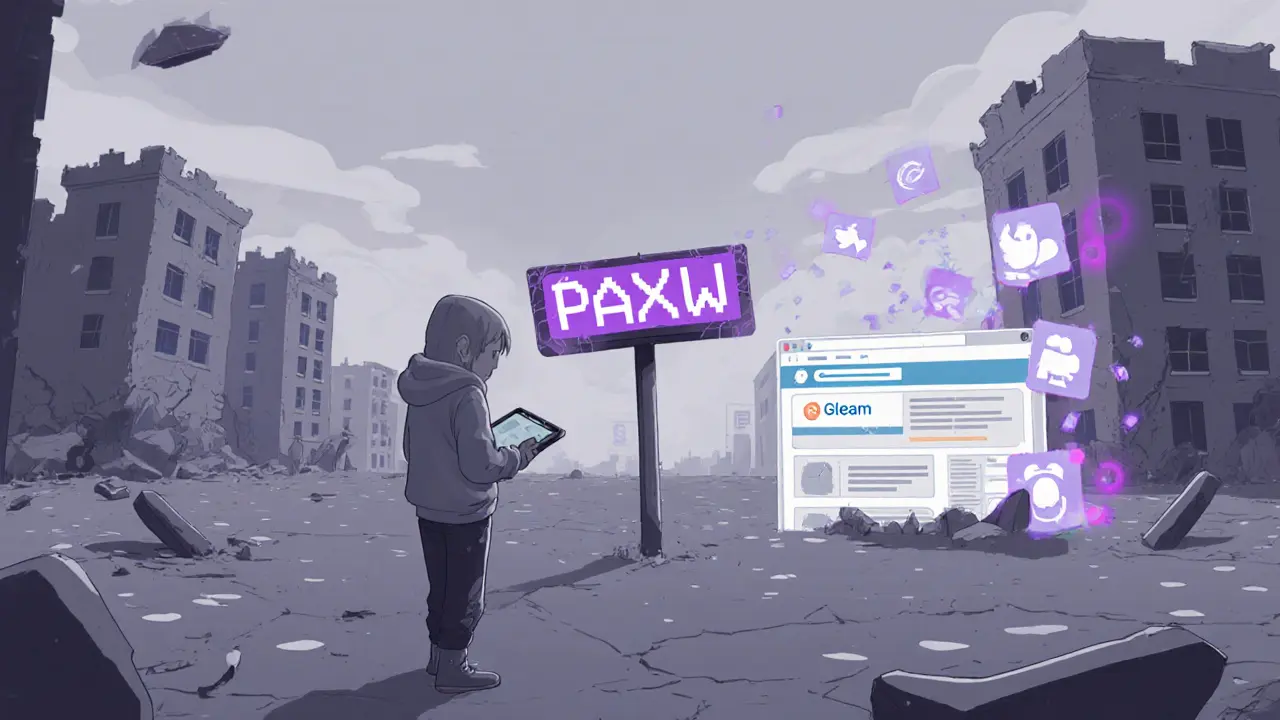
Pax.World's PAXW NFT airdrop promised free tokens and NFTs but delivered nothing. The project vanished in 2023, the token crashed 98.5%, and users never received rewards. Learn why it's a confirmed scam and how to avoid similar crypto traps.