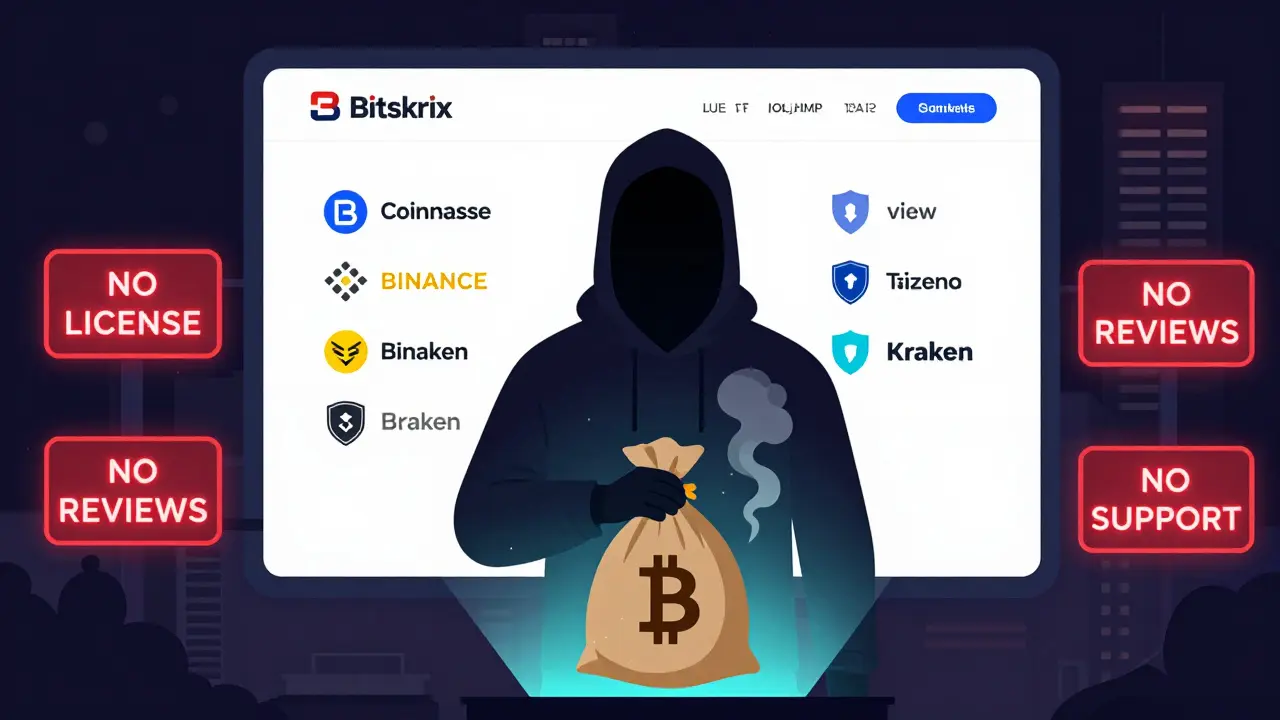
Bitskrix is not a legitimate crypto exchange. No reviews, no website, no regulatory presence-just a scam. Learn how fake exchanges work, how to spot them, and which real platforms to use instead.
Crypto Exchange Scam: How to Spot Fake Platforms and Avoid Losing Your Crypto
When you hear crypto exchange scam, a fraudulent platform designed to steal your cryptocurrency by pretending to be a legitimate trading site. Also known as fake crypto exchange, it’s not just a glitch—it’s a targeted theft that leaves people with empty wallets and no recourse. These aren’t just sketchy websites. They’re polished, convincing, and often use real logos, fake testimonials, and even fake customer support lines. In 2025, scammers are using AI-generated voices, cloned interfaces from real exchanges like Binance or Coinbase, and fake airdrop announcements to trick even experienced users.
One of the most common tricks? scam airdrop, a fake free token distribution that asks you to connect your wallet or enter your seed phrase to claim. Also known as fake crypto airdrop, it’s not a gift—it’s a trap. The Position Exchange Times Square billboard airdrop? Impossible. No crypto is distributed through billboards. The Sonar Holiday airdrop? Doesn’t exist. And TRO airdrop by Trodl? A total myth. These are designed to look like real opportunities, but they only lead to one place: your wallet being drained. Then there’s crypto phishing, a tactic where scammers send fake emails, texts, or pop-ups that mimic official platforms to steal login details or private keys. Also known as phishing attack, it’s the digital equivalent of someone handing you a fake key to your house and watching you walk inside. These attacks are getting smarter. AI now writes messages that sound like your favorite crypto influencer. Fake KYC pages look identical to real ones. Even the URLs are almost perfect—just one letter off.
And it’s not just about losing money. Some scams, like the fake 3xcalibur exchange, don’t even exist as platforms—they’re just decoys built to collect your wallet address and sell it to other criminals. Others, like the GEMS or TopGoal airdrop rumors, exploit your hope for free tokens to get you to click malicious links. The truth? If it sounds too good to be true, it’s a scam. No legitimate exchange asks for your seed phrase. No real airdrop requires you to send crypto first. And no trusted platform uses billboards or Instagram DMs to distribute tokens.
Below, you’ll find real cases—like the FEAR token collapse, the dead BOYS coin, and the abandoned Bamboo Relay DEX—that show how projects die, how scams evolve, and how to tell the difference between a failed project and a malicious one. You’ll learn what to look for when checking a new exchange, how to verify airdrops, and how to spot phishing before it’s too late. This isn’t theory. These are the exact patterns that have cost people thousands. Know them. Avoid them. Protect your crypto.

Coinrate is not a real crypto exchange-it's a scam. Learn why it doesn't exist, how fake exchanges trick users, and which safe platforms to use instead. Protect your crypto from fraud.