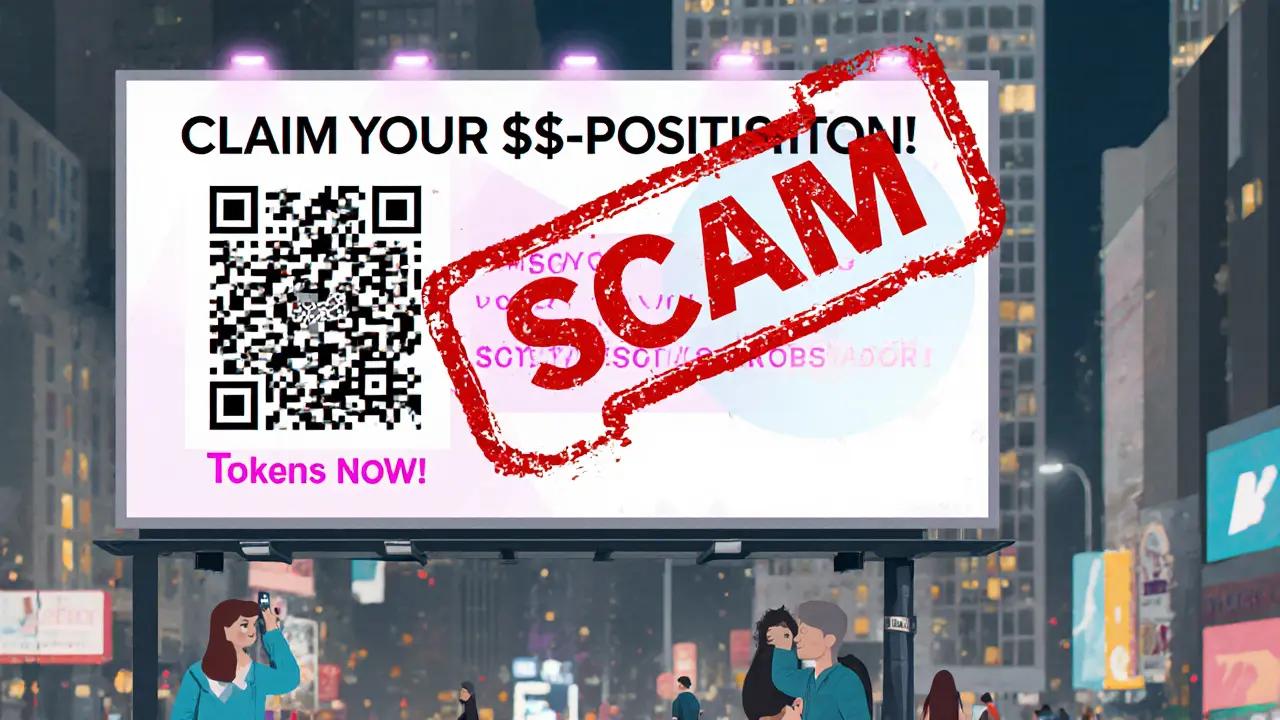
The Position Exchange Times Square billboard airdrop is a scam. No crypto can be distributed through billboards. Learn how the fraud works, why it's impossible, and how to protect your wallet from phishing sites.
Crypto Scam 2025: How to Spot Fake Airdrops, Fake Exchanges, and Phishing Tricks
When you hear about a crypto scam 2025, a deceptive scheme designed to steal cryptocurrency through fake offers, cloned platforms, or manipulated data. Also known as crypto fraud, it’s not just about lost money—it’s about lost trust in a space that’s supposed to be open and fair. Scammers aren’t using old-school spam anymore. They’re using AI to mimic real project websites, fake influencer endorsements, and even deepfake videos of founders. In 2025, the biggest threats aren’t the ones you see coming—they’re the ones that look exactly like the real thing.
One of the most common tricks is the fake airdrop, a false promise of free tokens that requires you to connect your wallet or enter your seed phrase. Also known as crypto giveaway scam, it preys on the excitement of free crypto. Projects like Sonar Holiday and Trodl’s TRO airdrop don’t exist—but scam sites copy their names to trick you. Real airdrops don’t ask for your private key. They don’t rush you. And they never ask you to send crypto to "claim" your reward. Then there’s the fake crypto exchange, a website that looks like Coinbase or Binance but is built to steal your funds the second you deposit. Also known as crypto exchange scam, platforms like Coinrate and 3xcalibur are complete fabrications. They show fake balances, fake withdrawal confirmations, and vanish the moment you send your coins. And don’t forget crypto phishing, a targeted attack where scammers send fake emails, SMS, or DMs pretending to be from a wallet or exchange to steal your login details or seed phrase. Also known as crypto fraud attempt, these are now powered by AI that writes perfect grammar, uses real logos, and even mimics customer support tones. These scams don’t just target new users—they target people who think they’re too smart to fall for them.
The pattern is always the same: urgency, exclusivity, and a hidden cost. If something sounds too good to be true—like 500,000 free tokens for clicking a link—it is. If a platform claims to be "the next Binance" but has no team, no history, and no transparency—it’s a trap. Real projects don’t need to beg you to join. They don’t pressure you. They don’t hide behind fake testimonials. And they don’t disappear after the first wave of deposits.
Below, you’ll find real breakdowns of scams that happened—and the ones still trying to trick you in 2025. From the FEAR token that vanished after its airdrop, to the GEMS NFT scam that used CoinMarketCap’s name without permission, to the dead meme coins like BOYS and BUILT that have zero trading volume but still show up in Google ads. You’ll learn how to verify every project before you touch your wallet. Not just how to avoid scams—but how to spot them before they even load.