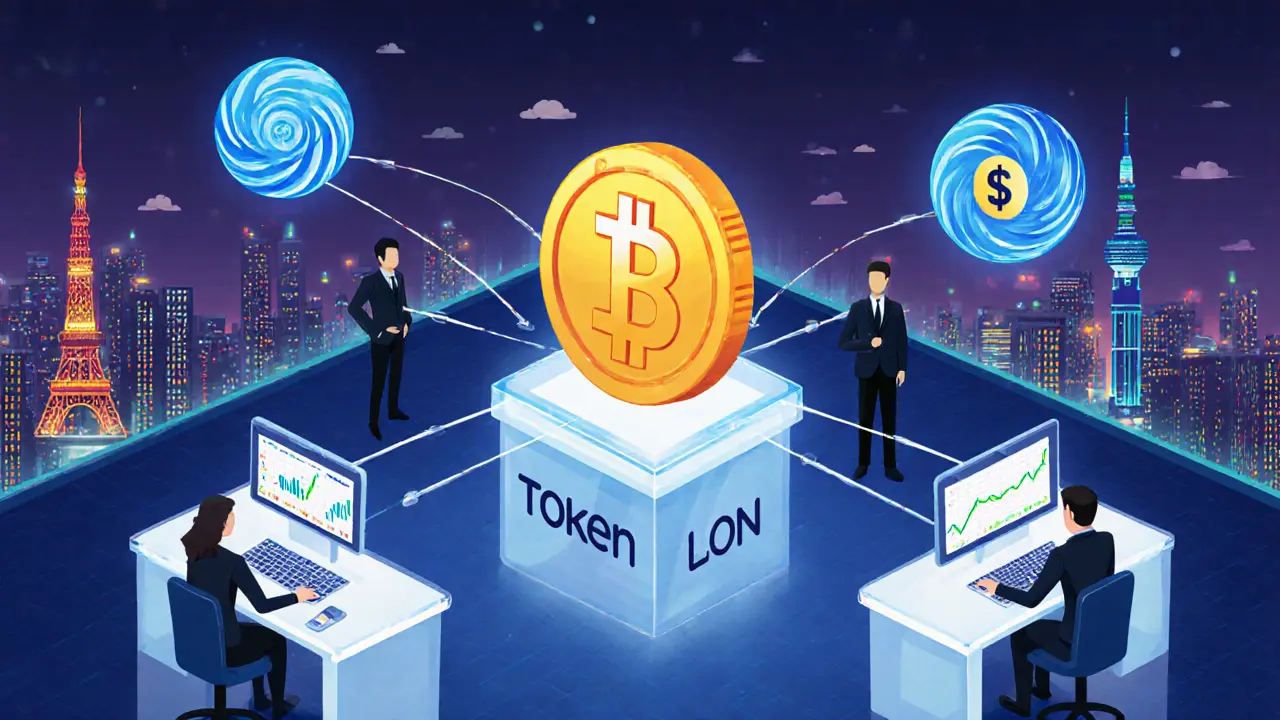
LON is the governance and utility token behind Tokenlon, a decentralized exchange that combines AMM pools with professional market makers for better trade prices. Learn how it works, where it's popular, and if it's worth holding.
Decentralized Exchange Token: What It Is and Why It Matters
When you trade crypto without a bank or company in the middle, you’re using a decentralized exchange token, a native cryptocurrency that runs a peer-to-peer trading platform on blockchain. Also known as a DEX token, it’s not just a currency—it’s the engine that keeps the whole system alive. Unlike centralized exchanges like Binance or Coinbase, where the company holds your coins, decentralized exchanges let you trade directly from your wallet. But without a company to manage things, someone has to pay for security, development, and liquidity. That’s where the decentralized exchange token comes in.
Most DEX tokens give you a stake in the platform. For example, SRM token, the native coin of the Serum DEX built on Solana lets holders vote on upgrades and earn trading fee discounts. RDNT token, used by Radiant Capital for cross-chain lending rewards users who supply or borrow crypto across blockchains. And 3ULL token, the currency behind the Web3 gaming platform PLAYA3ULL lets players buy in-game items and earn rewards just for playing. These aren’t just coins—they’re incentives that keep users locked in and the platform growing.
But not all DEX tokens survive. Many launch with hype, drop in price, and vanish when the community loses interest. You’ll see that in the posts below—some tokens like SRM still have active users after FTX collapsed, while others like PWAR or FEAR turned into digital ghosts. The difference? Real utility. If a token only exists to pay for ads or reward early speculators, it dies. If it solves a real problem—like letting you lend on Ethereum and borrow on Solana without bridges—it sticks around.
What you’ll find here aren’t guesses or fluff. These are real breakdowns of DEX tokens that actually matter in 2025, the ones that failed, and the scams pretending to be them. You’ll learn what makes a token worth holding, how to spot a fake DEX, and why some platforms still work even after their founders disappeared. No theory. Just what’s working, what’s dead, and what to avoid.