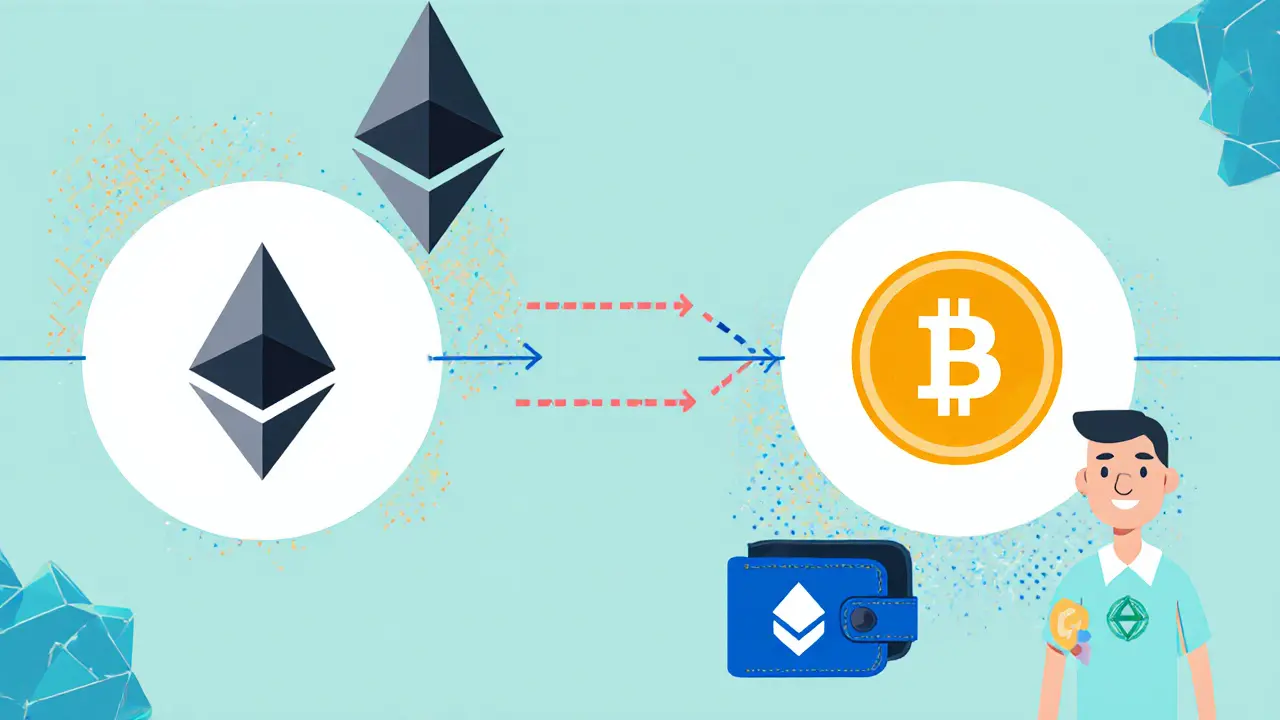
Uniswap v2 revolutionized crypto trading by enabling direct ERC-20 swaps without ETH as an intermediary. Though largely replaced by v3, it remains vital for obscure tokens and remains the foundation of modern DeFi.
ERC-20 Swaps: How They Work and What You Need to Know
When you trade tokens on a decentralized exchange like Uniswap or SushiSwap, you’re usually doing an ERC-20 swap, a standardized way to exchange tokens built on the Ethereum blockchain using the ERC-20 protocol. Also known as Ethereum token swaps, it’s the backbone of most DeFi trades today. Unlike buying crypto on Coinbase or Binance, ERC-20 swaps happen directly between wallets—no middleman, no account, just code.
This system relies on smart contracts that automatically match buyers and sellers. If you swap ETH for DAI or USDC for LINK, you’re using an ERC-20 swap. These swaps work because every token follows the same basic rules: it has a name, symbol, total supply, and transfer function. That standardization is why you can trade 100+ different tokens on the same platform without the exchange needing to build custom systems for each one.
But it’s not all smooth sailing. Poorly coded contracts, fake tokens, and slippage can cost you money. Some tokens look real but aren’t—like the ones that pop up in airdrop scams or fake DEX listings. You might think you’re swapping for a promising new coin, but if the contract isn’t verified or the liquidity is locked in a scammer’s wallet, you’re just sending funds into the void. That’s why checking token addresses and verifying liquidity pools matters more than the price chart.
ERC-20 swaps also tie into broader trends like cross-chain bridges and layer-2 networks. While most swaps still happen on Ethereum, tools like Polygon and Arbitrum let you do them cheaper and faster. But even then, the underlying token still needs to be ERC-20 compliant to work with the majority of wallets and DEXs. If a project claims to be "Ethereum-compatible" but doesn’t use ERC-20, it’s either lying or building something entirely different.
And here’s the thing: most of the airdrops and token launches you see in the posts below—whether it’s LON, RDNT, 3ULL, or UCO—depend on ERC-20 swaps to get into your wallet. You don’t just claim them; you often have to swap them, trade them, or move them through a DEX. That’s why understanding how these swaps work isn’t just technical knowledge—it’s survival. If you can’t swap your tokens safely, you can’t use them at all.
What follows is a collection of real-world cases: some tokens that succeeded because of smart swaps, others that died because users couldn’t trade them, and plenty of scams that hid behind fake swap interfaces. You’ll see how DEXs like Tokenlon and Serum made swaps faster, how fake airdrops tricked people into approving malicious contracts, and why some tokens—like BOYS or BUILT—have zero trading volume because no one could or would swap them. This isn’t theory. It’s what happens when you click "approve" without knowing what you’re signing.