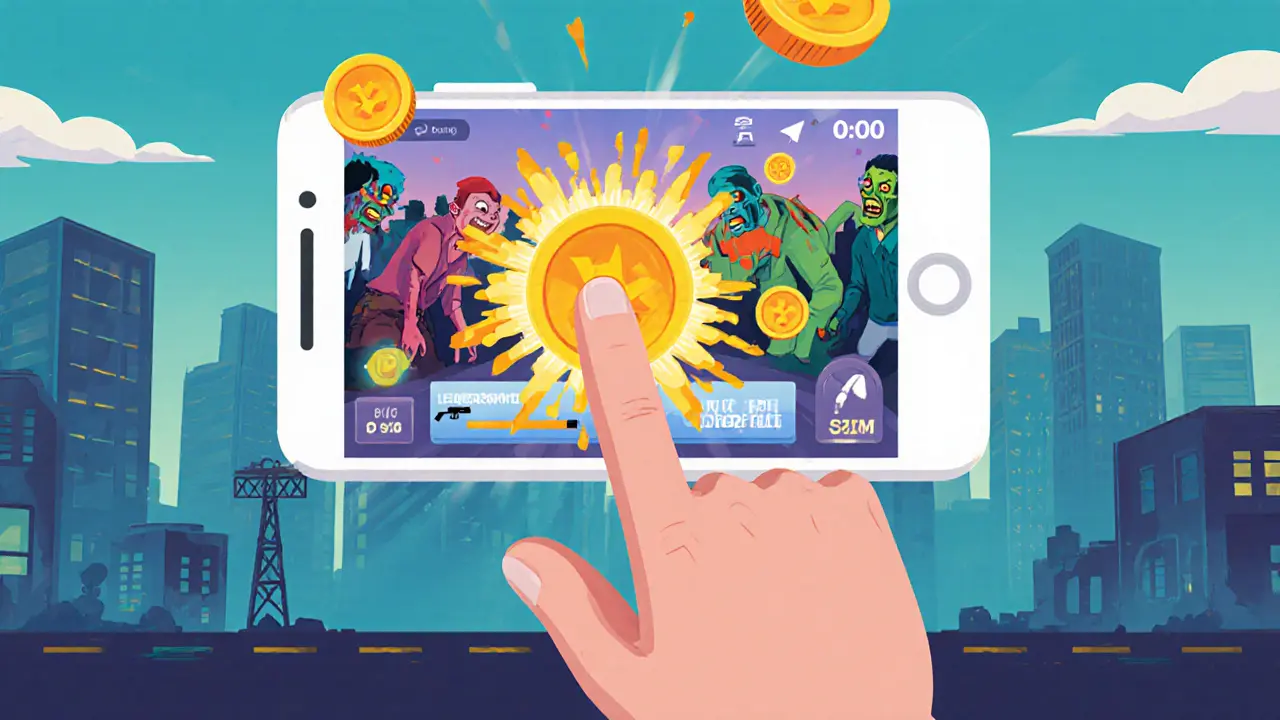
Bombie (BOMB) is a zombie-shooting GameFi game on Telegram and LINE where players earn crypto by playing. Launched in 2025, it offers a fair token launch, cross-chain support, and simple gameplay. Learn how it works, its risks, and if it's worth trying.
GameFi Crypto: What It Is, How It Works, and Real Projects That Actually Deliver
When you hear GameFi crypto, a blend of gaming and decentralized finance where players earn crypto by playing. Also known as play-to-earn, it’s not just about killing monsters — it’s about owning the weapons, the land, and the tokens that power the whole world. This isn’t sci-fi. It’s real blockchain tech running games where your time and skill get paid in tokens you can trade, stake, or use across other platforms.
But here’s the catch: most GameFi projects failed. A lot of them were just tokens with a game logo slapped on top. The ones that stuck? They gave players real utility. Like PLAYA3ULL (3ULL), a Web3 gaming token tied to actual in-game items and a living community, or GEMS NFT, a digital collectible that unlocks access to live esports tournaments and in-game gear. These aren’t just airdrops you claim and forget. They’re keys to ecosystems where your asset has a job.
GameFi crypto requires more than a wallet. It needs a reason to play. That’s why the best projects combine fun gameplay with clear tokenomics — like staking rewards, governance votes, or rare NFT drops that actually affect your in-game power. And while airdrops like the CYT BSC GameFi Expo, a 2021 token giveaway that crashed hard after launch taught us a lesson, they also showed what’s possible when a community shows up. The ones that survived? They kept building. They didn’t just hand out free tokens — they gave players a stake in the future.
Today, GameFi crypto isn’t about getting rich overnight. It’s about finding games where your effort turns into something real — a token you can hold, an NFT you can use, a rank you earned. The hype is gone. What’s left? A few solid projects, a lot of scams, and a growing number of players who care more about gameplay than price charts. If you’re looking to get into it, skip the flashy ads. Look for games with active players, transparent teams, and tools that actually work. That’s where the value is.
Below, you’ll find real breakdowns of GameFi projects that delivered — and the ones that vanished. No fluff. Just what happened, why it mattered, and what you can learn from it now.