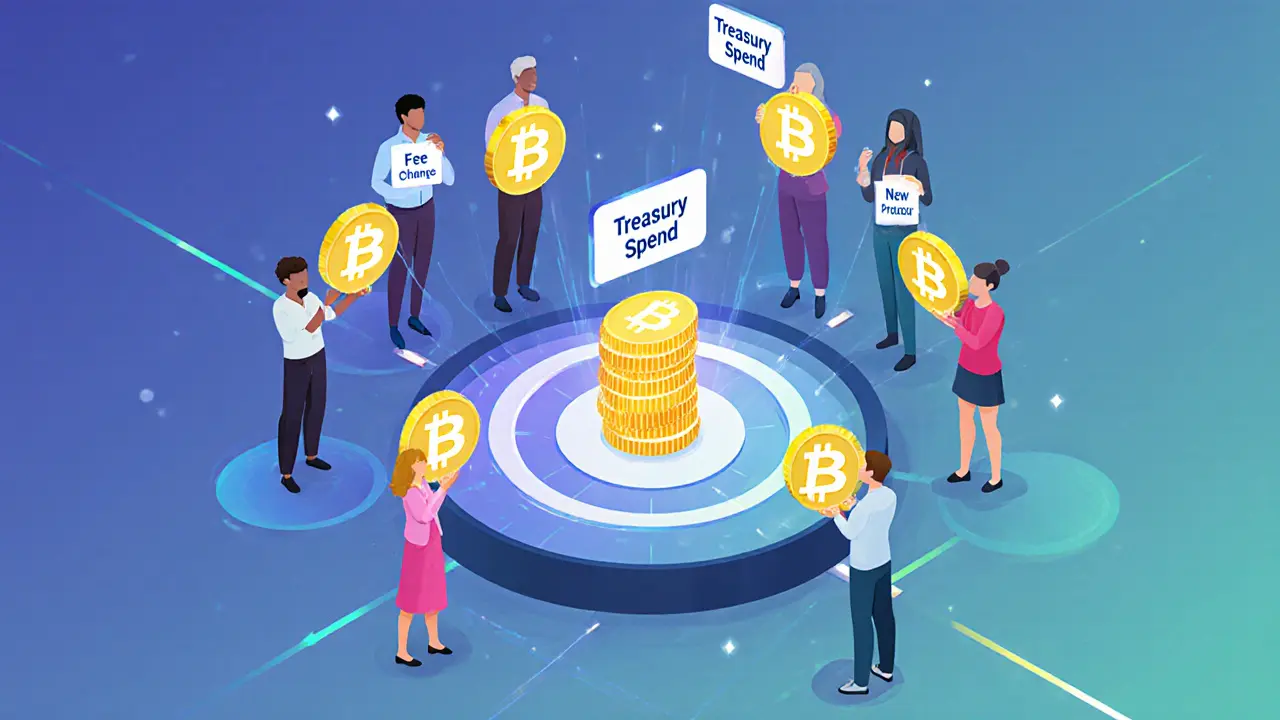
Governance tokens let token holders vote on key decisions in DAOs, turning economic stake into political power. Learn how they work, who really controls them, and why most people don't vote-even when it matters.
Governance Tokens: How They Give You Power in Crypto Projects
When you hold a governance token, a digital asset that grants voting rights in a decentralized project. Also known as DAO tokens, it lets you help decide how a blockchain protocol evolves—without needing permission from a company or CEO. This isn’t just about owning a coin. It’s about owning a voice. In traditional finance, you’re a passive investor. In crypto, if you hold the right token, you can vote on whether to change the fee structure, add new features, or even spend the project’s treasury. That’s real power.
These tokens are the backbone of DAOs, decentralized autonomous organizations that run on code and community votes. Think of them as digital cooperatives where every member gets a ballot. Projects like Tokenlon, a decentralized exchange that uses LON tokens for governance, let holders vote on which trading pairs to add or how to allocate liquidity rewards. It’s not theory—it’s happening right now. And not all governance is equal. Some tokens give you one vote per token. Others lock voting power behind staking or time-based vesting. Some projects even let you delegate your vote to someone else, like a trusted community member.
But here’s the catch: holding a governance token doesn’t mean you’ll get rich. It means you get a say. And too often, that say is ignored. A few big holders control most votes. Some projects launch tokens just to check a box—then never let you vote at all. That’s why you need to look beyond the hype. Ask: Has this project held a real vote? Did changes happen because the community asked? Or did the team just push through updates with no input? The posts below show you what’s real and what’s just marketing. You’ll see how LON tokens shaped Tokenlon’s direction, how FEAR tokens faded without ever giving users control, and why some airdrops hand out governance rights only to disappear later. You’ll also learn how to spot projects that actually listen—and how to avoid the ones that treat governance like a gimmick. This isn’t about speculation. It’s about accountability. And if you’re serious about crypto, you need to understand who’s really running the show.