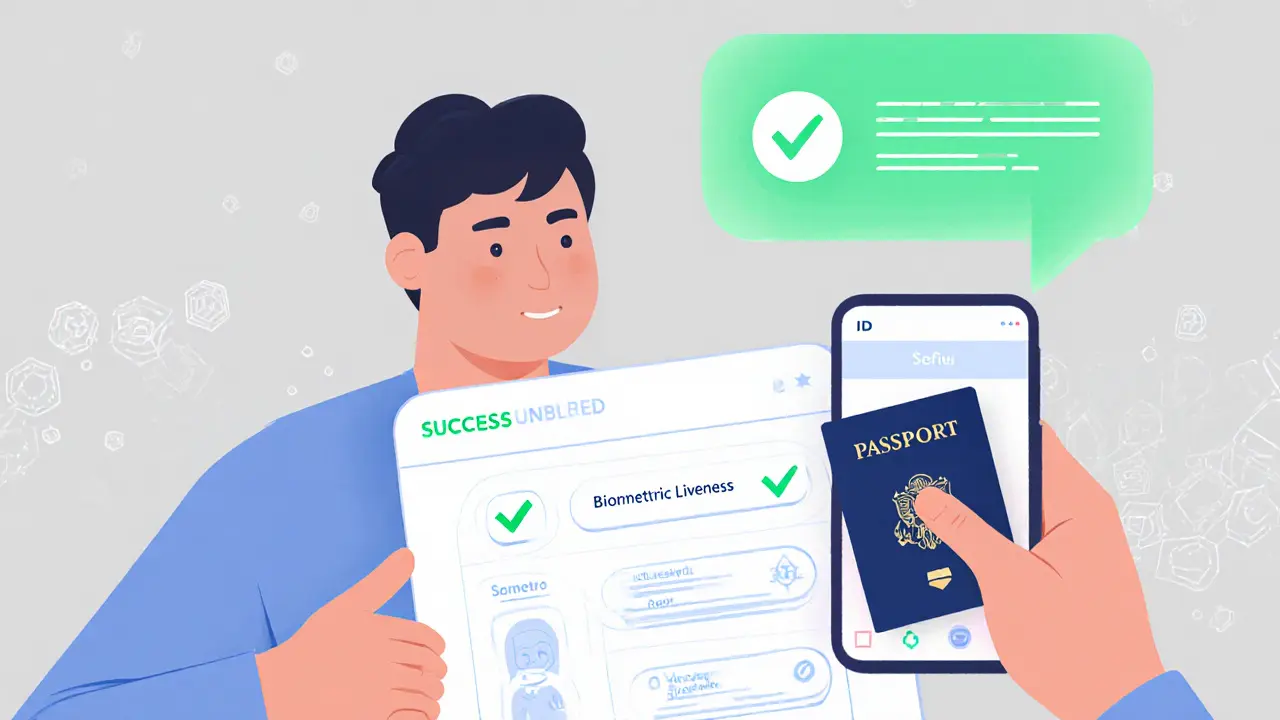
Learn how to complete KYC verification for crypto platforms quickly and successfully. Understand the required documents, common rejection reasons, and how to avoid delays. Essential for anyone using blockchain exchanges.
Identity Verification in Crypto: What You Need to Know to Stay Safe
When you hear identity verification, the process of proving who you are to access a crypto service. Also known as KYC, it's not just a form you fill out—it's the gatekeeper between your wallet and the wild west of crypto. Most exchanges, wallets, and even airdrop platforms now require it. And if you skip it, you won’t get access. But if you do it wrong, you could lose everything.
Why does this matter? Because scammers don’t just target your seed phrase—they fake entire identities. They create fake support teams, clone websites, and trick you into uploading your ID to phishing pages that look just like Coinbase or Binance. The crypto scams, fraudulent schemes designed to steal personal or financial data are getting smarter. AI-generated videos, deepfake voice calls, and fake KYC portals are now common. Your driver’s license, passport, or selfie isn’t just personal info—it’s a key that unlocks your funds if it falls into the wrong hands.
And it’s not just about signing up. Identity verification is also how tax agencies track you. Starting in 2026, 67 countries will automatically share your crypto activity with tax authorities under CARF and DAC8 rules. If you didn’t verify your identity on an exchange, they’ll still report your trades. That means unverified users aren’t hiding—they’re just making themselves targets for audits and penalties.
Some projects skip KYC entirely—like decentralized exchanges or certain airdrops. But that doesn’t mean they’re safer. In fact, the lack of verification often makes them more dangerous. Without identity checks, bad actors flood these platforms with fake accounts, pump-and-dump schemes, and fake airdrops like the ones you’ll find below. The Wallet safety, protecting your crypto assets through secure practices and verified access starts with knowing who you’re trusting. If a site asks for your ID, make sure it’s real. If it doesn’t ask, ask yourself why.
You’ll find posts here that expose fake airdrops pretending to need your ID, scams that steal your documents, and real-world examples of how identity verification either saved users—or ruined them. Some stories are about projects that vanished after collecting IDs. Others show how proper verification helped users recover stolen funds or avoid legal trouble. This isn’t about bureaucracy. It’s about survival.