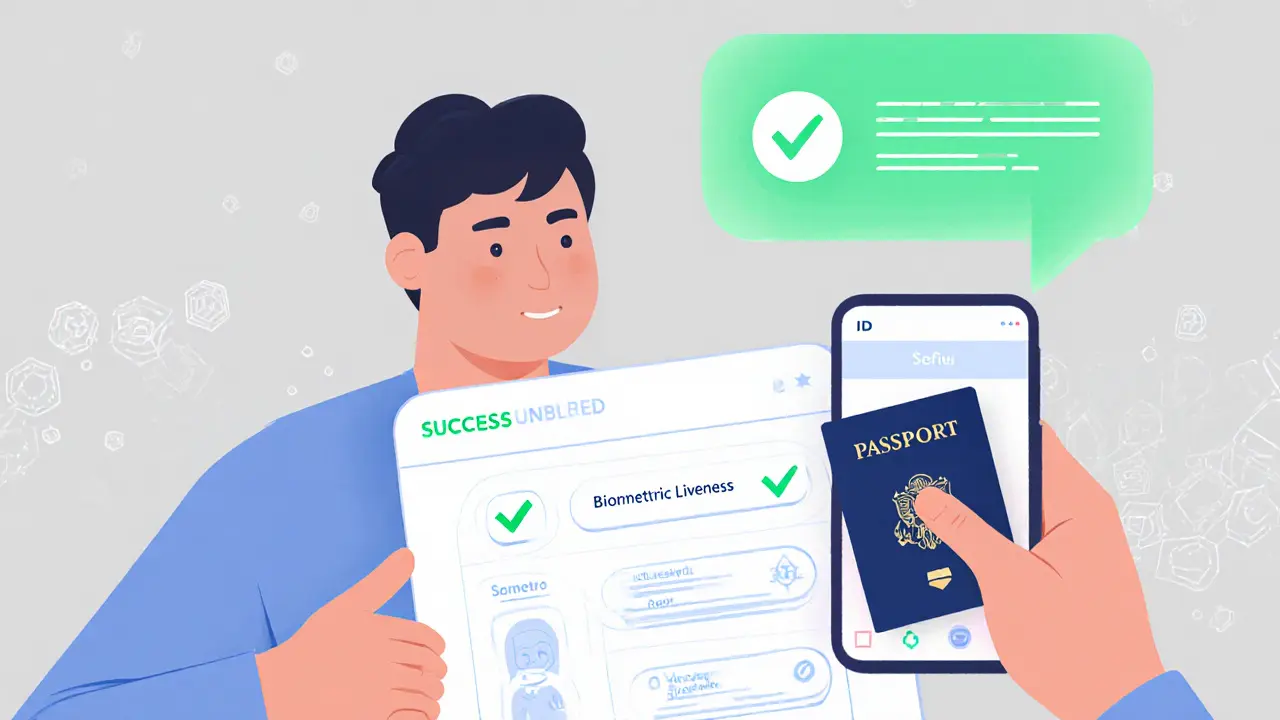
Learn how to complete KYC verification for crypto platforms quickly and successfully. Understand the required documents, common rejection reasons, and how to avoid delays. Essential for anyone using blockchain exchanges.
KYC Verification: What It Is, Why It Matters, and How It Affects Your Crypto
When you sign up for a crypto exchange, you’re often asked to complete KYC verification, a process where you prove your identity to a platform using government-issued documents. Also known as Know Your Customer, it’s not optional on most major platforms—it’s the gatekeeper between you and trading Bitcoin, staking Ethereum, or claiming an airdrop. Think of it like showing your ID at a bank, but online. And while it feels invasive, it’s not just bureaucracy—it’s what keeps fake exchanges, money launderers, and scam projects from running wild.
Most crypto platforms use KYC to meet AML compliance, anti-money laundering rules that require businesses to verify users and report suspicious activity. Also known as anti-money laundering checks, these rules are enforced by governments worldwide, from the U.S. to the EU to Singapore. If a platform doesn’t do KYC, it risks being shut down, fined, or cut off from banking services. That’s why even small exchanges like Bitpin or Coincall have to collect your ID, selfie, or utility bill. But here’s the catch: not every project follows suit. Some DeFi protocols and DEXs skip KYC entirely, letting you trade anonymously—but that also means you’re on your own if things go wrong.
And then there’s the flip side. Airdrops like the Flux Protocol FLUX giveaway or the GEMS NFT drop require KYC to prevent bots and fraud. If you can’t verify your identity, you won’t get the tokens—even if you did everything else right. Meanwhile, scams like the fake Position Exchange billboard or Sonar Holiday airdrop prey on people who don’t understand that real airdrops don’t ask for your private key or send you links to upload your passport. Crypto security, the practice of protecting your digital assets from theft and fraud. Also known as digital asset protection, it’s not just about strong passwords—it’s about knowing when a platform is legit and when it’s a trap. KYC doesn’t make you safe by itself, but it’s a signal. If a project demands KYC and has transparent rules, it’s more likely to be real. If it asks for your seed phrase instead, it’s a scam.
Some users hate KYC because it feels like giving up privacy. And sure, your government might one day see your crypto trades thanks to new rules like DAC8 and CARF. But if you want to use exchanges like Coincall, Binance, or even smaller ones like Bitpin, you’ll need to do it. The alternative? Stick to non-KYC DEXs like Serum or Bamboo Relay—but you’ll face higher risks, lower liquidity, and no recourse if something breaks. KYC isn’t perfect, but in 2025, it’s the price of entry for most of the crypto ecosystem. You don’t have to like it. But you do need to understand it.