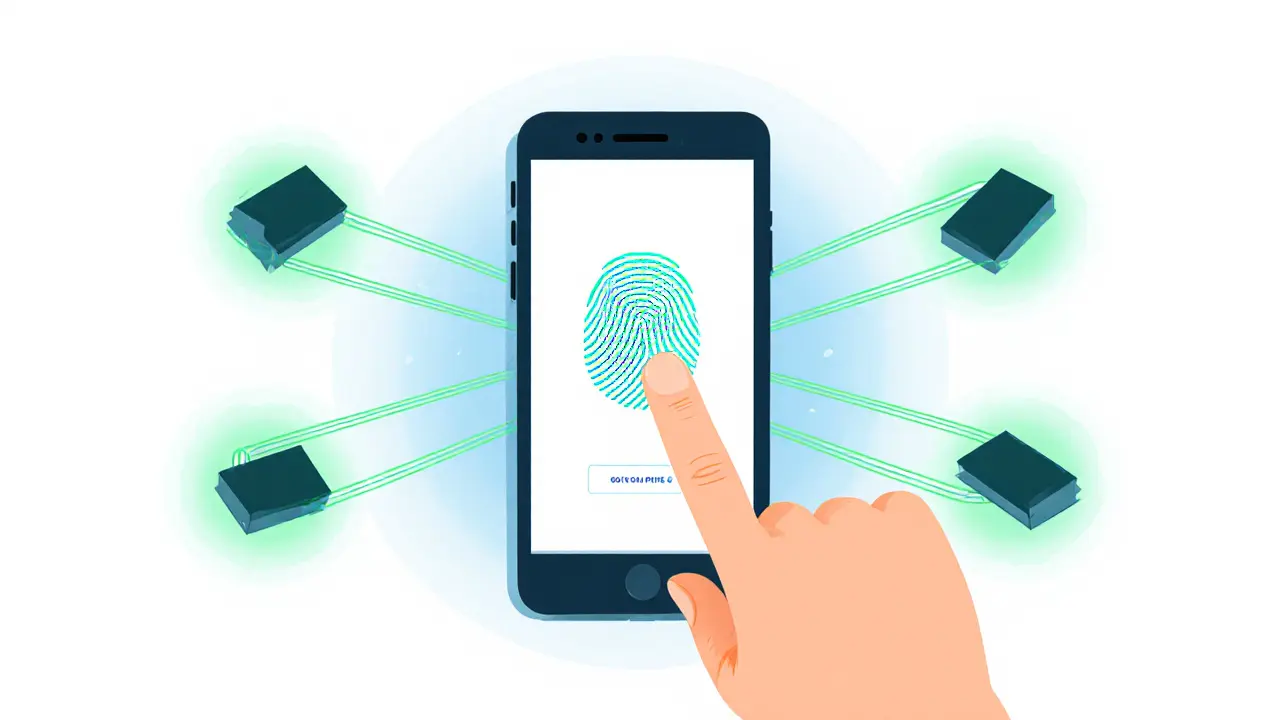
Archethic (UCO) is a Layer 1 blockchain that replaces private keys with fingerprint authentication. Learn how it works, why its price crashed, and whether its biometric tech could change crypto forever.
Layer 1 Blockchain: What It Is, How It Works, and Why It Matters
When you hear Layer 1 blockchain, the foundational network that processes and secures transactions directly on its own chain. Also known as base layer blockchain, it’s the original infrastructure behind Bitcoin, Ethereum, Solana, and others—no shortcuts, no sidechains, just raw, on-chain power. This isn’t just tech jargon. It’s the reason your crypto transactions exist at all. Without Layer 1, there’s no place for tokens, DeFi apps, or NFTs to live. They all start here.
Not all Layer 1 blockchains are built the same. Some, like Bitcoin, use proof-of-work, a consensus method where miners solve complex puzzles to validate blocks. Also known as PoW, it’s secure but slow and energy-heavy. Others, like Solana and Ethereum after its upgrade, use proof-of-stake, a system where validators lock up crypto to earn rewards and help secure the network. Also known as PoS, it’s faster, cheaper, and greener. These differences affect everything: transaction speed, fees, and even how projects build on top of them. That’s why you see so many new chains trying to outdo each other—each wants to be the best Layer 1 for developers and users.
Layer 1 isn’t just about speed or cost. It’s about trust. When a blockchain is decentralized enough to resist censorship and manipulation, it becomes a reliable foundation. That’s why projects like Radiant Capital and Serum DEX still matter—even after FTX collapsed. They run on Layer 1 networks that kept working when centralized platforms failed. Even airdrops like Flux Protocol’s or GEMS Esports 3.0 depend on Layer 1 to distribute tokens securely. If the base layer breaks, everything built on top crumbles.
You’ll notice most posts here focus on real projects running on actual Layer 1 chains—whether it’s a DeFi lending protocol on Ethereum, a DEX on Solana, or a GameFi token on BSC. These aren’t theoretical concepts. They’re live systems with users, wallets, and transaction histories. Some are thriving. Others are fading. But they all started on a Layer 1 blockchain. Understanding how these networks work helps you tell the difference between a real project and a hype trap.
And that’s what this collection is for. You’ll find deep dives into tokens built on these networks, reviews of exchanges running on them, and breakdowns of airdrops that only work because of the underlying blockchain. No fluff. No guesswork. Just clear facts about what’s actually happening on the base layer—so you know where to put your time, your attention, and your crypto.