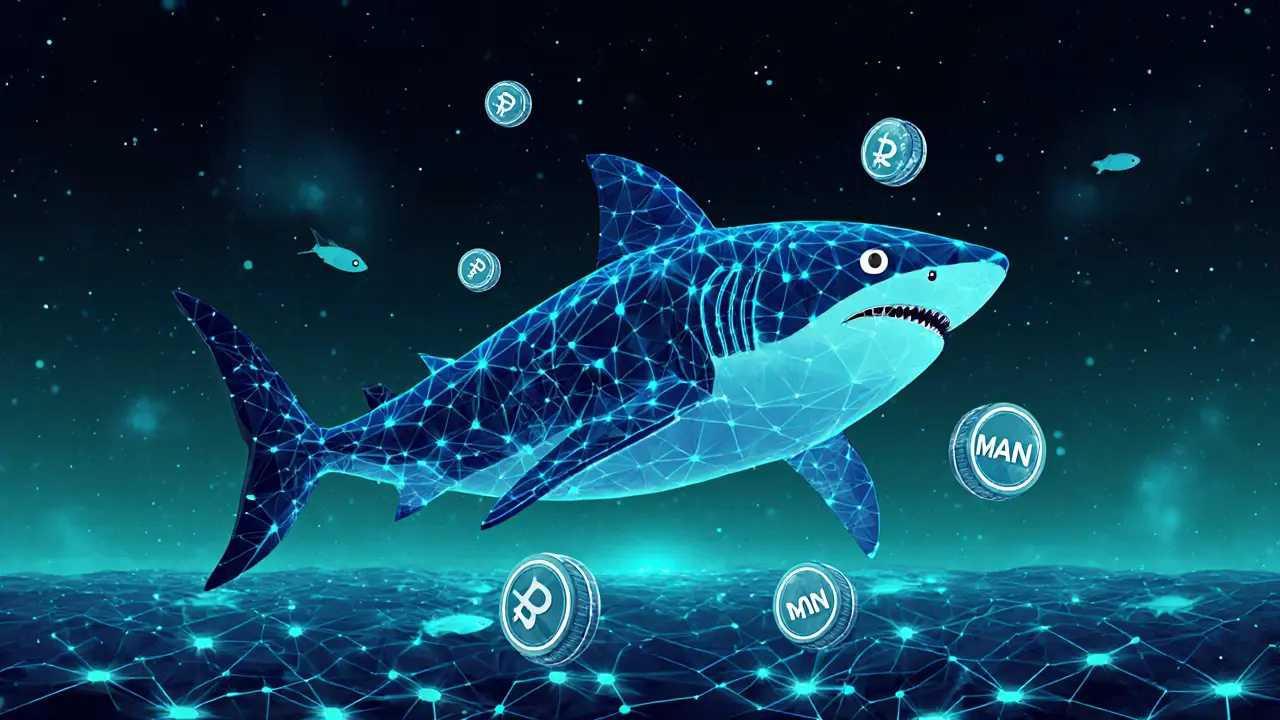
Details on the rumored MAN x Ocean Star airdrop by Matrix AI Network. Learn what's known, how past airdrops worked, and how to prepare safely before an official announcement.
Matrix AI Network: What It Is and Why It Matters in Crypto
When you hear Matrix AI Network, a blockchain platform that integrates artificial intelligence to automate smart contract execution and network optimization. Also known as MAI, it's one of the few projects trying to make blockchain self-learning instead of just self-executing. Most blockchains run code exactly as written. Matrix AI Network tries to improve that code over time—like a robot that learns from every transaction it processes.
This isn’t just theory. The network uses AI agents to analyze traffic patterns, adjust gas fees automatically, and even predict congestion before it happens. That’s different from Ethereum or Solana, where you’re stuck with static rules. Matrix AI Network’s AI layer also helps verify transactions without needing massive mining power, making it more energy-efficient than proof-of-work chains. It’s not just about speed—it’s about intelligence built into the base layer.
Related to this are decentralized AI, AI models trained and operated across multiple nodes without a central company controlling them, and artificial intelligence blockchain, blockchains designed specifically to run AI workloads, not just financial transactions. These concepts show up in real projects: some use Matrix AI Network to host decentralized AI models for image recognition or fraud detection, while others build prediction markets that update their algorithms based on user behavior. You won’t find this level of automation in most crypto projects—even the big ones.
What you’ll find below are real examples of how Matrix AI Network has been used, what went wrong, and what’s still working in 2025. Some posts cover actual deployments of its AI agents. Others expose fake airdrops pretending to be tied to MAI. There are reviews of wallets that support it, breakdowns of its tokenomics, and even comparisons to other AI-focused blockchains. No fluff. No hype. Just what’s real, what’s dead, and what still has legs.