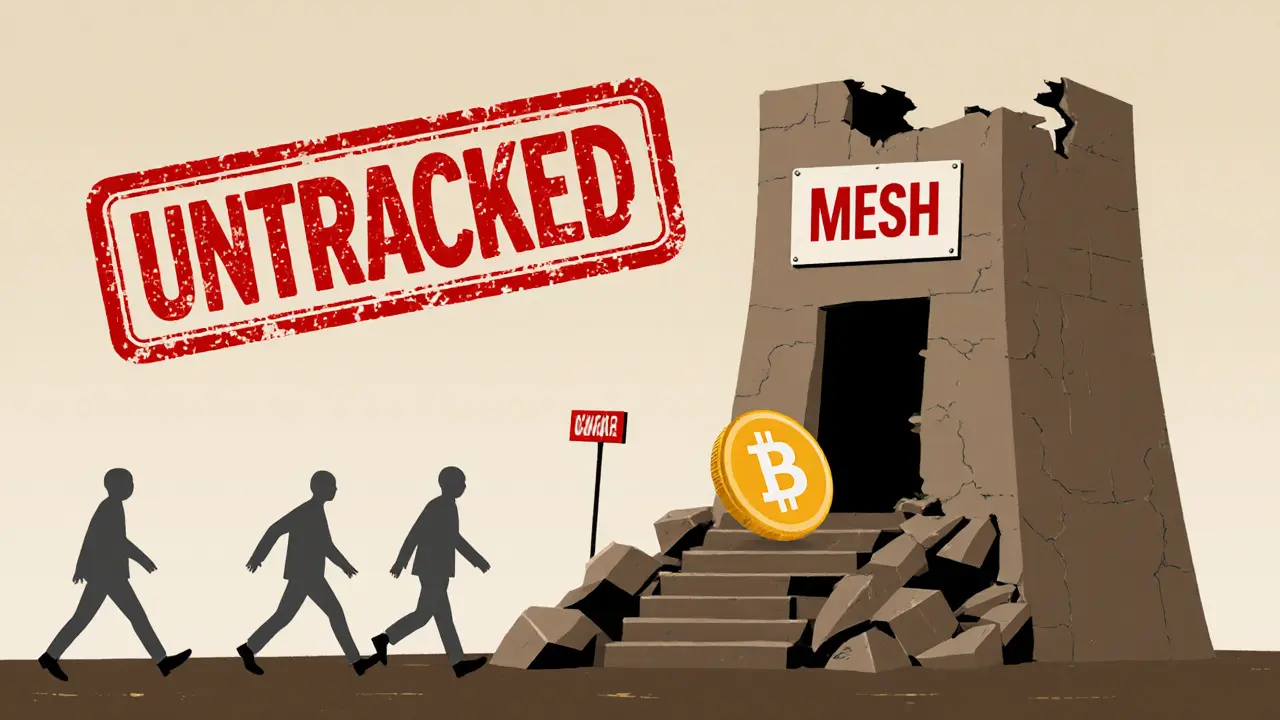
Meshswap was once a promising DeFi platform, but today its MESH token is near all-time lows with almost no trading volume or community activity. Here's why you should avoid it.
MESH token: What it is, how it works, and why it matters in Web3
When you hear MESH token, a utility and governance token designed for decentralized network coordination. Also known as Mesh Network Token, it enables users to participate in, secure, and shape a peer-to-peer infrastructure that operates without central control. Unlike tokens that just trade on exchanges, MESH is meant to be used—whether you’re staking to keep a network running, voting on protocol changes, or earning rewards for sharing bandwidth or data.
This token doesn’t exist in a vacuum. It’s tied to a decentralized network, a distributed system where nodes communicate directly without relying on servers or middlemen. Think of it like a digital neighborhood where everyone contributes and gets paid in MESH for keeping things running. It’s similar in spirit to projects like Filecoin or Helium, but focused on a specific use case—often connecting IoT devices, mobile hotspots, or edge computing nodes. The more people use the network, the more value the token gains, not because of hype, but because it’s actively needed.
People who care about MESH aren’t just speculators. They’re builders, node operators, and early adopters who believe in replacing centralized platforms with open systems. That’s why you’ll see posts here about blockchain governance, how token holders vote on upgrades, fee structures, and resource allocation. You’ll also find breakdowns of how MESH compares to other tokens that try to solve the same problem—like whether it’s better to earn through data sharing or through network security. And yes, there are scams too. Fake airdrops pretending to be MESH, phishing sites asking for your private keys, and bots claiming to boost your rewards. We’ve covered those so you don’t get burned.
What you’ll find in the posts below isn’t fluff. It’s real talk: how MESH actually gets used, who’s behind the network, what happens when adoption stalls, and whether holding it makes sense in 2025. No sugarcoating. No promises of quick riches. Just facts, user experiences, and what’s really going on with this token in the wild.