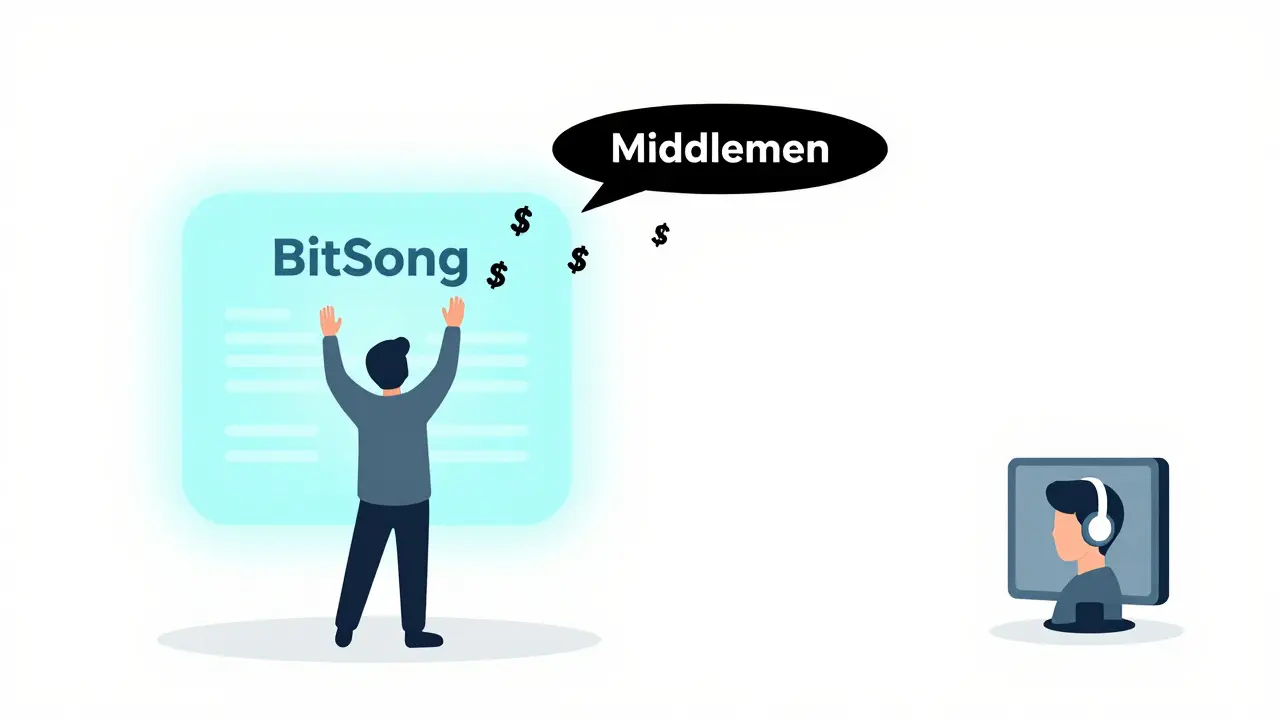
BitSong (BTSG) is a blockchain built to help artists earn directly from fans, but it has failed to gain traction. With near-zero trading volume and no active development, it's a cautionary tale in crypto.
Music Blockchain: How Blockchain Is Changing Music Royalties and Artist Payments
When you stream a song, music blockchain, a system that uses distributed ledgers to track ownership and payments in the music industry. Also known as blockchain music, it promises to cut out middlemen and get artists paid fairly—but most projects still don’t deliver. Right now, artists get pennies from streaming services, labels take 70% or more, and royalty splits are often messy, opaque, or lost in paperwork. A real music blockchain fixes that by recording every play, download, or license as a transparent, unchangeable entry on a public ledger. That means every time your song is used, the money flows directly to the right person—no delays, no disputes, no hidden fees.
That’s where NFT music, digital tokens tied to songs, albums, or rights that can be bought, sold, or licensed on blockchain networks comes in. Some artists are selling limited-edition NFTs of their tracks, giving fans ownership stakes or future royalty shares. Others use decentralized music, platforms that bypass traditional distributors and let creators upload, monetize, and distribute work without approval from gatekeepers. But here’s the catch: most NFT music projects are dead. The hype outpaced the tech. Platforms that promised to revolutionize royalties often had zero users, no real payment rails, or just sold JPEGs of album art. The real winners aren’t the flashy NFT drops—they’re the quiet systems quietly paying artists in crypto every time a track plays, with smart contracts that auto-split revenue among producers, writers, and performers.
What you’ll find below aren’t theories or vaporware. These are real reviews, breakdowns, and warnings from people who’ve tried the tools, chased the airdrops, and lost money to fake platforms. Some posts show how blockchain is actually being used today—like a Swiss exchange tracking music rights or a decentralized platform paying artists in real time. Others expose scams: fake NFT music airdrops, phantom royalties, and platforms that vanish after collecting your wallet address. There’s no fluff. Just what works, what doesn’t, and what you need to know before you invest your time—or your crypto—in the next big music blockchain project.