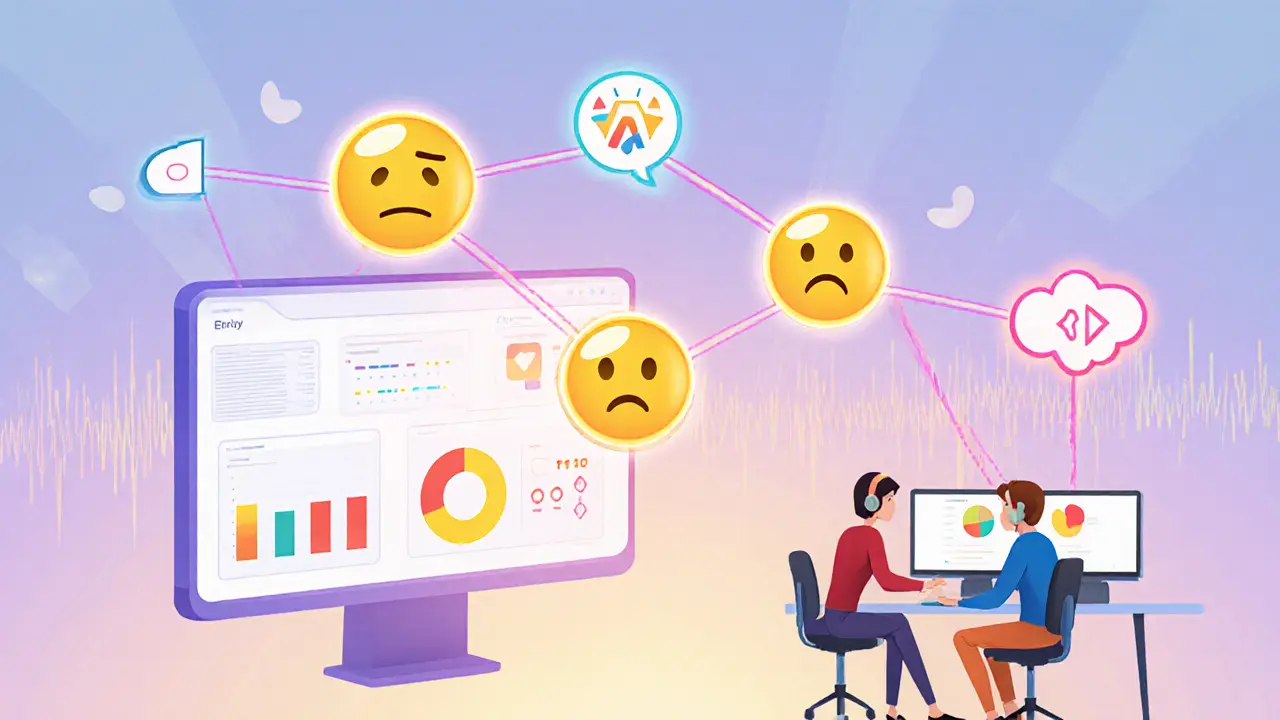
Sentiment analysis tools use AI to detect customer emotions in real time, helping businesses reduce churn, improve support, and predict behavior. Learn which tools work best in 2025 and how to use them without overcomplicating things.
NLP Sentiment Analysis in Crypto: How AI Reads Market Emotion
When you hear traders talk about NLP sentiment analysis, a technique that uses artificial intelligence to detect emotions in text. Also known as text sentiment detection, it’s what lets machines read whether a tweet about Bitcoin is excited, scared, or just spam. It’s not magic—it’s code scanning millions of words from Reddit, Twitter, and crypto forums to guess what the crowd feels. And in crypto, where hype can move prices faster than news, that guess matters.
Think about it: when Elon Musk tweets "Dogecoin to the moon," the price doesn’t jump because of his words alone. It jumps because thousands of traders react. NLP sentiment analysis picks up that surge in positive language across hundreds of posts in seconds. It flags sudden spikes in fear words like "dump," "scam," or "exit"—often before big sells happen. That’s why tools using this tech are quietly used by hedge funds and serious traders. But it’s not just for pros. Even if you’re just checking if a coin’s hype is real, sentiment data tells you if people are actually using it—or just talking about it.
It doesn’t work in isolation, though. Sentiment analysis needs context. A post saying "This project is dead" could mean the team quit, or it could be a sarcastic meme. Good systems learn from past patterns—like how "WAGMI" often signals hope, while "NGMI" is pure sarcasm. It also tracks how sentiment shifts after announcements: airdrops, exchange listings, or security breaches. That’s why the posts here cover real cases—like fake airdrops that trick people with fake excitement, or how a coin like BOYS dropped because sentiment turned cold, not because of any technical flaw.
You’ll find examples here of how sentiment analysis helps spot scams, predict airdrop hype cycles, and avoid coins drowning in negative chatter. You’ll see how platforms use it to monitor community health, and why some tokens die quietly while others explode. No theory. No fluff. Just how real traders use language patterns to make decisions—and how you can too.
Below, you’ll find real stories of crypto projects where emotion drove the outcome—not just fundamentals. Some failed because sentiment collapsed. Others survived because the community stayed loud. This isn’t about predicting prices. It’s about reading the room before you walk in.