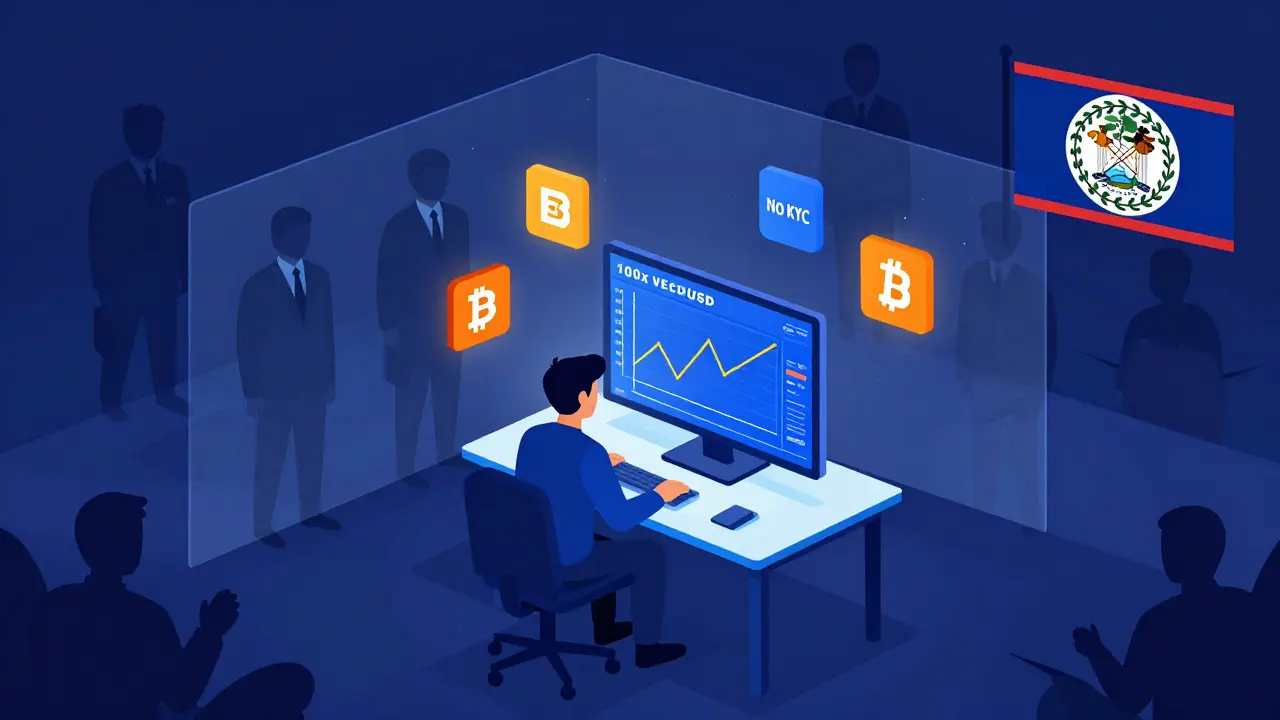
DueDEX offers zero fees and 100x leverage on Bitcoin with no KYC, but lacks verifiable volume, regulatory oversight, and withdrawal transparency. Is it a breakthrough or a sophisticated scam?
No KYC Crypto Exchange: Trade Privately Without Identity Verification
When you use a no KYC crypto exchange, a platform that lets you trade cryptocurrency without submitting personal documents or identity verification. Also known as non-KYC exchange, it gives you direct control over your funds and keeps your identity out of centralized databases. This isn’t just about privacy—it’s about sovereignty. If you don’t want banks, governments, or hackers holding your data, a no KYC crypto exchange is your best tool.
These platforms usually run as decentralized exchanges, blockchain-based platforms that connect buyers and sellers without a middleman. Unlike Binance or Coinbase, they don’t hold your crypto. You keep your keys. That’s why they’re popular in countries with strict crypto laws, like China and Algeria, and among traders who want to avoid taxes or surveillance. They rely on peer-to-peer trading, direct transactions between users, often using stablecoins like USDT to avoid bank interference. Also known as P2P crypto, this method skips traditional financial gatekeepers entirely.
But not all no KYC exchanges are equal. Some are legitimate, like GMX on Arbitrum, a decentralized platform offering leverage trading with zero identity checks, while others are outright scams like Bitskrix or BitbabyExchange. The difference? Transparency. Legit platforms have public code, active communities, and clear documentation. Scams vanish after collecting deposits. You’ll also find non-custodial wallet, a wallet where only you control the private keys, like Safe Wallet or Blue Wallet integrations on real no KYC platforms—because if the exchange doesn’t hold your crypto, your wallet must.
People use no KYC crypto exchanges for many reasons: avoiding taxes, living under censorship, or just preferring full control. But the biggest risk isn’t regulation—it’s poor security. Without KYC, you’re your own bank. Lose your seed phrase, and there’s no customer service to help. That’s why the posts below cover real tools like 4swap and SpookySwap, warn you about fake platforms, and explain how to spot a scam before you deposit anything. You’ll also see how P2P trading survives in banned regions, what happens when a chain like Fantom or Arbitrum becomes the backbone of privacy-focused trading, and why some airdrops and tokens are just ghosts with no backing. This isn’t theory. It’s what’s working in 2025 for traders who refuse to hand over their identity to get access to crypto.