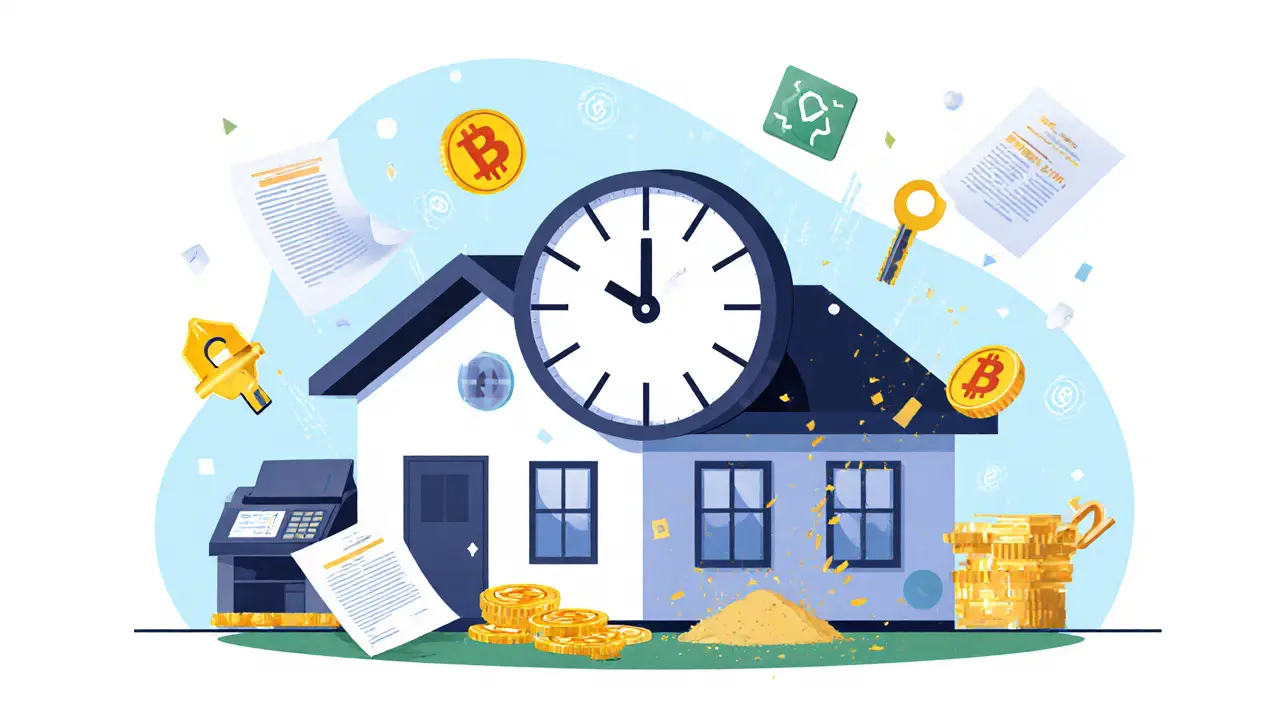
Blockchain can slash real estate closing times from 6 weeks to just a few days by automating title checks, identity verification, and fund transfers with smart contracts. Learn how it works, where it’s used, and why it’s not everywhere yet.
Real Estate Blockchain Technology: How Property Is Going Digital
When you think of real estate blockchain technology, a system that uses blockchain to record, trade, and manage ownership of physical property. Also known as property tokenization, it turns a house, office, or warehouse into a digital asset you can buy with just a few clicks—no lawyers, no paperwork, no waiting weeks for closing. This isn’t science fiction. It’s already happening. Platforms like Securitize and MANTRA Chain are letting people own tiny slices of commercial buildings, apartment complexes, and even farmland—all recorded on a public ledger that can’t be erased or faked.
What makes this different from traditional real estate? For one, you don’t need $500,000 to invest in a building anymore. With tokenization, you can buy $50 worth of a Brooklyn warehouse. The blockchain tracks every owner, every sale, every rent payment, and it does it 24/7. No more title searches. No more escrow delays. And because these tokens can be traded like crypto, you can sell your share in minutes, not months. This isn’t just about convenience—it’s about access. People who never could afford property now have a way in. Investors in Japan can own a piece of a warehouse in Texas. A teacher in Mexico can earn rent from a London apartment without ever stepping foot there.
But it’s not all smooth sailing. Real estate blockchain technology still faces big hurdles. Regulations vary wildly—some countries welcome it, others ban it. Banks still don’t fully trust it. And too many projects are just rebranding old scams with blockchain buzzwords. That’s why you need to know what’s real and what’s noise. The posts below cut through the hype. You’ll find clear breakdowns of actual RWA tokenization platforms, how they handle legal compliance, what happens when a project fails, and which ones actually deliver value. You’ll also see how scams like fake airdrops and phantom exchanges try to piggyback on this trend. This isn’t about getting rich quick. It’s about understanding a shift that’s already rewriting the rules of ownership—and making sure you’re not left behind.