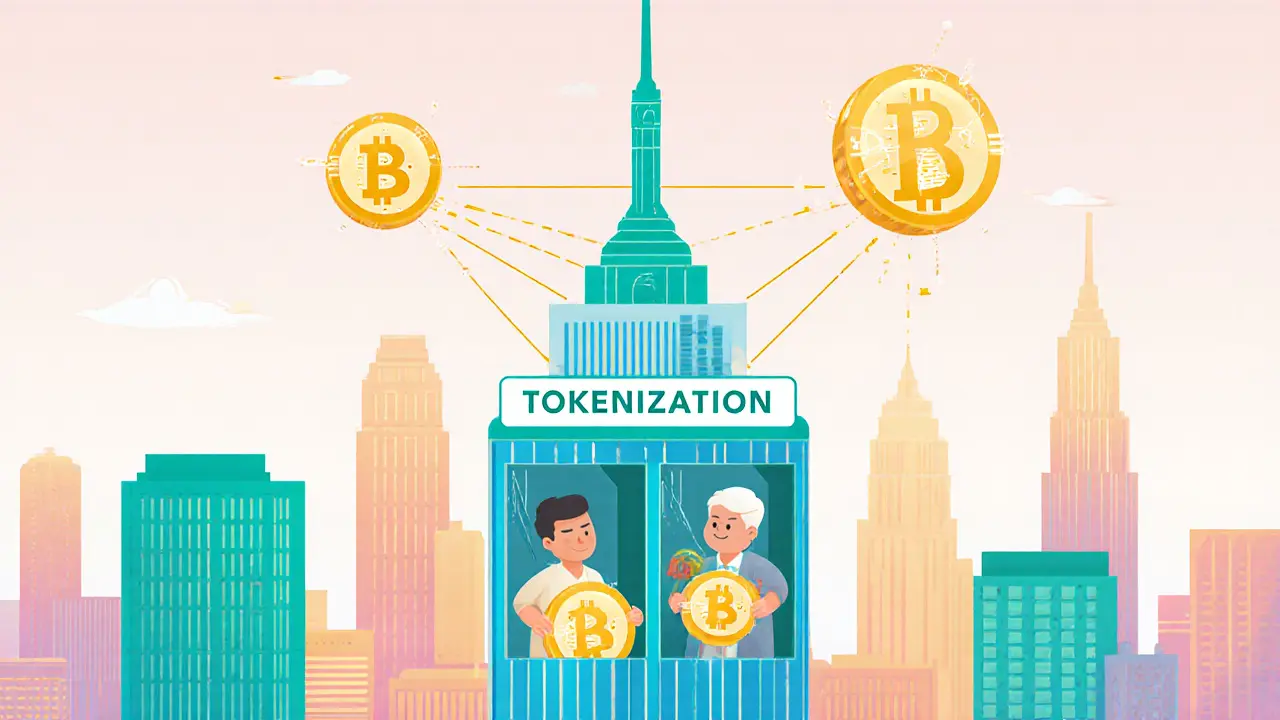
RWA tokenization platforms turn physical assets like real estate and machinery into digital tokens on blockchain, enabling fractional ownership and 24/7 trading. Learn how they work, who's leading the space, and why they're a $16 trillion opportunity-with real risks.
Real World Asset Tokenization: What It Is and How It’s Changing Crypto
When you hear real world asset tokenization, the process of converting physical assets like property, gold, or bonds into digital tokens on a blockchain. Also known as RWA crypto, it’s not sci-fi—it’s happening right now, with companies locking real value into smart contracts so anyone can buy a piece of it. Think of it like owning a share in a building, but instead of paper deeds, you hold a token on Ethereum or Solana that proves your claim. No lawyers, no middlemen, just code that enforces ownership.
This isn’t just about fancy tech. It’s about access. Before tokenization, buying into commercial real estate or fine art meant millions and legals teams. Now, someone in Nigeria can buy 0.01% of a Manhattan office tower with a few clicks. That’s the power of tokenized assets, digital representations of physical or financial assets that can be traded, divided, and verified on blockchain networks. It’s also why you’re seeing blockchain asset management, the use of decentralized systems to track, transfer, and secure ownership of tokenized physical and financial assets. These systems don’t rely on banks or registries—they use public ledgers that anyone can audit.
And it’s not just real estate. Gold bars are being turned into tokens. Government bonds are being sliced into fractions. Even carbon credits are getting tokenized so companies can trade them like crypto. The key? Every token must be backed by something real—something auditable, something with value outside the blockchain. That’s what separates legit RWA projects from the next meme coin. You can’t tokenize a dream. But you can tokenize a warehouse full of soybeans.
What you’ll find in this collection isn’t hype. It’s real examples—some working, some failed, some outright scams. You’ll see how airdrops like Flux Protocol’s FLUX giveaway tie into RWA ecosystems, how exchanges like Coincall and Serum DEX handle tokenized asset trading, and why projects like Archethic’s biometric blockchain matter when you’re trying to prove who owns what. Some posts expose fake airdrops pretending to be RWA-related. Others break down how DeFi lending protocols like Radiant Capital let you use tokenized assets as collateral. You’ll learn why KYC and tax reporting (like DAC8) are unavoidable when real assets go on-chain. And you’ll see why, despite all the noise, the real winners are the ones building infrastructure—not just selling tokens.