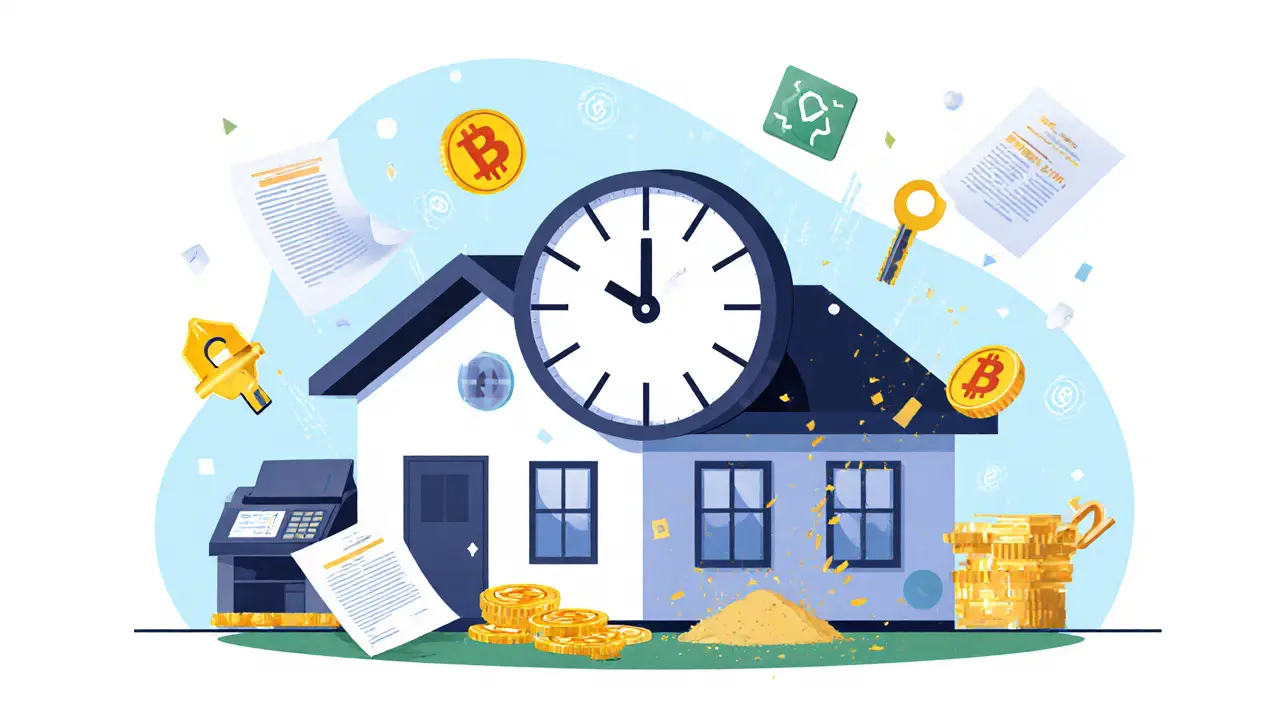
Blockchain can slash real estate closing times from 6 weeks to just a few days by automating title checks, identity verification, and fund transfers with smart contracts. Learn how it works, where it’s used, and why it’s not everywhere yet.
Smart Contracts in Real Estate: How Blockchain Is Changing Property Transactions
When you buy a house, you deal with lawyers, title companies, banks, and weeks of paperwork. But what if all that could be replaced by a single line of code? That’s the promise of smart contracts, self-executing agreements coded on a blockchain that automatically trigger actions when conditions are met. Also known as blockchain contracts, they remove guesswork, reduce fraud, and cut costs by removing intermediaries. In real estate, this isn’t science fiction—it’s already happening in small but growing ways.
Smart contracts in real estate don’t just digitize paperwork—they rebuild how ownership works. Imagine buying a fraction of a commercial building without needing a real estate agent. That’s RWA tokenization, the process of turning physical assets like land, buildings, or even machinery into digital tokens on a blockchain. These tokens can be bought, sold, or traded like crypto, making real estate accessible to anyone with a wallet, not just millionaires. Platforms like Securitize and MANTRA Chain are already letting people invest in rental properties with as little as $50. And because the contract runs on a public ledger, every transaction is visible and tamper-proof.
But it’s not all smooth sailing. Smart contracts need perfect conditions to work. If the code has a bug, or if someone uploads a fake deed, the system can’t fix it—because it’s automated. That’s why many real estate deals still pair smart contracts with human oversight. Still, the trend is clear: from escrow to title transfers, blockchain is replacing slow, paper-heavy processes with fast, transparent ones. Countries like Georgia and Sweden have tested blockchain land registries. In the U.S., startups are using smart contracts to automate rent payments and lease renewals. Even foreclosure processes are being streamlined—when a payment misses a deadline, the contract can automatically trigger a notice or transfer ownership, without court delays.
What you’ll find below are real examples of how this tech plays out in the wild—some successful, some failed. You’ll see how tokenized real estate projects launched, how scams disguised themselves as smart contract deals, and why some projects died before they even got off the ground. No fluff. No hype. Just what actually happened when blockchain met property.