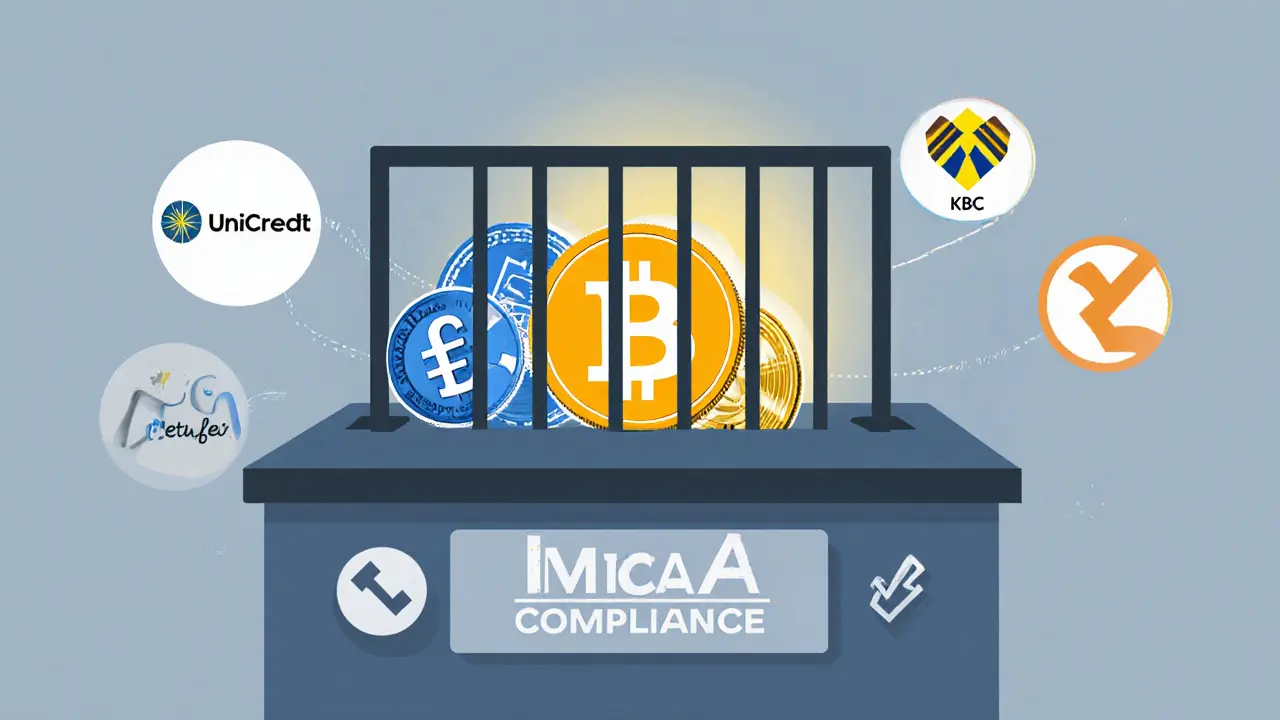
EU stablecoin restrictions under MiCA now block USDT and other non-compliant tokens from trading on exchanges. Learn what changed, why USDT is banned, and what alternatives exist in Europe.
Stablecoin Compliance: What You Need to Know in 2025
When you use a stablecoin, a cryptocurrency pegged to a stable asset like the US dollar to reduce volatility. Also known as digital fiat, it's the backbone of crypto trading, lending, and cross-border payments. But here’s the catch: using stablecoins isn’t just about sending money anymore. Governments are watching, and compliance isn’t a suggestion—it’s the law.
KYC verification, the process of confirming your identity before using financial services is now standard on every major exchange. If you’re holding USDT, USDC, or DAI, you’ve likely gone through it. But compliance goes deeper. AML compliance, anti-money laundering rules designed to stop criminals from moving illicit funds through crypto means exchanges track every transaction, flag suspicious behavior, and report to authorities. And starting in 2026, 67 countries will automatically share your crypto activity with tax agencies under CARF, the Crypto-Asset Reporting Framework created by the OECD to standardize global crypto tax reporting.
Stablecoin issuers aren’t off the hook either. Tether and Circle have to prove they hold enough dollars to back every token. They report reserves, undergo audits, and follow strict rules—or risk losing access to banks and payment processors. That’s why you see fewer new stablecoins launching. The bar is too high. If you’re trading, staking, or using DeFi with stablecoins, you’re part of this system. Ignoring compliance doesn’t make you clever—it makes you a target.
You don’t need to be a lawyer to stay safe. Just know this: if a platform doesn’t ask for ID, it’s risky. If a stablecoin has no public audits, avoid it. If you’re earning interest on stablecoins and never filed taxes, you’re already behind. The tools are here—KYC, transaction tracking, tax software. The rules are clear. The question isn’t whether compliance matters. It’s whether you’re ready for what’s next.
Below, you’ll find real examples of how compliance affects users—from exchanges that got shut down to airdrops that vanished because of regulatory pressure. These aren’t hypotheticals. They’re lessons learned the hard way.