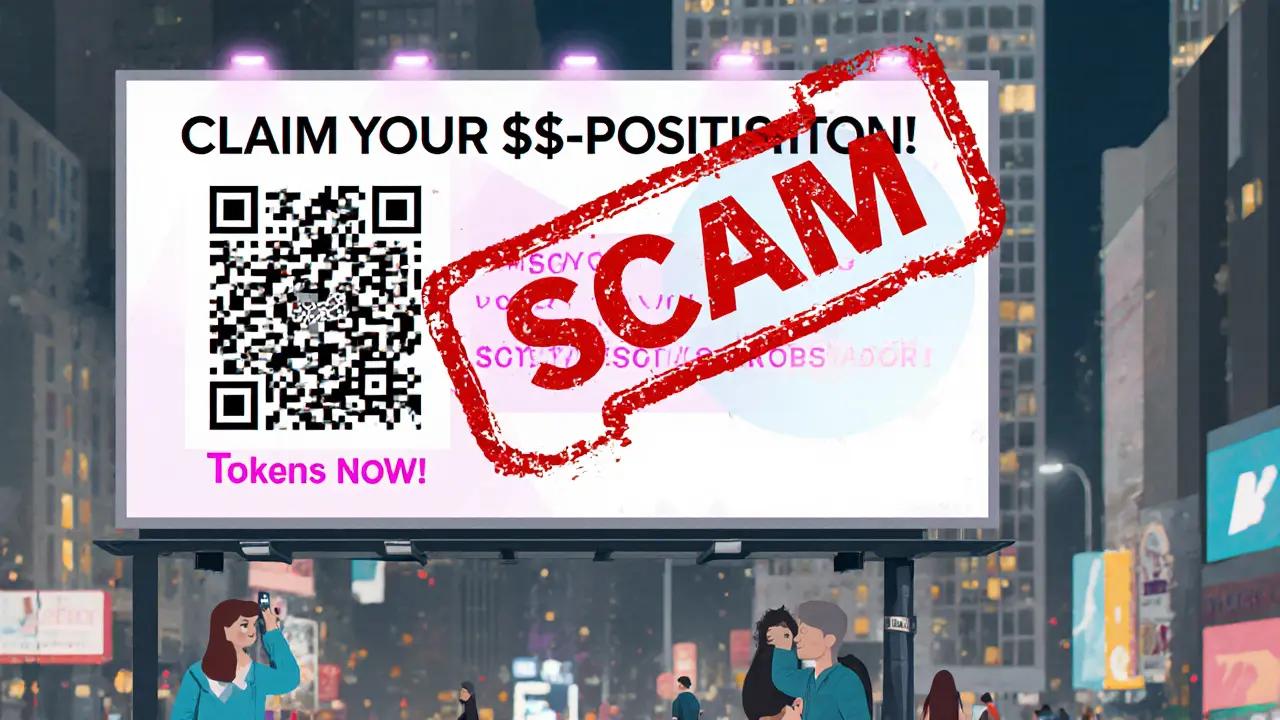
The Position Exchange Times Square billboard airdrop is a scam. No crypto can be distributed through billboards. Learn how the fraud works, why it's impossible, and how to protect your wallet from phishing sites.
Times Square crypto scam: How fake crypto schemes trick users in high-traffic areas
When people think of Times Square crypto scam, a type of physical crypto fraud targeting tourists and crypto newcomers with fake giveaways and counterfeit booths. Also known as crypto street scams, it’s not just a rumor—it’s a recurring pattern that preys on excitement, curiosity, and lack of crypto knowledge. You’ve probably seen the videos: someone in a hoodie hands out flyers for a "free $5,000 Bitcoin airdrop" near the New Year’s Eve ball, or a guy with a tablet claims to be from "CoinMarketCap Verified" and asks for your wallet address. These aren’t promotions. They’re crypto phishing, a method where scammers trick users into giving up access to their wallets or private keys dressed up as street-level giveaways.
This isn’t just about Times Square. The same tactics show up at crypto conferences, airport terminals, and even college campuses. The script is always the same: free money, urgency, and a fake authority figure. They’ll ask you to connect your wallet to a "claim portal," scan a QR code, or enter your seed phrase to "verify eligibility." None of these are real. Real airdrops don’t need your private key. Real exchanges don’t send reps to hand out flyers. The fake airdrops, false token distributions designed to steal funds or harvest personal data you see in Times Square mirror the ones online—like the Sonar Holiday or TRO airdrops that never existed. The only difference? This one happens face-to-face, making it feel more real.
These scams thrive because they exploit trust in crowded, unfamiliar places. Tourists think, "If it’s in Times Square, it must be legit." But legitimacy doesn’t come from location—it comes from verification. Check the official website. Look for a verified social media account. Never enter your seed phrase. Never connect your wallet to an unknown site. If it’s too good to be true, and it’s being offered on the sidewalk, it’s a scam. The crypto fraud, illegal schemes designed to steal cryptocurrency through deception in Times Square is just one face of a much bigger problem: people thinking crypto is easy money, not a system that demands caution.
What you’ll find in the posts below aren’t just stories about scams—they’re practical breakdowns of how these tricks work, what real airdrops look like, and how to spot the red flags before you lose your crypto. From the CYT and FEAR token fakes to the fake Coinrate and 3xcalibur exchanges, every example here shows the same pattern: hype without substance, promises without proof. If you’ve ever been tempted by a "free crypto" offer on the street or online, these posts will show you exactly why you should walk away.