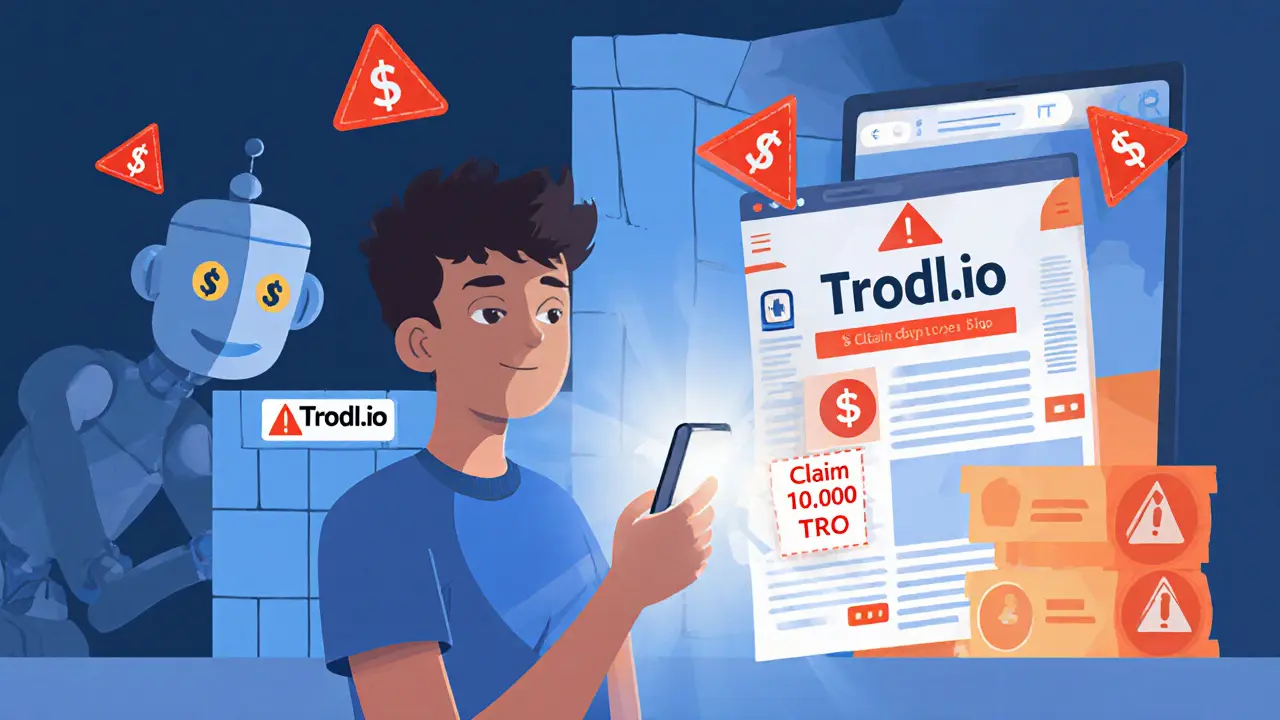
No TRO airdrop exists by Trodl in 2025. Despite rumors and fake ads, there’s no official campaign, distribution, or eligibility rules. Learn why this token has no airdrop and how to avoid scams.
TRO Airdrop: What It Is, How It Works, and Real Airdrops to Watch
When you hear TRO airdrop, a token distribution event where users receive free cryptocurrency for completing simple tasks. Also known as crypto airdrop, it's one of the most common ways new blockchain projects reward early adopters and grow their user base. But not every airdrop is real. Some are just phishing traps dressed up as free money. The TRO airdrop, if it’s active, should come from an official project website with clear rules, no wallet connection required upfront, and no asking for your seed phrase. If it does, walk away.
A crypto airdrop, a distribution of free tokens to wallet addresses based on eligibility criteria. Also known as token airdrop, it’s not a gift—it’s a marketing tool. Projects use it to build hype, test network adoption, or reward community members. Real airdrops like the Flux Protocol FLUX airdrop, a CoinMarketCap-backed distribution of 10,000 FLUX tokens to verified users or the PLAYA3ULL (3ULL) airdrop, which gave out 20 million tokens to 10,000 winners in 2024 never ask you to send crypto to claim. They never require you to connect your wallet to a random site. They don’t use fake billboards or social media bots. If it sounds too easy, it’s probably a scam.
Most fake airdrops today mimic real ones. They copy names like TRO, use similar logos, and even steal screenshots from legitimate announcements. They rely on urgency—"Claim now before it’s gone!"—to trick you into giving up control of your wallet. Real airdrops don’t rush you. They give you time, clear instructions, and official channels to verify eligibility. If you’re unsure, check the project’s Twitter, Discord, or website. Look for announcements from verified accounts. Compare the details to past airdrops like the GEMS NFT drop or the TopGoal event. If the project has no history, no team, and no real community, it’s not worth your time.
What makes a good airdrop? It’s not just the token amount. It’s whether the project has a working product, active users, and a clear reason for giving away tokens. The Bombie (BOMB) crypto, a GameFi project on Telegram that rewards players with tokens for completing in-game tasks works because it’s tied to real gameplay. The Radiant Capital (RDNT), a cross-chain DeFi lending protocol that uses its token for governance and incentives gives tokens to users who actually lend or borrow. These aren’t just giveaways—they’re incentives for participation. The TRO airdrop, if real, should follow the same pattern. If it doesn’t, it’s noise.
Below you’ll find real examples of airdrops that worked, ones that failed, and scams that looked too good to be true. You’ll learn how to spot the difference, what to do if you missed out, and which projects are still giving away tokens in 2025. No fluff. No hype. Just what you need to know before you click.