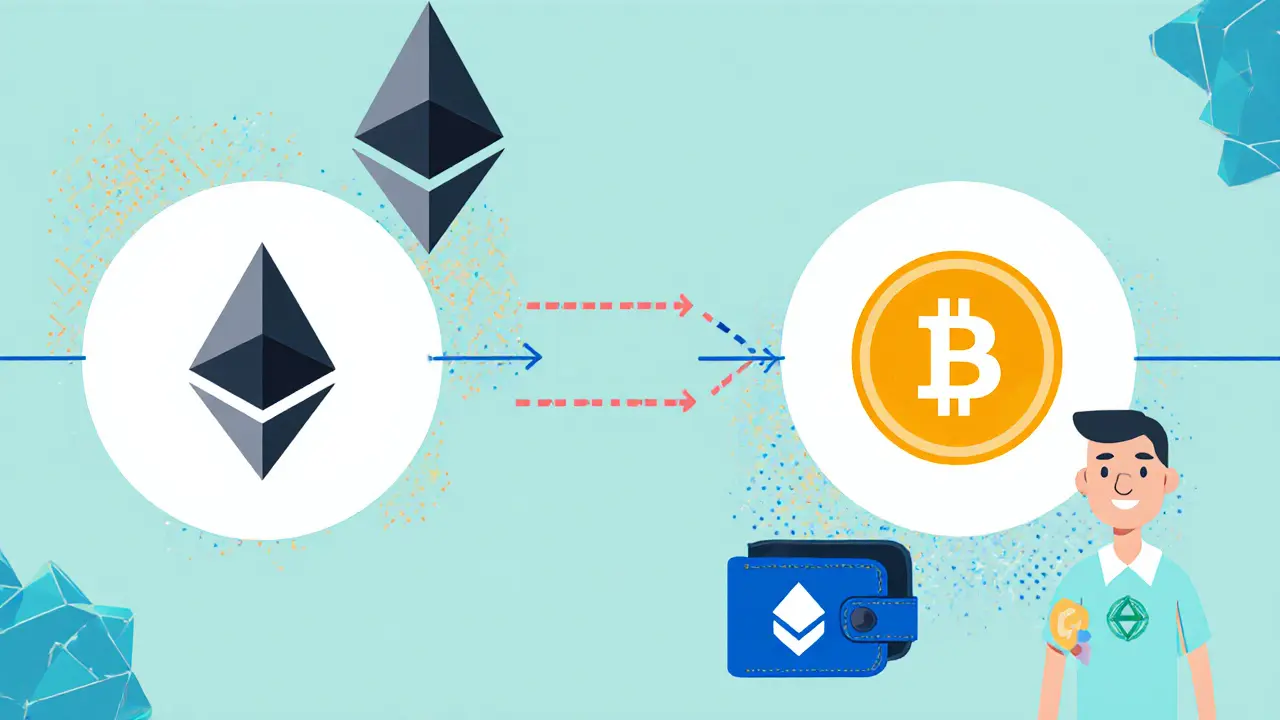
Uniswap v2 revolutionized crypto trading by enabling direct ERC-20 swaps without ETH as an intermediary. Though largely replaced by v3, it remains vital for obscure tokens and remains the foundation of modern DeFi.
Uniswap v2: What It Is, How It Works, and Why It Still Matters
When you trade crypto without a middleman, you’re likely using something built on Uniswap v2, a decentralized exchange protocol that lets users swap tokens directly from their wallets using automated liquidity pools. Also known as Uniswap V2, it’s the engine behind millions of trades every day — even in 2025, long after newer versions arrived. Unlike traditional exchanges that match buyers and sellers, Uniswap v2 uses smart contracts and math to set prices automatically. You don’t need an order book. You just connect your wallet, pick two tokens, and hit swap. It’s simple, open, and doesn’t require approval from anyone.
This system runs on Ethereum, the blockchain where most DeFi apps were built and still operate. It’s also powered by AMM, Automated Market Makers — a term you’ll hear everywhere in DeFi. AMMs don’t rely on human traders to set prices. Instead, they use a formula: the more of one token you buy, the more expensive it gets. That keeps liquidity balanced. This is why Uniswap v2 became the go-to for new tokens. If a project wanted to launch without paying a centralized exchange thousands in fees, they just added liquidity to Uniswap v2 and called it a day. Thousands of tokens did exactly that.
But Uniswap v2 isn’t just about swapping. It’s also where people earn by providing liquidity. You deposit equal values of two tokens — say, ETH and a new meme coin — into a pool. In return, you get LP tokens. Those earn you a share of every trade fee that happens in that pool. It’s not risk-free — you can lose money if the token price swings too much (that’s called impermanent loss). But for many, it’s the first real way to earn from crypto without mining or staking.
Even though Uniswap v3 came out with concentrated liquidity and better capital efficiency, v2 is still everywhere. Most older tokens still trade primarily on v2. Many wallets default to it. A lot of DeFi tools still rely on its data. And because it’s simpler and more predictable, some traders prefer it for small swaps or testing new projects. It’s the quiet workhorse behind the flashy new stuff.
What you’ll find below are real stories about what happened when people used Uniswap v2 — the good, the bad, and the scams. From tokens that exploded overnight and vanished by morning, to exchanges built on top of it that promised more than they delivered. You’ll see how airdrops tied to DEXs like Uniswap v2 played out, how phishing sites copied its interface, and why some projects failed not because of bad code, but because no one cared to trade them. This isn’t theory. These are the outcomes people actually lived through.