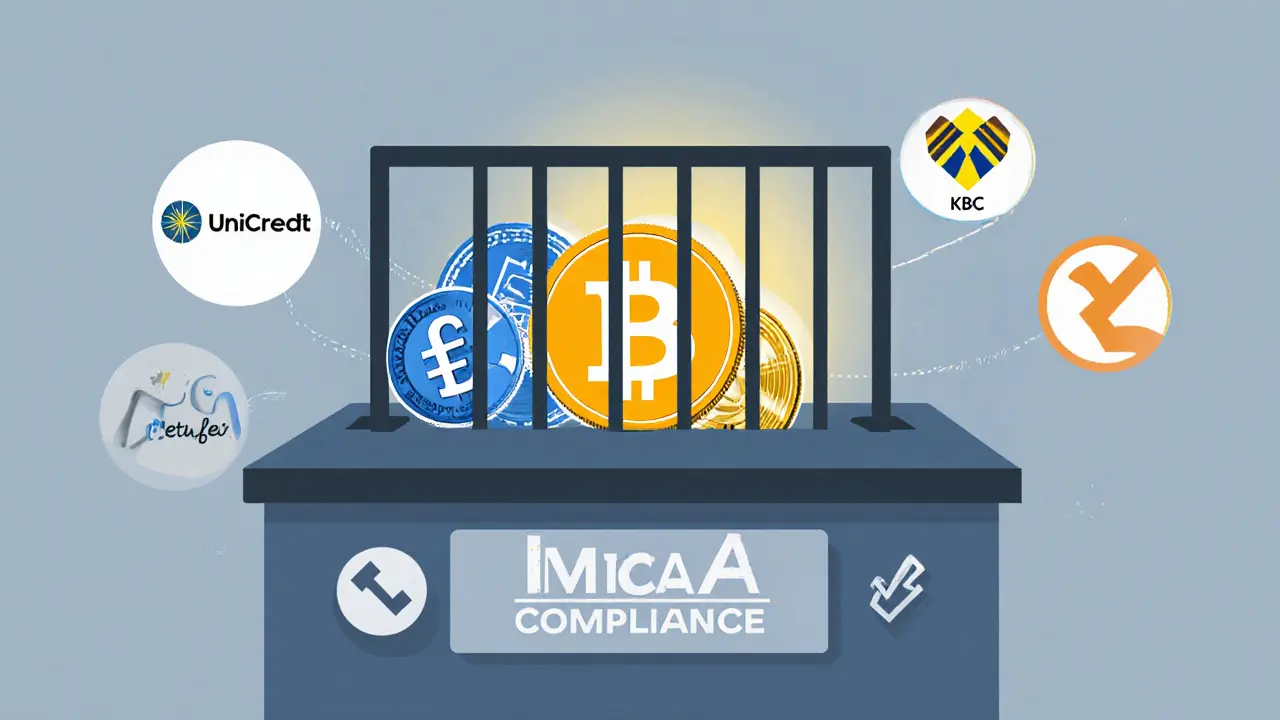
EU stablecoin restrictions under MiCA now block USDT and other non-compliant tokens from trading on exchanges. Learn what changed, why USDT is banned, and what alternatives exist in Europe.
USDT EU Ban: What It Means and How It Affects Crypto Users
When people talk about the USDT EU ban, a regulatory move by the European Union to limit the use of Tether’s USD-pegged stablecoin. Also known as Tether regulation, it’s not a full ban—but it’s close enough to shake up how millions trade, hold, and move value across Europe. This isn’t about shutting down crypto. It’s about controlling the flow of money that looks like cash but runs on blockchain. And USDT, the biggest stablecoin by volume, is right in the crosshairs.
The EU’s MiCA regulation, the Markets in Crypto-Assets framework that came into full effect in 2024. Also known as EU crypto rules, it requires all stablecoins to be fully backed, audited monthly, and issued by licensed entities. USDT doesn’t meet those standards yet. It’s still mostly backed by commercial paper, reserves, and opaque assets—not pure cash or short-term government bonds. That’s why the EU is giving it until mid-2025 to comply or get restricted. If Tether doesn’t fix this, USDT will be blocked from being offered, advertised, or traded on any exchange operating in the EU. That includes Binance, Kraken, and even smaller platforms. It doesn’t matter if you’re in Germany, Spain, or Poland—any exchange serving EU customers must follow these rules.
But here’s what most people miss: the ban doesn’t stop you from holding USDT in your own wallet. It stops exchanges from letting you buy it, sell it, or swap it for euros. If you already have USDT, you can keep it. But if you want to cash out to euros, you’ll need to convert it first to something that’s MiCA-compliant—like EURT or Eurocoin. That’s why some traders are already shifting to alternatives. Others are using peer-to-peer platforms, but those come with their own risks. The EU isn’t trying to kill crypto. It’s trying to make sure stablecoins can’t be used for money laundering, tax evasion, or market manipulation.
What you’ll find in the posts below are real cases of how this plays out. You’ll see how users in Italy lost access to USDT trading pairs overnight. How one exchange in Lithuania switched to EURT overnight to stay legal. How fake airdrops claiming to "compensate" EU users for the USDT ban are already popping up—and how to spot them before you lose your seed phrase. You’ll also get clear breakdowns of which stablecoins actually meet EU standards, what documentation exchanges need to file, and how to check if your platform is still compliant.
This isn’t theoretical. It’s happening right now. And if you’re using crypto in Europe, you need to know what’s next—not just what’s been announced. The posts here cut through the noise. No fluff. No hype. Just what you need to do, what you need to avoid, and where the real risks are hiding.