Tax Residency Changes for Crypto Tax Optimization: What Works in 2025 and What Doesn’t
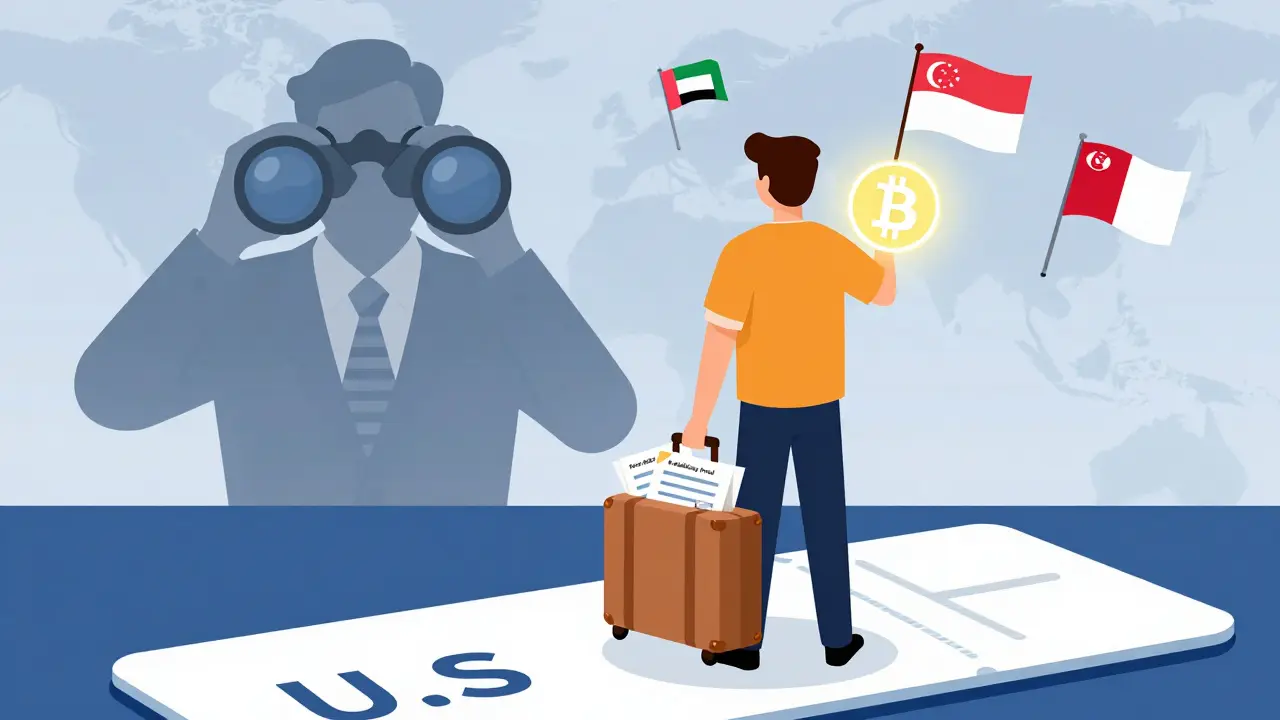 Sep, 26 2025
Crypto Tax Residency Eligibility Checker
Check Your Eligibility
Changing your tax residency to save money on crypto taxes sounds simple: move to a country with 0% capital gains tax, and boom - your Bitcoin profits disappear from your tax bill. But in 2025, that idea is far more complicated than it looks. The IRS is watching. Other countries are sharing data. And the rules you thought were safe? They might have changed while you were scrolling through Reddit.
Why Tax Residency Matters for Crypto
Your tax bill on crypto isn’t based on where you were born. It’s based on where you’re legally considered a resident. The U.S. taxes its citizens on worldwide income - even if you live in Bali. If you’re a U.S. citizen and you sell Ethereum for a profit, the IRS expects you to pay capital gains tax, no matter how far you’ve traveled. But if you legally become a tax resident of a country that doesn’t tax crypto gains, you might owe $0. This isn’t tax evasion. It’s legal tax optimization. But it requires more than just buying a plane ticket. You need to prove you’ve cut ties with your old country and built real, lasting ties to your new one. And that’s where most people fail.The Top 5 Places for Crypto Tax Residency in 2025
Not all crypto-friendly countries are created equal. Some offer 0% tax but come with hidden traps. Here’s what actually works right now.- United Arab Emirates (Dubai): No personal income tax. No capital gains tax on crypto. All you need is to spend 30 days a year in the country to qualify for tax residency. You don’t need to buy property. You don’t need to invest. Just show up, rent an apartment, get a local bank account, and keep receipts. The Virtual Assets Regulatory Authority (VARA) keeps things simple. But if you’re trading daily like a hedge fund, they might reclassify you as a business - and then you pay corporate tax.
- Singapore: 0% capital gains tax. No tax on crypto sales if you’re not trading frequently. But if you’re staking, mining, or trading more than 10 times a month, the Inland Revenue Authority of Singapore (IRAS) may treat it as business income - taxed up to 24%. You need to live there 183 days a year. It’s strict, but stable. Singapore doesn’t change its rules overnight.
- Malta: Still offers 0% capital gains tax for occasional traders. But if your crypto turnover hits €50,000 a year, you’re considered a professional trader and taxed up to 35%. You must live there 183 days a year. You also need to prove you’re not just a tourist - rental agreement, utility bills, local bank account. Malta’s big advantage? It’s in the EU. Your residency gives you freedom to travel across Europe without visa issues.
- Puerto Rico: Act 22 still gives 0% capital gains tax to new residents. But here’s the catch: you must become a bona fide resident of Puerto Rico. That means spending at least 183 days a year on the island, and you must give up your state residency in the U.S. You can’t claim California or Texas as your home anymore. You also need to file Form 8854 with the IRS to prove you’re no longer a U.S. tax resident. Many people think they can keep their U.S. address and still qualify. They can’t.
- Malaysia: 0% capital gains tax for casual investors. You need to live there 182 days a year. But if you’re mining, staking, or trading daily, the government taxes it as ordinary income - up to 30%. It’s one of the cheapest places to live while doing this. Rent in Kuala Lumpur is under $500/month. But the banking system is slow. Getting a local bank account can take weeks.
The Countries That Used to Be Safe - But Aren’t Anymore
A lot of people still talk about Portugal as a crypto haven. That was true until 2024. Now, Portugal taxes crypto gains at 28% unless you qualify as a Non-Habitual Resident - and even then, the rules are tight. You have to apply within five years of becoming a resident, and your crypto gains still count as foreign income. If you’re not careful, you’ll get hit with a 28% bill anyway. Portugal isn’t alone. Switzerland dropped its crypto-friendly stance in 2023. Cyprus changed its rules in 2024. Even the Cayman Islands, once a go-to for crypto millionaires, now requires proof of physical presence and may tax you if you’re deemed a “de facto” resident of another country. The message is clear: if a country doesn’t have a clear, written law protecting crypto gains - and it’s not backed by a stable government - it’s not safe anymore.
The Hidden Costs of Moving
Most people focus on the tax savings. But they forget the costs.- Exit taxes: If you’re leaving Germany, France, Italy, or Spain, they can tax you on your unrealized crypto gains as if you sold everything the day you left. Rates range from 12% to 30%. One Reddit user left Germany for Portugal in 2024 and got hit with a €22,000 exit tax on crypto he hadn’t sold. He thought he was fine. He wasn’t.
- Professional fees: Hiring a tax lawyer who understands crypto residency costs $15,000 to $50,000. That’s not optional. One mistake on Form 8854 or residency documentation and the IRS can come after you for years.
- Time and effort: You need to prove you live somewhere. That means utility bills, lease agreements, bank statements, medical records, even gym memberships. The IRS and other tax authorities don’t believe your word. They want paper trails. And if you’re only there 180 days a year? You’ll get flagged.
Why the IRS Is Getting Smarter
The IRS didn’t just wake up one day and decide to crack down. They’ve been building this for years. Starting with the 2025 tax year (covering 2024 transactions), U.S. crypto exchanges like Coinbase, Kraken, and Binance US must issue Form 1099-DA. This form includes the exact date you bought your crypto, how much you paid, and how much you sold it for. No more guessing. No more “I don’t remember.” The IRS now has your entire crypto transaction history. And it’s not stopping there. The OECD’s Crypto-Asset Reporting Framework (CARF) kicks in 2027. That means over 100 countries will automatically share your crypto transaction data with each other. If you’re a U.S. citizen living in Dubai, the IRS will get a copy of your Dubai bank and exchange records. If you’re in Singapore and you sold Bitcoin to buy Ethereum, Singapore will tell the IRS. There’s no hiding anymore. The IRS reported a 637% increase in crypto-related enforcement actions from 2020 to 2024. They’re not bluffing.What Happens If You Get Caught?
The penalties aren’t just financial. They’re personal. If you’re a U.S. citizen and you move to a crypto tax haven but never file Form 8854, the IRS can treat you as a “covered expatriate.” That means you’ll owe tax on your entire net worth - not just crypto - if you ever return to the U.S. You could be barred from re-entering the country. Your bank accounts could be frozen. Your credit score could collapse. Even if you’re not a U.S. citizen, many countries now share tax information. If you move to Malaysia but still have a U.S. bank account, and the IRS finds out you’re not paying taxes there, they’ll notify Malaysian authorities. Now you’re in trouble in two countries.
Who Should Even Try This?
This isn’t for everyone. If you have $50,000 in crypto gains and you’re trying to save $10,000 in taxes - it’s not worth it. The fees, the time, the risk - it all adds up. This strategy only makes sense if:- You have over $500,000 in crypto holdings
- You’re willing to live in your new country for at least 183 days a year - no exceptions
- You’re prepared to spend $20,000+ on legal and accounting help
- You understand you’re giving up U.S. state residency (if you’re American)
- You’re okay with never returning to your old life as if nothing changed
Cristal Consulting
December 5, 2025 AT 12:11This is actually super helpful. I’ve been thinking about this for months but didn’t realize how much paperwork is involved. Just getting a local bank account in Dubai took me 3 weeks and 5 trips to the branch. No joke.
Tom Van bergen
December 7, 2025 AT 11:06Adam Bosworth
December 9, 2025 AT 09:31Renelle Wilson
December 9, 2025 AT 12:39It’s important to recognize that tax residency is not merely a financial maneuver-it’s a profound reorientation of one’s legal, social, and personal identity. The psychological burden of severing ties with one’s home country, especially for U.S. citizens who have lived under the same tax regime their entire lives, is often underestimated. The emotional toll of navigating bureaucratic systems across continents, coupled with the fear of missteps that could trigger penalties or loss of future mobility, cannot be quantified in dollars alone. Many who pursue this path do so not out of greed, but out of a desire for autonomy in an increasingly surveilled global economy. Yet, this autonomy comes at the cost of stability, community, and sometimes, peace of mind.
Jerry Perisho
December 10, 2025 AT 05:32Manish Yadav
December 10, 2025 AT 18:59Isha Kaur
December 10, 2025 AT 21:02I’ve been researching this for over a year now, and I think what’s missing from most discussions is the human side of relocation. It’s not just about tax forms and bank accounts-it’s about losing your weekly coffee routine, your doctor, your friends who know your history, your sense of belonging. I moved from Texas to Malaysia last year, and while my crypto taxes are zero, I cried for three weeks straight because I missed my mom’s cooking and the way the rain sounded on my old apartment roof. The money saves you, but it doesn’t heal you. And if you’re not emotionally prepared for that kind of loss, no 0% tax rate will make you happy.
Glenn Jones
December 11, 2025 AT 07:07Joe West
December 12, 2025 AT 00:05Good call on the 0% bracket for long-term holds in the US. I did that last year-held my BTC for 14 months, sold when income was under $45k, paid $0 in capital gains. No moving, no lawyer, no visa hassle. Sometimes the simplest move is the smartest one.