Thailand's Foreign P2P Crypto Ban: What Traders Need to Know in 2026
 May, 3 2026
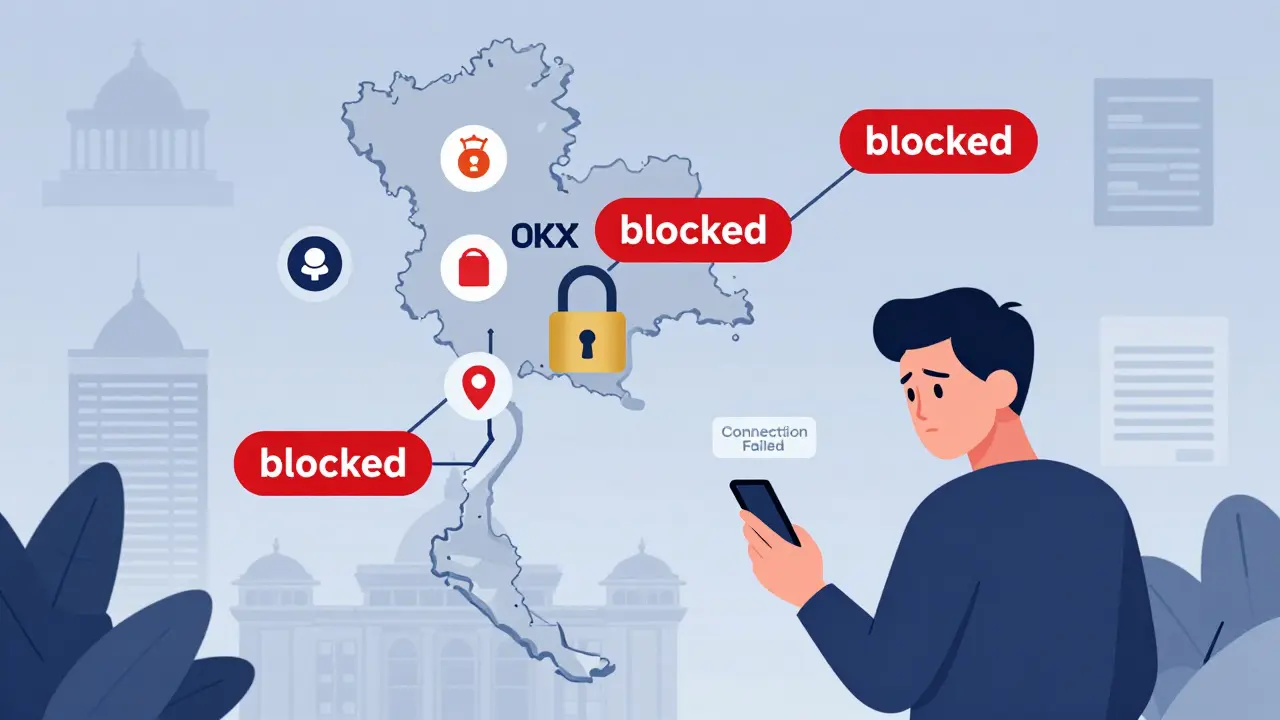
The landscape for cryptocurrency traders in Thailand changed dramatically in 2025. If you are holding assets on international exchanges like Bybit or OKX, the door has officially closed. The Thai government implemented a strict ban on foreign, unlicensed peer-to-peer (P2P) crypto platforms, marking one of the most aggressive regulatory crackdowns in Southeast Asia. This wasn't just a warning shot; it was a full enforcement action that blocked access to five major global exchanges overnight.
For many users, this shift felt sudden. But looking back at the timeline, the Thai Securities and Exchange Commission (Thai SEC) laid the groundwork months in advance. The core issue? Unlicensed platforms were seen as gateways for money laundering and online scams. The government decided that protecting local investors from fraud outweighed the convenience of accessing global markets.
The Regulatory Timeline: From Warning to Shutdown
To understand where things stand today, we need to look at how fast the rules were enforced. The process accelerated quickly in the spring of 2025. On April 8, 2025, the Thai Cabinet approved amendments to laws targeting crypto-related fraud. Just five days later, on April 13, two Royal Decrees were signed into law. These decrees gave regulators new teeth.
The first decree, the Royal Decree on the Operation of Digital Asset Businesses (No. 2), mandated that any foreign crypto platform targeting Thai users must obtain a license from the Thai SEC. The second, the Royal Decree on Measures to Prevent and Suppress Technology Crimes, empowered the Ministry of Digital Economy and Society (MDES) to block access to unlicensed platforms without needing court approval. That last part is crucial-it removed judicial delays, allowing for immediate takedowns.
The actual blocking happened on June 28, 2025. However, the Thai SEC had issued a clear warning on May 29, giving investors roughly one month to withdraw their funds. For some, that window was enough. For others with large holdings or complex withdrawal issues, it was too short. The message was clear: if you weren't licensed by the Thai SEC, you couldn't operate here.
Which Platforms Were Banned?
The crackdown didn't target every exchange equally. It focused on specific platforms that were popular among Thai users but lacked local licensing. Five major names were blacklisted and blocked nationwide:
- Bybit
- OKX
- CoinEx
- XT.COM
- 1000X
These platforms are not necessarily "bad" globally-they are major players in the Asian market-but they failed to comply with Thailand’s specific licensing requirements. As of late 2025 and into 2026, accessing these sites from within Thailand requires bypassing national internet filters, which carries legal risk. The Thai SEC explicitly advised users to move their assets before the shutdown date. Staying on these platforms now means operating in a gray area that could lead to frozen funds or account closures without recourse.
Penalties for Operators and Users
The penalties introduced under the new framework are severe, designed to deter both operators and reckless users. For operators running unlicensed P2P platforms, the stakes are high. Violations can result in up to three years in prison, fines of 300,000 baht (approximately $8,700 USD), or both. This isn't just a slap on the wrist; it's a criminal offense.
But what about regular users? While the primary target is the platform operator, the broader regulatory environment makes user activity risky. The new laws hold commercial banks, telecom companies, and even social media platforms jointly responsible for preventing cybercrime. If your bank account is used to facilitate transactions on a banned platform, and the bank fails to implement preventive measures, they could face liability. Conversely, if you use a banned platform, your bank may freeze your account for suspicious activity, leaving you with no easy way to retrieve your funds.
Why Did Thailand Take This Hardline Stance?
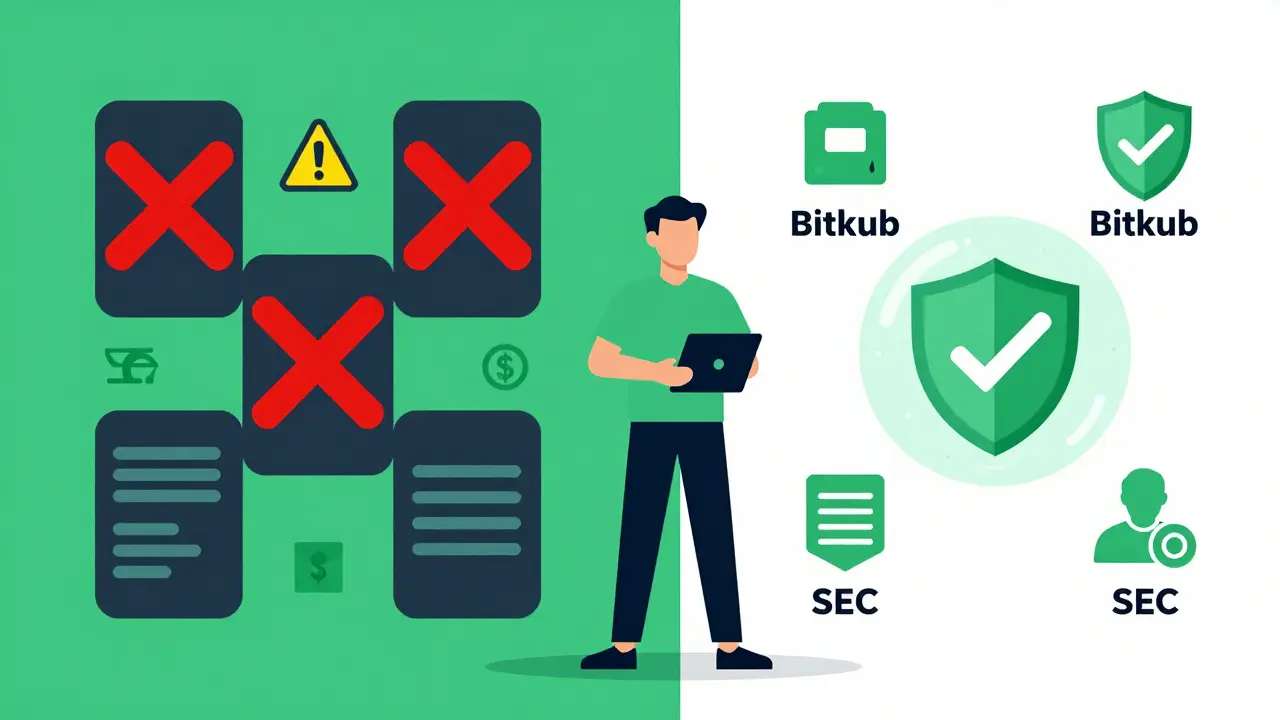
You might wonder why Thailand went so far out of its way to block these platforms. The answer lies in security and financial integrity. According to Pornanong Budsaratragoon, Secretary-General of the Thai SEC, the primary goal was to reduce money laundering risks and minimize damage from online crimes. Cryptocurrency scams have been a growing problem in the region, often involving fake investment schemes that lure victims into depositing funds on offshore exchanges.
By forcing all trading onto locally licensed platforms, the government gains visibility into transactions. Licensed exchanges must follow strict Anti-Money Laundering (AML) and Know Your Customer (KYC) rules. This creates a paper trail that authorities can follow if fraud occurs. It also ensures that consumer protection laws apply more consistently. In short, the trade-off is convenience for security. You lose the ability to trade on global platforms, but you gain a safer, regulated environment.
Impact on Cross-Border Business and Payments
The ban hasn't just affected individual traders; it has rippled through businesses too. International companies doing business with Thai partners face new hurdles. Previously, a company in India or Singapore could send crypto directly to a Thai supplier using a shared global exchange. Now, that direct path is cut off.
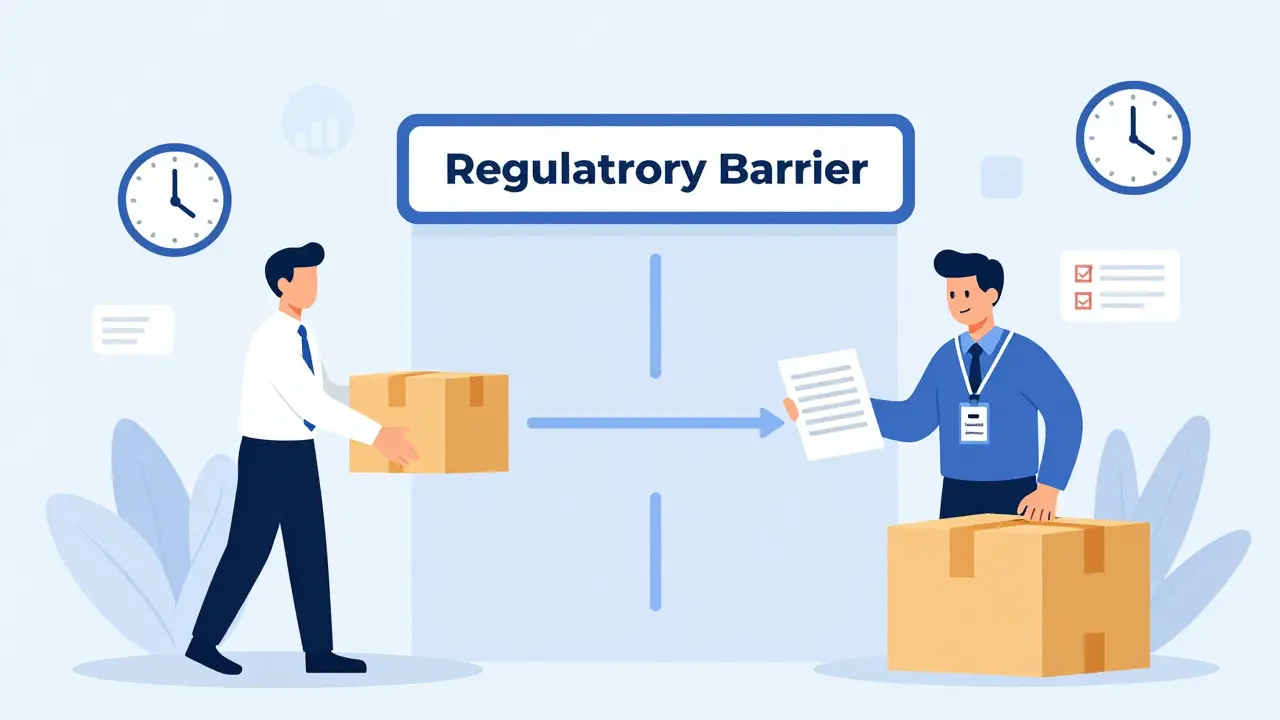
All digital asset transactions involving Thai residents must occur on locally licensed platforms. This means international businesses must find a regulated domestic intermediary in Thailand to handle the transfer. This adds layers of complexity: multiple sets of AML/KYC rules, higher compliance overhead, and potential delays. Payments that once took minutes can now take days as they navigate the stricter local infrastructure. For small businesses, this increased friction can be a significant operational burden.
What Is Still Legal in Thailand?
Despite the bans, cryptocurrency itself remains legal in Thailand. It is classified as a "digital asset" under Thai law, not legal tender. You can still buy, sell, and hold crypto-you just have to do it through approved channels. Local exchanges like Bitkub and Zipmex continue to operate normally. These platforms are fully licensed by the Thai SEC and offer a range of services including spot trading and custody solutions.
In fact, Thailand is pushing forward with its own blockchain initiatives. The government plans to issue digital asset tokens called "G Tokens" backed by government bonds, aiming to raise approximately 5 billion baht ($150 million). There are also discussions about creating a blockchain-based trading platform for securities firms. So, while the door is closed to foreign unlicensed platforms, the window for domestic innovation is wide open.
| Feature | Banned Foreign Platforms (e.g., Bybit, OKX) | Licensed Local Exchanges (e.g., Bitkub) |
|---|---|---|
| Licensing Status | Unlicensed in Thailand | Fully licensed by Thai SEC |
| Access from Thailand | Blocked/Restricted | Fully accessible |
| Consumer Protection | Limited/None under Thai law | Protected under Thai regulations |
| KYC/AML Requirements | Varying standards | Strict Thai compliance |
| Cross-Border Ease | High (pre-ban) | Moderate (requires intermediaries) |
How Should Traders Adapt?
If you are a trader based in Thailand, adaptation is key. First, ensure all your assets are moved to a licensed local exchange or a self-custody wallet that does not rely on the banned platforms for daily trading. Using a hardware wallet gives you control over your private keys, reducing reliance on any single exchange.
Second, familiarize yourself with the licensed options. Compare fees, liquidity, and supported coins on platforms like Bitkub. They may not offer the exact same leverage or exotic pairs as Bybit, but they provide peace of mind. Third, stay informed. Regulatory landscapes can shift. Follow announcements from the Thai SEC and MDES to avoid surprises.
Finally, consider the broader implications. If you run a business that relies on crypto payments, explore working with licensed payment processors that bridge the gap between international clients and Thai recipients. The ecosystem is evolving, and tools are emerging to help navigate these restrictions legally.
Is cryptocurrency illegal in Thailand?
No, cryptocurrency is not illegal in Thailand. It is recognized as a "digital asset" under Thai law. However, trading must occur through platforms licensed by the Thai Securities and Exchange Commission (SEC). Using unlicensed foreign platforms is prohibited and can result in legal penalties.
Can I still use Bybit or OKX in Thailand?
Technically, access to Bybit, OKX, CoinEx, XT.COM, and 1000X has been blocked nationwide since June 28, 2025. Attempting to bypass these blocks to trade on these platforms violates Thai regulations. The Thai SEC advises users to withdraw assets and switch to licensed local exchanges.
What are the penalties for using banned crypto platforms?
Operators of unlicensed platforms face up to three years in prison and fines of 300,000 baht. For users, while direct criminal charges are less common, you risk having your bank accounts frozen due to suspicious transaction monitoring. Additionally, you lose consumer protection rights if disputes arise on unlicensed platforms.
Which exchanges are legal in Thailand?
Licensed exchanges include Bitkub, Zipmex, and other platforms approved by the Thai SEC. These exchanges comply with local KYC and AML regulations and offer protected trading environments. Always verify the current license status on the official Thai SEC website before depositing funds.
How does this affect cross-border crypto payments?
Cross-border payments are more complex now. Direct transfers between international parties using global exchanges are restricted. Businesses must use licensed Thai intermediaries to receive funds, which increases compliance costs and processing times. Companies should plan for additional administrative steps when sending crypto to Thai counterparts.
Carli Bates
May 4, 2026 AT 22:04so the government decided that your freedom to lose money on scams is less important than their ability to control where you click. classic move. they call it protection but i call it a leash with extra steps. you think they care about money laundering or do they just want to make sure all the digital gold flows through pipes they can turn off at will. its always about control really. not safety. never safety.
Aaron Zeiler
May 5, 2026 AT 02:08look if you are in thailand you have to play by the rules now. bitkub and zipmex are fully licensed so use them. trying to bypass the block via vpn is risky because your bank will flag the transaction and freeze your account. its better to just accept the new reality and trade on local exchanges. the liquidity is decent enough for most pairs. dont risk your funds on unlicensed platforms when legal options exist right there.
Kathleen Warren
May 5, 2026 AT 18:47i understand how frustrating this must feel for everyone who had accounts on bybit or okx. it feels like a sudden loss of access to tools you relied on daily. please remember that the goal here is to keep your assets safe from fraudsters who often operate on those unregulated sites. moving to a licensed exchange might seem like a hassle at first but it gives you peace of mind knowing your data is protected under thai law. we are all navigating this change together and its okay to take time to adjust.
Barbara Jones
May 6, 2026 AT 07:48honestly i think people are overreacting a bit. yeah its annoying but at least you cant get scammed as easily. i switched to bitkub last month and its fine. the fees are higher but its worth it for the security. stop complaining and just adapt. life goes on.
Gabrielle Danis
May 6, 2026 AT 07:57The regulatory framework established by the Royal Decree on the Operation of Digital Asset Businesses (No. 2) creates a distinct legal boundary for market participants. It is imperative that traders recognize that utilizing Virtual Private Networks to access blocked entities such as Bybit constitutes a violation of Thai law. The enforcement mechanism allows the Ministry of Digital Economy and Society to restrict internet access without judicial oversight, which significantly reduces the latency between detection and action. Consequently, users should prioritize migrating their holdings to self-custody wallets or SEC-licensed exchanges to mitigate the risk of asset forfeiture. The distinction between legal tender and digital assets remains clear, yet the operational channels for trading those assets are strictly controlled.
Abhishek Verma
May 6, 2026 AT 13:53and here we go again with the nanny state routine. tell me you live in a country where the government decides what apps you can open without telling me. i bet your neighbors are reporting each other for using a vpn too. hilarious. meanwhile the real criminals are probably running shell companies through licensed banks anyway. but sure lets pretend blocking a website stops money laundering. laughable.
Brendan Thraxton
May 6, 2026 AT 21:05hey guys look on the bright side. this is actually a great opportunity to learn more about decentralized finance and self custody. you can use hardware wallets to store your btc and eth safely. then you only need an exchange when you want to trade fiat. it teaches you responsibility. also bitkub has improved a lot lately so give it a try. community support is strong here so ask questions if you are stuck. we got this.
Janis Naglis
May 8, 2026 AT 11:33It is fascinating to observe the paradigm shift in the regulatory landscape! While some view this as restrictive, I see it as a necessary evolution toward institutional-grade compliance. The integration of strict KYC protocols ensures that the digital asset ecosystem matures responsibly. Furthermore, the introduction of G Tokens backed by government bonds signals a proactive stance by the Thai authorities in leveraging blockchain technology for sovereign finance. We must embrace these changes as catalysts for innovation within the constrained parameters. Collaboration among stakeholders will undoubtedly yield robust solutions for cross-border payment friction!