Underground Crypto Trading Under Taliban Rule: How Afghans Survive Without Banks
 Jan, 28 2026
When the Taliban took over Afghanistan in August 2021, they didn’t just change the government-they shut down the economy. Foreign aid dried up. Banks froze accounts. International sanctions cut off access to global finance. By 2022, the World Bank estimated that 97% of Afghans would fall below the poverty line. People had food in their homes but no way to pay for it. That’s when crypto slipped in-not as an investment, not as a tech trend, but as a lifeline.
The Ban That Couldn’t Stop the Flow
In August 2022, the Taliban officially banned cryptocurrency. They called it haram-forbidden under Islamic law-because it wasn’t backed by gold or physical assets and was too speculative. They shut down exchanges, revoked licenses, and arrested traders. At first, it looked like the crackdown worked. Monthly crypto transaction values dropped from millions to just $80,000 by November 2022. But the numbers lied. The real trade didn’t stop. It went underground. People stopped using regulated platforms. They stopped advertising. They started using WhatsApp, Telegram, and even face-to-face meetups in markets to swap Bitcoin and USDT (Tether) for cash. A trader in Kabul might receive $500 in USDT from a cousin in Germany. Then they’d meet a local forex dealer in a back alley of Darul Aman Road, hand over the digital key, and walk away with Afghanis in hand. No bank. No paperwork. No trace. The Taliban can shut down exchanges. They can’t shut down peer-to-peer networks. They can’t arrest every person with a phone. And in a country where only 8.64 million out of 40 million people have internet access, surveillance is slow, patchy, and expensive.Why Bitcoin and USDT? The Two Coins That Keep Afghanistan Alive
Not every crypto works here. Ethereum? Too slow. Solana? Too unknown. Dogecoin? Too volatile. The two coins that survived are Bitcoin and USDT. Bitcoin is trusted because it’s decentralized. It doesn’t need a middleman. You can send it across borders without asking permission. But its price swings make it risky for daily use. That’s where USDT comes in. Tether is pegged to the U.S. dollar. One USDT = $1. That makes it perfect for remittances. A father working in Turkey sends 100 USDT to his family in Herat. They cash it out locally. They buy flour. They pay for medicine. They don’t care if the dollar rises or falls next week-they care about eating today. Forex dealers, once seen as shady operators, became essential financial hubs. In Peshawar, Pakistan, Afghan traders sit in small shops, waiting for buyers from Afghanistan to send USDT. Once the payment clears, they hand over cash in Afghanis. Some even offer discounts for bulk transfers. It’s informal banking, built on trust, not regulation.Internet Blackouts and the New Underground
The Taliban didn’t stop at banning crypto. In September 2024, they ordered nationwide internet blackouts in five northern provinces: Kunduz, Badakhshan, Baghlan, Takhar, and Balkh. The official reason? To stop "immoral content." The real effect? Crippling the underground crypto network. Without internet, you can’t verify a transaction. You can’t check a wallet address. You can’t receive money from abroad. Traders who relied on WhatsApp to confirm payments were suddenly blind. Some turned to mesh networks-devices that connect directly to each other without the internet. Others use SMS-based crypto wallets, though these are rare and unreliable. One trader in Mazar-i-Sharif told a journalist he now carries USB drives with pre-loaded wallet keys. He drives to the border, meets a contact, swaps the drive for cash. It’s slow. It’s dangerous. But it works.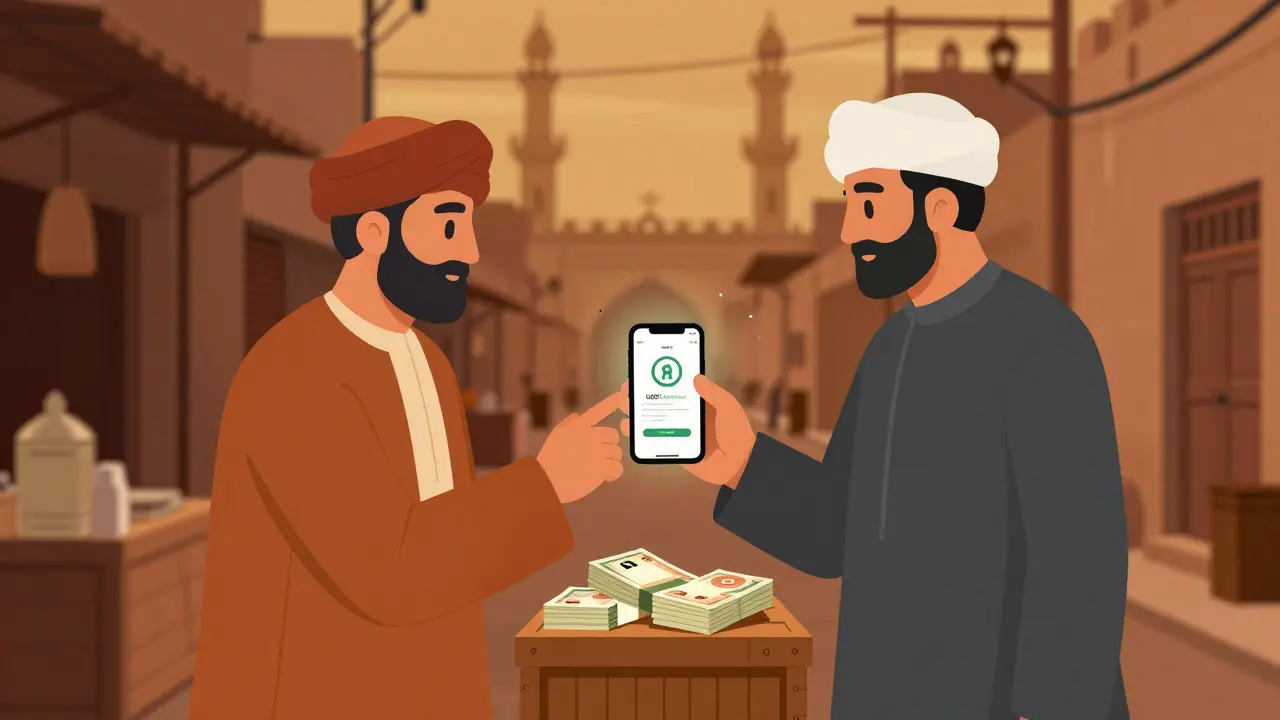
The Human Cost of a Digital Ban
This isn’t just about money. It’s about survival. A mother in Kabul can’t buy insulin for her diabetic child because the local pharmacy only accepts cash. Her brother in Canada sends $300 in USDT. She converts it through a friend of a friend. She gets the medicine. That’s the chain. The United Nations says over 20 million Afghans need humanitarian aid. But aid organizations can’t send money directly. Banks won’t process it. The Taliban won’t let them. So diaspora communities use crypto. It’s the only way. Even schools are affected. In 2025, the Taliban ordered universities to remove courses on democracy and women’s rights. Books by women were burned. But in secret, young Afghans still learn how to use crypto. A 19-year-old woman in Herat runs a WhatsApp group teaching others how to set up a wallet. She doesn’t say "crypto." She says "digital money." She knows if she’s caught, she could be arrested.The Irony of Control
The Taliban wants to control everything-what people wear, what they read, what they believe. But they can’t control digital money. It doesn’t need a passport. It doesn’t need a license. It doesn’t care who you are. They ban forex trading. Yet, forex dealers thrive. They ban women from universities. Yet, women are among the most active crypto users, managing household finances when men are unemployed or missing. They cut the internet. Yet, people find ways to reconnect. This isn’t rebellion. It’s adaptation. It’s the quiet, daily act of refusing to starve.
What’s Next? No One Knows
Will the Taliban eventually crack down harder? Maybe. They’re learning. They’ve started using AI tools to monitor suspicious transactions. They’re working with telecom companies to flag unusual data patterns. In 2025, they tested a system that detects when a phone repeatedly connects to known crypto wallet addresses. But the demand won’t disappear. The banking system is still dead. The economy is still collapsing. International sanctions are still in place. As long as families abroad are sending money, crypto will find a way. Some hope the Taliban will one day legalize crypto. Others think the world will pressure them to open banking channels. But for now, the only rule is this: if you need to eat, you find a way. And for millions in Afghanistan, that way is digital.How It Works: A Real Example
Here’s how a typical transaction goes:- A father in Germany sends 50 USDT to his sister’s wallet in Kabul using a non-KYC exchange like LocalBitcoins.
- She doesn’t have internet, so she gives the wallet address to her cousin in Peshawar, who has a stable connection.
- The cousin receives the USDT and goes to a local forex shop in Peshawar.
- He hands over the digital proof. The shop gives him 4,200 Afghanis (at the black-market rate).
- He flies back to Kabul, meets his sister in a park, and hands her the cash.
- She buys rice, lentils, and medicine.
Is crypto legal in Afghanistan under Taliban rule?
No. The Taliban officially banned all cryptocurrency trading, mining, and usage in August 2022, declaring it haram under Islamic law. Exchanges were shut down, and traders have been arrested. But the ban is not enforced perfectly, and underground trading continues.
What cryptocurrencies are used in Afghanistan?
Bitcoin and USDT (Tether) are the most common. Bitcoin is used for long-term value storage and cross-border transfers. USDT is preferred for daily transactions because it’s pegged to the U.S. dollar, making it stable and predictable for buying essentials like food and medicine.
How do people trade crypto without internet?
They use intermediaries. Someone with internet connects to a wallet abroad, receives the crypto, and then meets a local contact in person to hand over cash. Some use USB drives to transfer wallet keys. Others rely on SMS-based wallets, though these are rare and unreliable. Offline networks are emerging, but they’re slow and risky.
Why hasn’t the Taliban shut down crypto completely?
Because it’s impossible to fully control. Crypto doesn’t need banks, borders, or infrastructure. It runs on phones, even in areas with poor internet. The Taliban lacks the resources to monitor every user. Plus, many Afghans rely on it for survival. Shutting it down completely would cause mass starvation and unrest.
Are women involved in underground crypto trading?
Yes. With men unemployed or unable to leave home, many women manage household finances. Some run WhatsApp groups teaching others how to use crypto wallets. They avoid using the word "crypto"-they call it "digital money"-to stay safe. Their role is critical but rarely reported.
Can international aid organizations use crypto in Afghanistan?
Not directly. Most aid groups can’t send funds through crypto due to legal risks and compliance rules. But diaspora communities and private donors often use crypto to send money to families, which then gets converted to cash locally. This is how aid reaches people, even if it’s not officially labeled as such.
Akhil Mathew
January 30, 2026 AT 02:37Man, this is wild. I grew up in Mumbai where hawala networks were the real banking system, and now I see the same thing happening with crypto in Afghanistan. It’s not tech-it’s survival. The Taliban can ban coins all they want, but they can’t ban a mother feeding her kid. USDT is just digital bread now.
Raju Bhagat
January 30, 2026 AT 03:34OMG THIS IS LIKE A MOVIE BROOOOO 😭 I just watched a doc on this last week and I cried. Imagine carrying USB drives like they’re gold bars. And women running WhatsApp crypto classes?? I’m not even kidding I’m gonna donate to one of those groups. This is the most real thing I’ve seen all year.
Moray Wallace
January 31, 2026 AT 11:59It’s ironic how the same governments that preach financial regulation and KYC are the ones refusing to let aid flow through legitimate channels. The Taliban’s ban is a policy failure disguised as morality. Crypto isn’t the problem-it’s the only thing keeping the lights on in a system the world abandoned.
Elizabeth Jones
February 1, 2026 AT 00:24The deeper tragedy here isn’t the ban-it’s the normalization of desperation. We’ve turned peer-to-peer digital transfers into a humanitarian lifeline because our institutions failed. Bitcoin and USDT aren’t currencies here; they’re the last remnants of dignity. When a society must rely on encrypted wallets to buy insulin, we’ve already lost the moral high ground.
Will Pimblett
February 2, 2026 AT 08:18So let me get this straight-the Taliban bans crypto because it’s ‘haram,’ but they’re cool with black-market forex dealers handing out stacks of cash in alleyways? That’s not religious enforcement, that’s incompetence with a side of hypocrisy. Also, ‘digital money’? Yeah, real subtle, sis. They’re not fooling anyone.
Meenal Sharma
February 4, 2026 AT 07:50This entire narrative feels like Western propaganda disguised as humanitarian concern. Crypto is inherently speculative and unregulated-why should we trust it as a replacement for state-backed currency? The Taliban’s actions, however harsh, may be the only way to prevent financial anarchy. Who verifies these wallet addresses? Who ensures the integrity of these transfers? No one. And that is dangerous.
Calvin Tucker
February 5, 2026 AT 03:38There’s a philosophical paradox here: the most oppressive regime in the world is inadvertently enabling the most decentralized system ever created. The Taliban wants to control the body, the mind, the soul-but they cannot control the transaction. Bitcoin doesn’t need permission. It doesn’t need a flag. It only needs a phone and a will to live. That’s the real revolution-not in the streets, but in the wallets.
laurence watson
February 6, 2026 AT 04:24I’m a nurse. I’ve seen kids go without insulin because the bank froze remittances. I’ve held mothers who cried because they couldn’t pay for their child’s asthma inhaler. This isn’t crypto. This is love. This is someone’s brother in Toronto sending $200 so his sister doesn’t have to choose between medicine and rice. The world needs to stop pretending this is about technology. It’s about humanity.