Upbit KYC Violations: What the 500,000 Crypto Compliance Cases Mean for You
 May, 16 2026
Imagine logging into your favorite crypto exchange, only to find out that half a million accounts-including potentially yours-were flagged for serious identity verification failures. This isn't a hypothetical scenario from a dystopian novel; it is the reality facing Upbit, South Korea's largest cryptocurrency exchange operated by Dunamu. In late 2024, regulators uncovered massive gaps in how Upbit verified its users, leading to one of the most significant enforcement actions in the history of digital assets.
The scale of this issue is staggering. We are not talking about a few hundred clerical errors. The Financial Intelligence Unit (FIU) identified over 500,000 cases where Know Your Customer (KYC) protocols were breached or inadequately executed. For traders relying on Upbit, which handles billions in daily volume, this raises urgent questions: Is my account safe? Will I lose access to my funds? And what does this mean for the future of crypto trading in South Korea?
The Core of the Upbit KYC Scandal
To understand why this matters, you need to look at what actually went wrong. The investigation wasn't just about sloppy paperwork; it revealed systemic failures in the core security infrastructure of the platform. Under South Korea's Special Financial Transactions Act, legislation requiring strict anti-money laundering compliance for financial institutions, exchanges must rigorously verify every user. Upbit failed this test on multiple fronts.
First, let’s talk about driving licenses. In nearly 190,000 instances, Upbit accepted driving licenses without verifying their authenticity through the mandatory encrypted serial number system. Essentially, they checked the name and date of birth but ignored the security features that prove the document is real. If someone forged a license with valid-looking personal details, Upbit’s system would likely have approved it.
Second, there was the issue of document quality. Regulators found that Upbit approved registrations using photocopied IDs instead of originals. They also accepted documents where key identification details were obscured or unclear. In a world where deepfakes and AI-generated images are becoming common, accepting blurry or copied photos is a massive security risk.
Perhaps most alarming was the discovery during re-verification processes. Investigators found over 9 million cases where no official identification documents were collected from users during periodic reviews. This suggests that for millions of active users, the exchange had little to no proof that the person currently holding the account was the same person who originally opened it.
Why the Numbers Matter: 500,000 vs. 9 Million
You might wonder why the headline focuses on 500,000 violations when the text mentions 9 million missing documents. The distinction is crucial for understanding regulatory strategy. The 500,000 figure represents specific, actionable violations identified during the initial audit of new account registrations and critical transaction flags. These are the cases where the breach directly enabled potential misuse or violated explicit registration rules.
The 9 million figure relates to historical data gaps discovered during deeper forensic audits. While these don't necessarily mean fraud occurred, they indicate a complete breakdown in ongoing compliance duties. Regulators view this as evidence that Upbit lacked the internal systems to maintain continuous oversight. It shifts the narrative from "isolated mistakes" to "institutional negligence."
| Violation Type | Estimated Count | Risk Level |
|---|---|---|
| Unverified Driving Licenses | ~190,000 | High (Identity Theft) |
| Missing Re-verification Docs | >9,000,000 | Medium (Account Security) |
| Transactions with Unregistered Exchanges | ~45,000 | Critical (Money Laundering) |
| Total Flagged KYC Breaches | ~500,000+ | High (Regulatory Penalty) |
The Financial Stakes: Fines and Suspensions
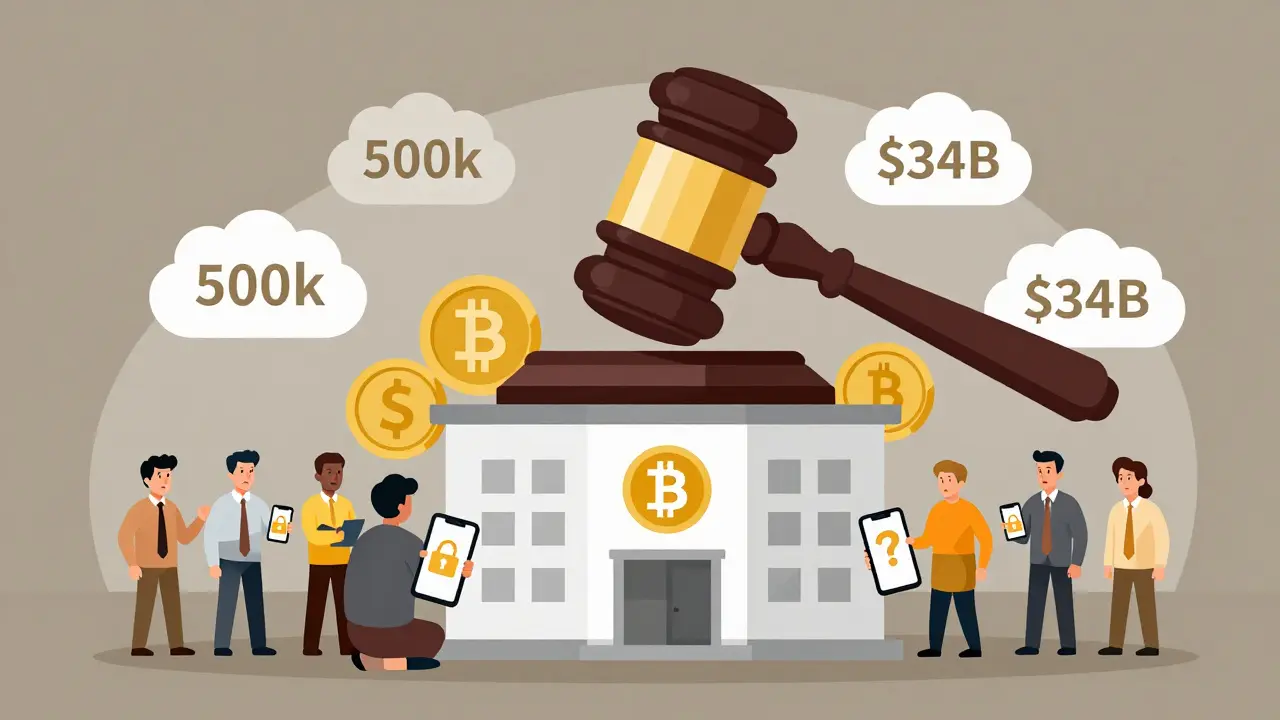
The penalties proposed by the Financial Services Commission (FSC) are severe enough to make any exchange operator sweat. The primary sanction discussed is a six-month suspension of new user registrations. For an exchange like Upbit, which dominates roughly 80% of South Korea's crypto market, stopping growth for half a year is a significant blow. It freezes their ability to capture new retail interest while competitors like Bithumb, a major competing cryptocurrency exchange in South Korea may pick up the slack.
Then there are the fines. The law allows for penalties up to 100 million Korean won (approximately $68,600) per violation. If applied strictly to all 500,000+ cases, the theoretical total reaches $34 billion. Obviously, this is unlikely to be the final bill. Regulatory bodies usually negotiate settlements based on the company's ability to pay and the severity of intent. However, even a fraction of this amount represents a massive hit to Dunamu’s profitability.
Compare this to Binance’s $4.3 billion settlement with U.S. authorities in 2023. That case involved global sanctions evasion and more direct criminal facilitation. Upbit’s case is different-it’s about procedural failure and lack of due diligence rather than intentional conspiracy. This distinction might help Dunamu argue for lower fines, but the reputational damage remains substantial.
What This Means for Traders and Users
If you are an Upbit user, your immediate concern is probably: "Can I still trade?" Currently, existing users retain access to their accounts. The suspension applies only to *new* sign-ups. However, the uncertainty creates anxiety. Social media sentiment analysis shows increased chatter among Korean traders about moving funds to alternative platforms.
Here is what you should consider doing right now:
- Audit your own KYC status: Ensure your profile has clear, original, and up-to-date identification documents. If your ID expires soon, update it immediately. This reduces the chance your account gets frozen during further regulatory sweeps.
- Diversify your holdings: Don’t keep all your eggs in one basket. Consider moving a portion of your assets to other regulated exchanges or self-custody wallets. This protects you if Upbit faces unexpected technical disruptions or stricter temporary blocks.
- Monitor official communications: Ignore rumors on Telegram or Twitter. Stick to official announcements from Upbit and the FSC. Misinformation spreads quickly during crises and can lead to panic selling.
Many users are also looking into international platforms. However, be cautious. Not all offshore exchanges offer the same level of consumer protection or legal recourse as domestic Korean entities. Moving funds abroad introduces new risks, including withdrawal delays and lack of local regulatory oversight.

The Legal Battle Ahead
Dunamu, the parent company of Upbit, has not gone quietly. They filed a lawsuit to challenge the business sanctions, arguing that the penalties are disproportionate and that they have since improved their compliance infrastructure. This legal battle will likely drag on for months, possibly years.
The January 2025 deadline for Upbit’s response to the suspension notice was a critical juncture. Industry observers noted that FSC officials stated "nothing has been decided yet," suggesting ongoing negotiations. This is typical in major regulatory cases. Both sides want to avoid a public relations disaster. A negotiated settlement that includes strict monitoring requirements and moderate fines is often preferable to a hardline stance that could destabilize the entire market.
This case sets a precedent. It signals to other exchanges in South Korea-and potentially in Asia-that regulators will dig deep into historical data during license renewals. The three-year renewal cycle means every exchange needs to maintain impeccable records. There is no hiding behind "we fixed it last month." Regulators want to see consistent, long-term adherence to the Special Financial Transactions Act.
Global Implications for Crypto Regulation
While this is a South Korean story, the ripple effects are global. As the fifth-largest exchange globally by volume, Upbit’s troubles highlight the fragility of centralized exchanges under increasing scrutiny. Other jurisdictions, including the EU and US, are watching closely. If South Korea enforces strict penalties, it validates the approach taken by other regulators.
We are seeing a shift from "wild west" crypto environments to institutional-grade compliance. This is good for long-term stability but painful for short-term convenience. Exchanges must invest heavily in advanced document authentication technologies, multi-layer identity verification, and AI-driven fraud detection. These costs will eventually be passed down to users in the form of higher fees or stricter withdrawal limits.
For the average trader, the takeaway is simple: regulation is here to stay. The days of anonymous, high-risk trading on unverified platforms are ending. Platforms that survive this wave will be those that prioritize security over speed. Those that cut corners will face existential threats.
Will Upbit shut down completely?
It is highly unlikely that Upbit will shut down entirely. The proposed penalty is a six-month suspension of new user registrations, not a revocation of its operating license. Existing users can continue to trade, deposit, and withdraw funds. However, the company faces significant legal and financial challenges that could impact its operations in the long term.
Is my money safe on Upbit despite the violations?
Your funds are generally safe because the violations relate to identity verification processes, not the theft of user assets. Upbit holds user funds in segregated accounts. However, regulatory uncertainty always carries some risk. To mitigate this, consider diversifying your holdings across multiple reputable exchanges or using self-custody wallets.
How can I check if my account was affected?
Upbit has not publicly released a list of affected accounts due to privacy laws. However, if you registered using a photocopy of your ID, a blurred photo, or if your driving license was not verified via the encrypted serial number system, your account may be part of the violation count. Ensure your current profile meets all KYC standards by uploading clear, original documents.
What is the Special Financial Transactions Act?
The Special Financial Transactions Act is South Korean legislation designed to prevent money laundering and terrorist financing. It requires financial institutions, including cryptocurrency exchanges, to report suspicious transactions and strictly verify customer identities. Failure to comply can result in heavy fines, license suspensions, or criminal charges.
Should I move my funds to Bithumb or another exchange?
Diversification is a prudent strategy during times of regulatory uncertainty. While Bithumb and other domestic exchanges are also subject to the same regulations, spreading your assets reduces the impact of any single platform's issues. Always research the compliance record and security measures of any alternative exchange before transferring funds.
When will the final decision on penalties be made?
The timeline depends on the outcome of Dunamu's lawsuit and negotiations with the FSC. While initial deadlines were set for early 2025, legal proceedings often extend this process. Final determinations regarding fines and the duration of the suspension could take several months. Keep an eye on official statements from both Upbit and the Financial Services Commission.
Caique Muniz
May 17, 2026 AT 17:44lol another exchange gets caught holding hands with the law. its always the same story. they promise security then sell your data or just ignore rules bcuz compliance is boring af.
robert Whitehead
May 19, 2026 AT 13:24You people are absolutely deluded if you think this is just a "boring" oversight. This is institutional negligence on a massive scale. The fact that Upbit accepted photocopied IDs and ignored encrypted serial numbers on 190,000 driving licenses shows a complete disregard for the Special Financial Transactions Act. It’s not about convenience; it’s about whether you want to be part of a money laundering ring or not. The distinction between the 500,000 actionable violations and the 9 million historical gaps is crucial because it proves they didn’t just make mistakes-they lacked the internal systems to maintain continuous oversight. If you’re still keeping all your funds on Upbit without diversifying, you’re not an investor, you’re a gambler who doesn’t understand risk management. Wake up.
Bradley Geldenhuys
May 20, 2026 AT 12:58hey robert calm down dude. everyone makes mistakes right? i mean 500k out of millions isnt that bad probabaly. we shouldnt be so harsh on them. maybe they were just busy helping people trade. lets be inclusive and supportive here instead of attacking.
robert Whitehead
May 20, 2026 AT 17:01Supportive? Of what? Criminal negligence? Bradley, your optimism is blinding you to reality. This isn't a clerical error; it's a systemic failure that endangers the entire financial ecosystem. When you accept blurry photos and deepfakes as valid ID, you aren't "helping people trade," you're enabling identity theft and fraud. The FSC isn't proposing fines out of malice; they are enforcing the rule of law. Your attitude of "everyone makes mistakes" is exactly why platforms like Upbit get away with cutting corners until regulators step in. You need to stop being a cheerleader for incompetence and start understanding the severity of KYC protocols. It’s not personal, it’s professional integrity.
Mike S
May 22, 2026 AT 05:31Oh wow, look at Mr. Know-It-All Robert again, preaching his gospel of compliance like he invented it. 🙄 You act like you’ve never used a crypto exchange yourself. The whole point of crypto was freedom from this bureaucratic nightmare! Now we have suits in Seoul telling us how to upload our driver’s licenses properly. And don’t even get me started on the fines-$34 billion theoretical total? Please. They’ll settle for peanuts. Meanwhile, regular users like me are stuck watching our assets freeze while these big companies play legal chess. It’s dramatic, it’s messy, and honestly? I’m just tired of the constant drama. Just give me my Bitcoin and leave me alone!
Michael Berggren
May 23, 2026 AT 11:50I think we can find a silver lining here! 😊 While the situation is serious, it actually pushes the industry toward better security. Think about it: advanced document authentication and AI-driven fraud detection will become standard. That means fewer scams in the long run! 🚀 For those worried, I’d suggest auditing your own KYC status right now. Update your ID if it’s expiring, and maybe consider moving some funds to a self-custody wallet just to feel safer. Diversification is key! Let’s stay positive and help each other navigate these changes. We’re building a more stable future together! ✨
Kiran CS
May 25, 2026 AT 09:32How utterly pedestrian. The masses flock to exchanges like Upbit with their photocopies and blurred images, expecting the digital equivalent of a bank vault while contributing nothing but chaos. One must appreciate the sheer audacity of Dunamu to believe such laxity could go unnoticed indefinitely. The Special Financial Transactions Act exists for a reason, yet these individuals treat it as a suggestion rather than a mandate. It is truly tragic to witness the decline of standards when convenience becomes the only virtue worth pursuing. Perhaps if users demanded excellence rather than speed, we would not find ourselves in this rather undignified predicament.