Web3 Social Media Platforms in 2025: The New Era of Digital Ownership
 Mar, 27 2026
The Shift from Renting to Owning Your Online Life
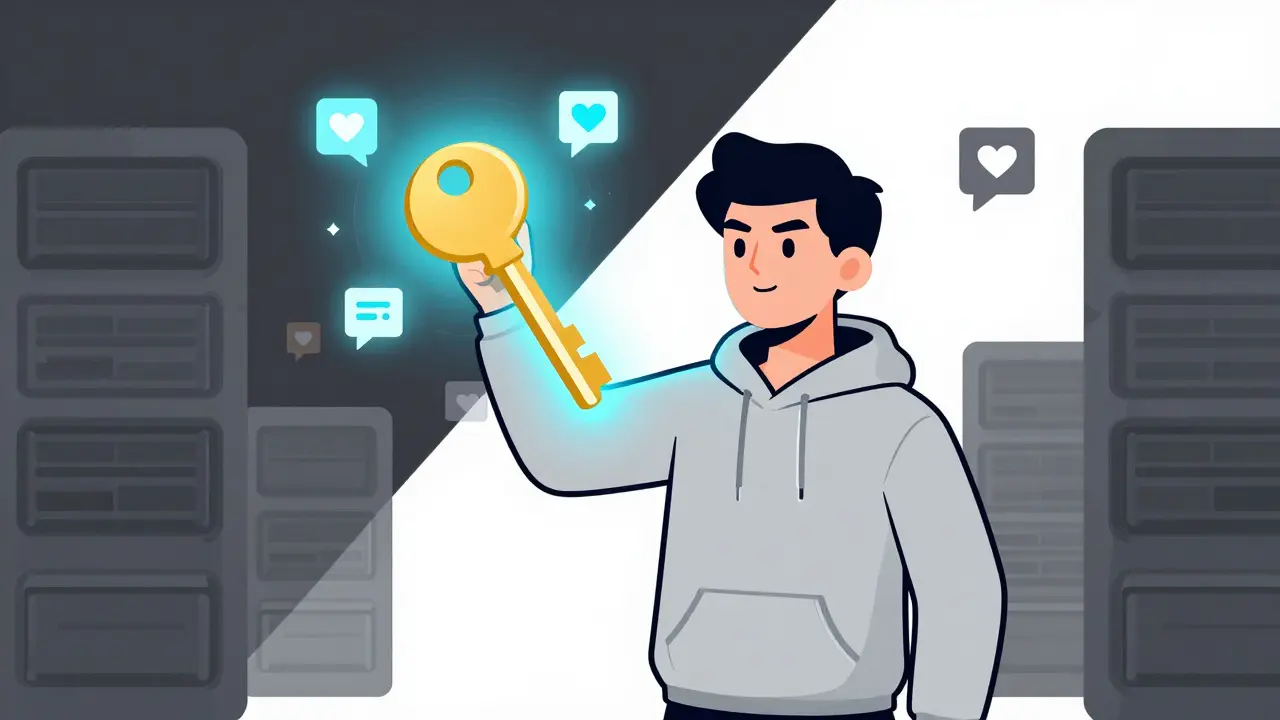
For the last decade, you've likely given away your most valuable digital asset-your attention-and the second most valuable one-your data-for free. In 2025, the landscape finally shifted enough that users can actually keep their keys to the kingdom. We aren't talking about minor tweaks to privacy settings anymore. We are talking about Web3 Social Media Platforms which represent a fundamental rewrite of how social interaction works online. By mid-2025, the conversation moved past hype cycles into practical utility. You might remember logging into Facebook or X (formerly Twitter) where your posts belonged to the company, subject to their whims and ads. Now, protocols allow you to own your follower graph and migrate it wherever you choose.
This transition wasn't sudden. It built on years of development in blockchain infrastructure. What started as a niche experiment for crypto enthusiasts has matured into a viable alternative for creators tired of demonetization and censorship. If you are trying to decide whether to invest your time in these new networks, understanding the 2025 landscape is critical. The numbers tell a compelling story: the market grew from roughly $7.2 billion in 2024 toward a trajectory targeting hundreds of billions, signaling serious institutional backing behind the idea of user-owned networks.
How These Networks Actually Work
To understand why these platforms feel different, you need to grasp the underlying technology without getting bogged down in jargon. Traditional social media, often called Web2, stores everything on centralized servers owned by a single corporation. If that server goes down or bans you, your identity vanishes. Web3 uses Blockchaina distributed ledger technology that records transactions across many computers so that the record cannot be altered retroactively.
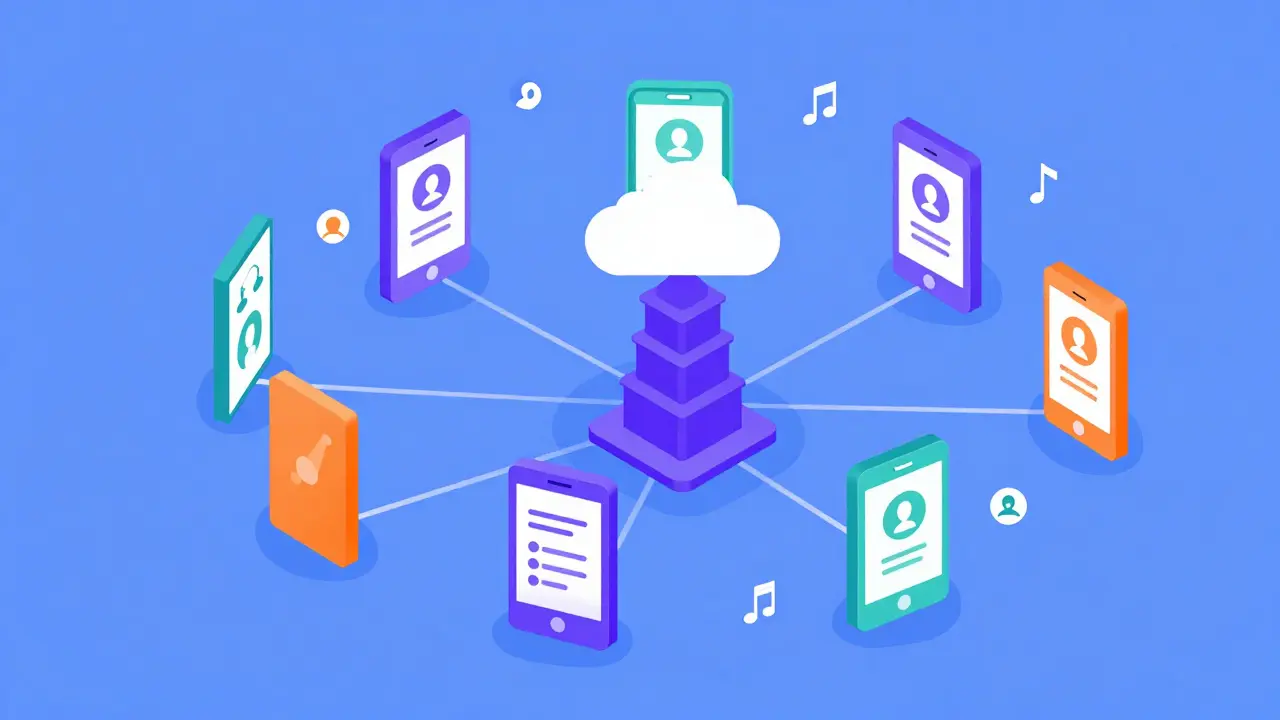
In this new model, your identity isn't tied to an email address verified by Google. Instead, you use a cryptographic wallet as your login. When you post content, it isn't sitting on Amazon Web Services; it is often distributed across decentralized storage networks. This architecture creates what developers call 'interoperability.' Think of it like bringing your phone number when you switch carriers, except you can take your followers, likes, and comments with you if you leave one app for another. The data follows you, not the other way around.
Leading Platforms Shaping the 2025 Landscape
Not all Web3 platforms look the same. Some are direct replacements for Twitter, while others focus on music or long-form publishing. In 2025, several players emerged as dominant standards worth watching.
Lens Protocol functions less as an app you log into directly and more as the plumbing underneath dozens of applications. Built on the Polygona Layer-2 scaling solution for Ethereum that processes thousands of transactions per second with minimal gas fees blockchain, it lets you create posts once and share them everywhere. Creators love this because it solves the problem of being locked into one specific site.
Farcaster became a standout success story. By late 2025, it had demonstrated significant growth, reaching over 50,000 total users. It operates on an open protocol model similar to the way email works-you can use any client to access the network. This means if you don't like one version of the Farcaster interface, you can download another app and still see the same friends and posts. The barrier to entry remains higher than Web2 due to the need for a wallet, but the community engagement levels are remarkably high.
Audius took a different approach by focusing specifically on music. Unlike SoundCloud or Spotify, Audius allows artists to mint albums as Non-Fungible Tokens. This creates a permanent, verifiable link between the artist and the work. They attracted over 7 million active users by offering features that Web2 music streaming services simply couldn't replicate regarding revenue transparency.
| Platform | Primary Focus | Underlying Chain | User Base Status (2025) |
|---|---|---|---|
| Lens Protocol | Social Graph Infrastructure | Polygon | Developer & Creator Hub |
| Farcaster | Text/Microblogging | Optimism/Ethereum | Growing Community (50k+) |
| Audius | Music Streaming | Ethereum/Mumbai | 7 Million Active Users |
| Mastodon | Decentralized Messaging | ActivityPub (Federated) | Stable, Large Network |
While Mirror focuses on long-form blogging and journalism, allowing writers to tokenize articles for sale, Mastodon provides a federated alternative that predates true blockchain integration but shares the philosophy of no single owner controlling the data. Each of these serves a specific need, showing that Web3 isn't just one product but a collection of tools working together.
Financial Benefits Beyond Ad Revenue
One of the biggest draws in 2025 is the ability to monetize participation directly. On traditional platforms, you build value for the company, and they sell your data to advertisers. Web3 introduces tokenomics into the mix. When you curate content, moderate discussions, or create viral posts, the platform can reward you with native tokens automatically.
This doesn't mean everyone gets rich overnight. However, it shifts the economic incentive structure. Instead of passive consumption driving profit for a CEO, active participation drives value for the community. You might earn small fractions of a token for verifying bots or moderating spam. These rewards accumulate for power users who treat their social presence as a business. Furthermore, Non-Fungible Tokens (NFTs)digital assets that verify ownership of unique items, often used for collectibles, art, or membership passes allow for membership tiers where fans buy access to exclusive groups or content, creating a direct relationship between creator and supporter without a middleman taking a 30% cut.
The Hidden Challenges of Early Adoption
Despite the potential, the road to mass adoption has been bumpy. If you try to onboard a non-tech-savvy friend to Farcaster or Lens, you will immediately hit friction points. The first hurdle is the wallet. Managing private keys feels like managing bank accounts. Losing a password means losing your identity forever, unlike recovering a forgotten Facebook login via email.
User interface (UI) design also lags behind. Many Web3 apps prioritize functionality over aesthetics, resulting in dashboards that look more like spreadsheets than streamlined social feeds. Mobile experiences, in particular, struggle to compete with the polished feel of Instagram or TikTok. As of 2025, most major projects were actively working on 'smart wallets' and 'account abstraction' to hide this complexity, making the experience seamless, but the transition period is frustrating for average consumers.
There is also the issue of content moderation. In a truly decentralized system, no single admin can ban bad actors globally. Some platforms rely on curation lists where users decide who they see, while others implement reputation systems. This freedom protects free speech, but it means you might encounter toxic behavior more frequently until community norms solidify.
Infrastructure Keeping the System Running
You can't have social media without storage. Storing petabytes of images and videos on a public blockchain is expensive and slow. To solve this, platforms utilize decentralized storage solutions like Filecoina decentralized storage network designed to store data cost-effectively and permanently. By early 2024, Filecoin offered over 2.5 exabytes of storage capacity. This ensures that even if a web interface disappears, the data itself survives on the distributed network.
Virtually social spaces also play a role. Projects like Decentralanda virtual reality platform powered by blockchain where users can buy land and create 3D experiences expanded their social graphs beyond simple chat rooms to immersive worlds. While not strictly 2D social media, they represent the next evolution of connection, moving from scrolling screens to walking virtual rooms. The diversity of blockchains supporting these apps-ranging from Ethereum to Solana, Avalanche, and Base-provides options for developers choosing where to build their next social dApp.
Is Mainstream Adoption Coming?
The growth statistics are undeniable. Analysts project the market could reach $471 billion by 2034. However, hitting that number requires solving the 'last mile' problem. Currently, these platforms serve Web3 natives-developers, creators, and early adopters. For the general public, the value proposition must become obvious without requiring technical knowledge.
We are seeing signs of progress. Account abstraction technology is evolving to allow users to login with a biometric scan or email while keeping the backend security of a blockchain wallet hidden. As mobile-first designs improve, the gap narrows. If Web3 platforms can offer the simplicity of WhatsApp with the ownership of a personal website, the tipping point may arrive sooner than expected.
Can I move my followers from a Web3 platform to another app?
Yes, because your identity is stored on the blockchain, not on a specific database. If you use the Lens Protocol, for instance, your follower graph is portable. You can change the application front-end without losing your connections, which is impossible on Facebook or X.
Do I need cryptocurrency to use these platforms?
You generally need a digital wallet, which involves some form of crypto asset like Ethereum or MATIC, though many platforms now offer 'gasless' sign-ups covered by the network or sponsors. However, setting up a basic account usually requires owning a small amount of the chain's native token.
Is my data safer on Web3 than Facebook?
Your data is encrypted and distributed, meaning no single corporate server holds a copy they can sell. Security depends on how well you protect your private keys. If you lose your keys, no support team can recover your account, which is a risk trade-off compared to Web2.
How do creators get paid on Audius or Lens?
Creators typically earn through token rewards funded by platform treasuries, grants, or direct sales. Fans can tip in crypto or purchase NFT memberships. Payments are processed instantly on-chain without waiting for monthly payout cycles like Stripe or PayPal.
Will Web3 replace Web2 entirely?
Likely not in the near term. Web2 offers superior ease of use and speed for casual browsing. Web3 offers ownership and monetization. Expect a hybrid future where both coexist, or Web2 companies integrate blockchain features like digital ownership into their existing ecosystems.
Alex Kuzmenko
March 27, 2026 AT 09:19Thier is so much talk about web three but the real world stuff still feels clusmy for most people. I think the tech is great but the UX needs work before it takes off. Hope we see better wallets soon so normal folk can try without losing money.
Elizabeth Akers
March 27, 2026 AT 18:08totally agree with you actually i use lens sometimes and love portability
its nice to know your followers stick even if app changes
just wish it was easier to setup honestly
Alex Lo
March 28, 2026 AT 10:22So many people get excited about decentraliztion but they forget about the gas fees involved when trying to mint somthing cool. It feels like everyone is rushing into crypto without really understading how the ledger works underneat everything. I rememberring projects fail because nobody wanted to manage ther own private keys propely during the last boom cycle. The articel mentions Farcaster growing fast whitch is amazing for the ecosistem development over the past year. We need more tools that handle storage offchain otherwice the cost becomes prohibitive for regular posts. Filecoin sounds expnsive though compared to what AWS offers right now for simple image hostign solutions. If you look at the tokenomics rewards then participations matters more than just viewing content passive. Creators deserve to owne ther audience instead of renting it from big tech monopollys forever. This shft might take decades though sence older generations are hesitent about secruity risks online. Security is the biggest barrir for mass adoption right now besides learning how to backkup seed phrases saffly. We need smart wallets that abstrack away this comlexity for sure so grandma can joyn too. Some platforms like Audius ar doing reall well with musci streamng which shows utilty beyong social networkign graphs. Interoperability is the kay feature missing from legasy systems that killed inovatin in previoud years. Eventualy these netwrks will become standerd infrastucture for digitl identiti verifiction globaly. I hope devloprs focus on mobiel experiensce next since deskop apps are borring for daily usage habs. It will chang everyting if we solve the modration issie without centralizd controul mechanims interferiing.
Jay Starr
March 30, 2026 AT 06:41This narrative ignores the catastrophic failure rate of early adopter tokens.
Matt Bridger
March 31, 2026 AT 22:25The premise assumes mass compliance with cryptographic standards which is statistically improbable for general populations
most individuals lack requisite financial literacy for self custody models
elitist approach to digital rights remains flawed until infrastructure improves
current implementations suffer from excessive friction regarding onboarding processes
true decentralization often leads to governance paralysis within community protocols
web two efficiency cannot be ignored by proponents seeking total disruption of existing models
I remain skeptical regarding projected market valuations without clear adoption metrics
technical specifications described herein overlook significant latency issues inherent in distributed ledgers
pragmatic evaluation suggests hybrid systems will dominate rather than pure decentralized architectures
investment in traditional equity markets carries significantly lower risk profiles than venture capital in nascent sectors
intellectual discourse surrounding blockchain often degenerates into speculation driven by hype cycles rather than utility
Lisa Miller
April 2, 2026 AT 02:44I see where you are coming from regarding the hurdles we face right now
however i think its important to stay positive about the progress being made everyday
we have already seen huge improvements in account abstraction technology since last year
many creators are finding new ways to monetize their work without middleman fees eating profits
lets not lose sight of the potential benefits for digital ownership and privacy rights
i am confident the next wave of apps will smooth out those rough edges for everyone
staying open minded helps us adapt to these changing technologies faster than expected
community support makes all the difference when navigating complex wallet setups alone
we are building something special together and mistakes are just part of the process
look forward to seeing how Lens evolves in the coming quarters for sure