What Are Digital Signatures in Cryptocurrency? A Simple Breakdown
 Dec, 14 2025
Digital Signature Simulator
How This Works
This simulator demonstrates how digital signatures secure cryptocurrency transactions. Just like in the article, your private key creates a signature that proves you authorized the transaction, while the network verifies it using your public key.
Transaction Details
Verification Status
Tamper Test
Change the transaction details below to see how the signature detects tampering.
When you send Bitcoin or Ethereum, how does the network know it’s really you? No ID card. No password. No bank clerk checking your face. Just a string of numbers and letters flying across the internet. The answer lies in digital signatures-the invisible lock and key that make cryptocurrency secure.
How Digital Signatures Work
Think of a digital signature like a handwritten signature, but way stronger. Your handwritten signature can be copied. A digital signature? It’s mathematically impossible to fake without the right secret. It uses something called asymmetric cryptography. That sounds fancy, but it’s just a system with two keys: one private, one public. Your private key is like the password to your safe. Only you have it. Your public key is like the lock on your safe. Anyone can see it, even strangers. They can’t open it, but they can check if something was locked by you. Here’s how it works step by step:- You want to send 0.5 BTC to someone.
- Your wallet takes the transaction details-how much, who to, when-and turns them into a unique digital fingerprint called a transaction hash.
- Using your private key, your wallet creates a digital signature for that hash. This signature is a unique code that only your private key can produce.
- You broadcast the transaction, including the signature and your public key, to the network.
- Every node on the network uses your public key to check the signature. If it matches, they know you signed it. If it doesn’t, they reject it.
Why Digital Signatures Are Essential
Three things make digital signatures the backbone of crypto:- Authentication - It proves the transaction came from you. Not someone pretending to be you. Not a hacker. You.
- Integrity - If even one digit in the transaction changes-say, someone tries to alter the amount from 0.5 BTC to 5 BTC-the signature becomes invalid. The network instantly rejects it.
- Non-repudiation - You can’t say, “I didn’t send that.” The math says otherwise. The signature is tied to your private key, and only you control it.
What Happens If Someone Steals Your Private Key?
This is the big risk. Digital signatures only work if your private key stays secret. If someone gets it-through a phishing scam, a hacked device, or a poorly stored backup-they can sign transactions as you. No warning. No alert. The network doesn’t care who you are. It only checks if the signature matches the public key. If it does, the transaction goes through. That’s why wallet security matters more than anything. Storing your private key on a paper wallet, a hardware device like a Ledger or Trezor, or an encrypted offline drive is far safer than keeping it on your phone or computer. Once it’s gone, your funds are gone. There’s no “forgot password?” button.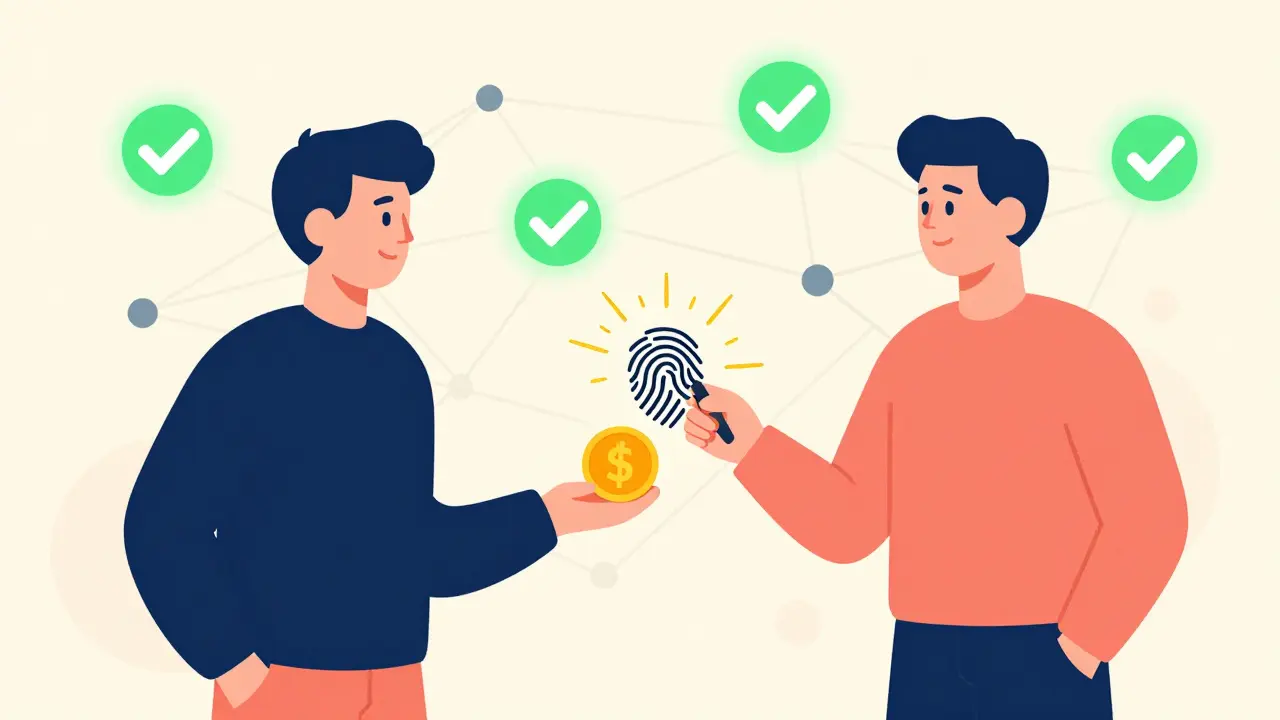
Digital Signatures vs. Traditional Signatures
| Feature | Digital Signature | Handwritten Signature | |---------|-------------------|------------------------| | Forgery | Mathematically impossible without private key | Easy to copy or fake | | Verification | Instant, automated, network-wide | Requires human review or notary | | Tamper-proof | Any change breaks signature | Can be altered after signing | | Non-repudiation | Absolute - math proves ownership | Often disputed in court | | Legal status | Legally binding in U.S. and EU | Legally binding by tradition | Digital signatures aren’t just more secure-they’re more reliable. You don’t need a notary. You don’t need a courier. The blockchain does it all.How Bitcoin and Ethereum Use Them
In Bitcoin, every transaction must be signed with the sender’s private key. The signature is checked against the public key linked to the sending address. If it passes, the transaction is added to the next block. Ethereum works the same way, but adds smart contracts. When you interact with a contract-say, swapping tokens on Uniswap-the system still requires a digital signature to prove you authorized the action. Even if you’re not sending ETH, you’re still signing a message that says, “Yes, I want this contract to run.” This is why you see wallet prompts saying, “Sign this transaction.” You’re not approving a payment. You’re generating a digital signature that proves you’re the one asking for it.Public Key Certificates and Trust
In traditional systems like email or websites, you often see digital certificates issued by companies like DigiCert or GlobalSign. These certificates bind a public key to a person or company’s identity. They’re used to prove you’re visiting the real PayPal site, not a fake one. In cryptocurrency, you don’t need those. There’s no central authority. Your public key is your identity. Your address-like 0x742d...a9b1-is just a hashed version of your public key. You don’t need a certificate. You just need to keep your private key safe. This is part of what makes crypto decentralized. No middleman. No issuer. Just math.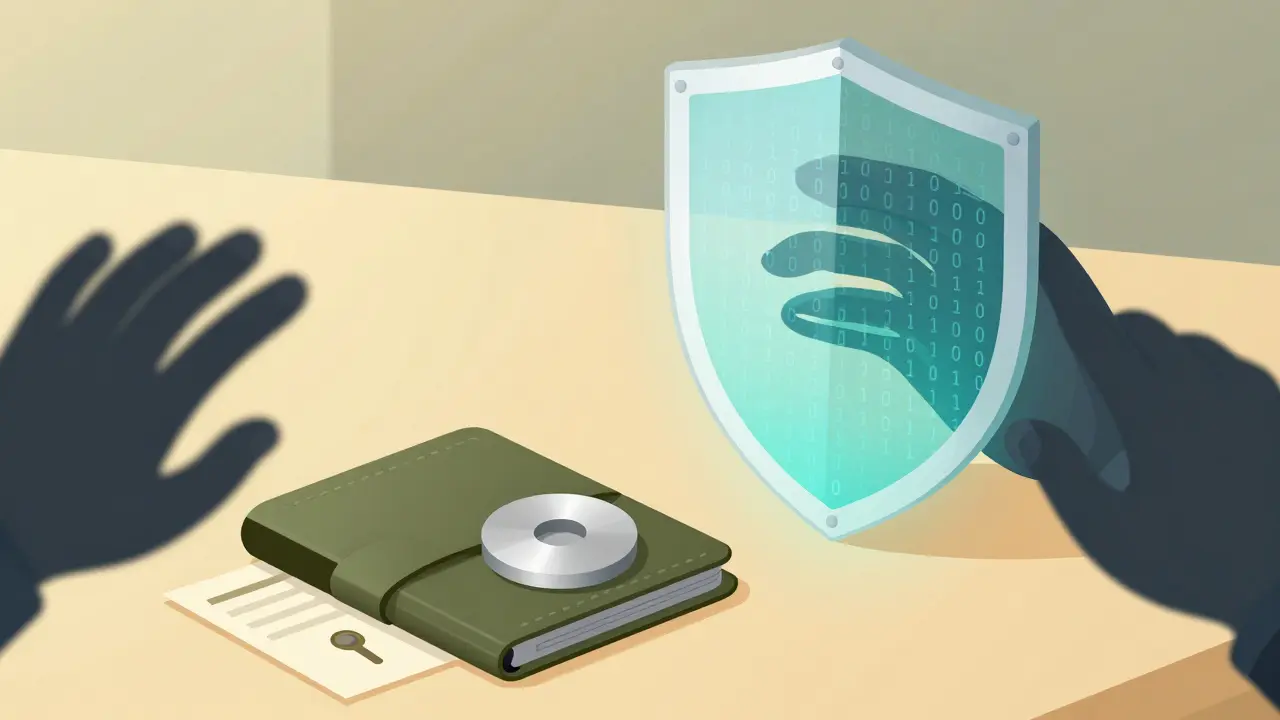
What If Someone Guesses Your Private Key?
Short answer: They won’t. Private keys are 256-bit numbers. That means there are 2²⁵⁶ possible combinations. To put that in perspective: if every atom in the observable universe (about 10⁸⁰ atoms) was a computer trying one billion keys per second, it would still take longer than the age of the universe to guess one. The system isn’t about being unbreakable. It’s about being practically unbreakable. That’s good enough.Why This Matters for You
You don’t need to understand elliptic curve cryptography to use crypto. But you do need to understand one thing: your private key is your money. If you lose it, you lose access. If someone steals it, they own it. No bank can reverse it. No government can freeze it. No support team can help you. That’s why learning how to store your keys safely isn’t optional. It’s survival.Final Thought
Digital signatures are the quiet hero of cryptocurrency. They don’t make headlines. They don’t have flashy logos. But without them, crypto wouldn’t work. No trustless system. No peer-to-peer transfers. No blockchain. They turn abstract math into real-world security. And that’s what lets you send value across the world with nothing but a phone and a secret.Can digital signatures be forged in cryptocurrency?
No, not if the private key is kept secure. Digital signatures use math that makes it computationally impossible to create a valid signature without the private key. Even if someone sees a signature, they can’t reverse-engineer the key from it. The only way to forge a signature is to steal the private key.
Do I need to sign every crypto transaction?
Yes. Every time you send crypto, interact with a smart contract, or even claim airdrops, your wallet will ask you to sign a message. That signature proves you authorized the action. Skipping it means the transaction won’t be processed.
Can I use the same private key for multiple wallets?
Technically yes, but you shouldn’t. Using one key across wallets increases risk. If one wallet gets compromised, all your funds tied to that key are exposed. Best practice: use a unique key per wallet or account, especially for large holdings.
What’s the difference between a public key and a wallet address?
Your public key is a long string of numbers generated from your private key. Your wallet address is a shorter, hashed version of that public key-like a nickname for your public key. You share your address to receive funds. No one can derive your public key from your address, and no one can get your private key from either.
Are digital signatures legally recognized?
Yes. In the U.S., EU, and many other countries, digital signatures have the same legal standing as handwritten ones under laws like the ESIGN Act and eIDAS. This applies to contracts, documents, and even blockchain-based agreements-so long as the signature is properly generated and verified.
Can I change my private key after creating a wallet?
No. Your private key is permanently tied to your wallet address. If you want a new key, you must create a new wallet. Any funds sent to your old address will still be accessible only with the old private key. Never delete your old key until you’ve moved all funds to the new one.
Andy Walton
December 16, 2025 AT 02:06Candace Murangi
December 17, 2025 AT 07:49Albert Chau
December 19, 2025 AT 02:05Madison Surface
December 19, 2025 AT 19:55Tiffany M
December 21, 2025 AT 14:01