What is Alchemix (ALCX) crypto coin? Explained with real use cases and how it works
 Mar, 12 2026
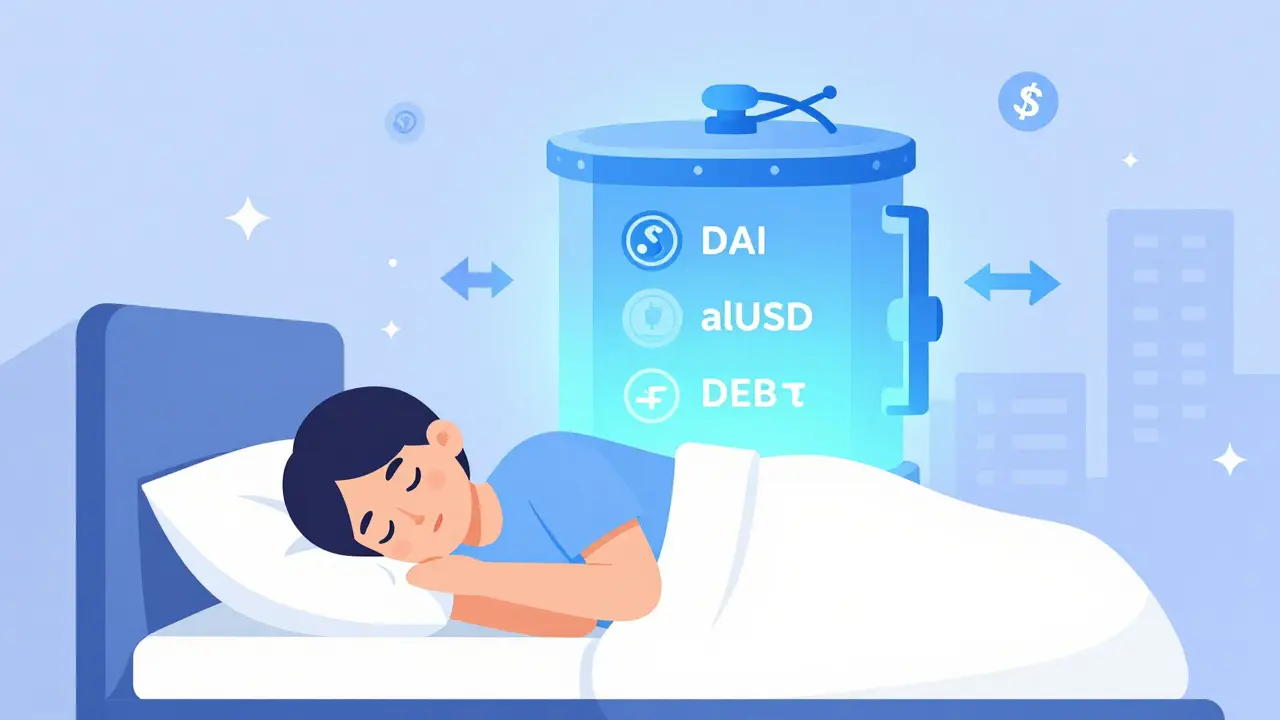
Most crypto coins are just digital assets you buy and hold. But Alchemix (ALCX) is different. It’s not a coin you trade for fun-it’s a working system that pays off your own loans for you. Imagine borrowing money against your crypto, then watching it slowly pay itself back without you lifting a finger. That’s Alchemix. No monthly payments. No panic when prices drop. No liquidations. Just your money working in the background.
How Alchemix turns your crypto into a self-paying loan
Here’s how it works in plain terms: You deposit your DAI (a stablecoin pegged to $1) or ETH into Alchemix. In return, the system gives you synthetic tokens-alUSD if you used DAI, or alETH if you used ETH. These aren’t new currencies. They’re digital receipts that represent your future yield. You can spend alUSD like regular money. Trade it. Use it in other DeFi apps. Even stake it elsewhere.
But here’s the magic: while you’re using alUSD, the DAI you originally deposited is already earning yield-usually through Yearn.Finance. That yield doesn’t go to you directly. It automatically flows back into your loan, paying it down over time. So if you borrowed 100 alUSD, within months, you might owe only 80. Then 60. Then 0. All without you ever sending a single transaction. The system does it for you.
This is the opposite of how most DeFi loans work. In platforms like Aave or Compound, if your collateral value drops too much, your position gets liquidated. You lose everything. Alchemix removes that risk entirely. Because repayment comes from yield, not from price swings, your loan is immune to market volatility.
The three engines behind Alchemix
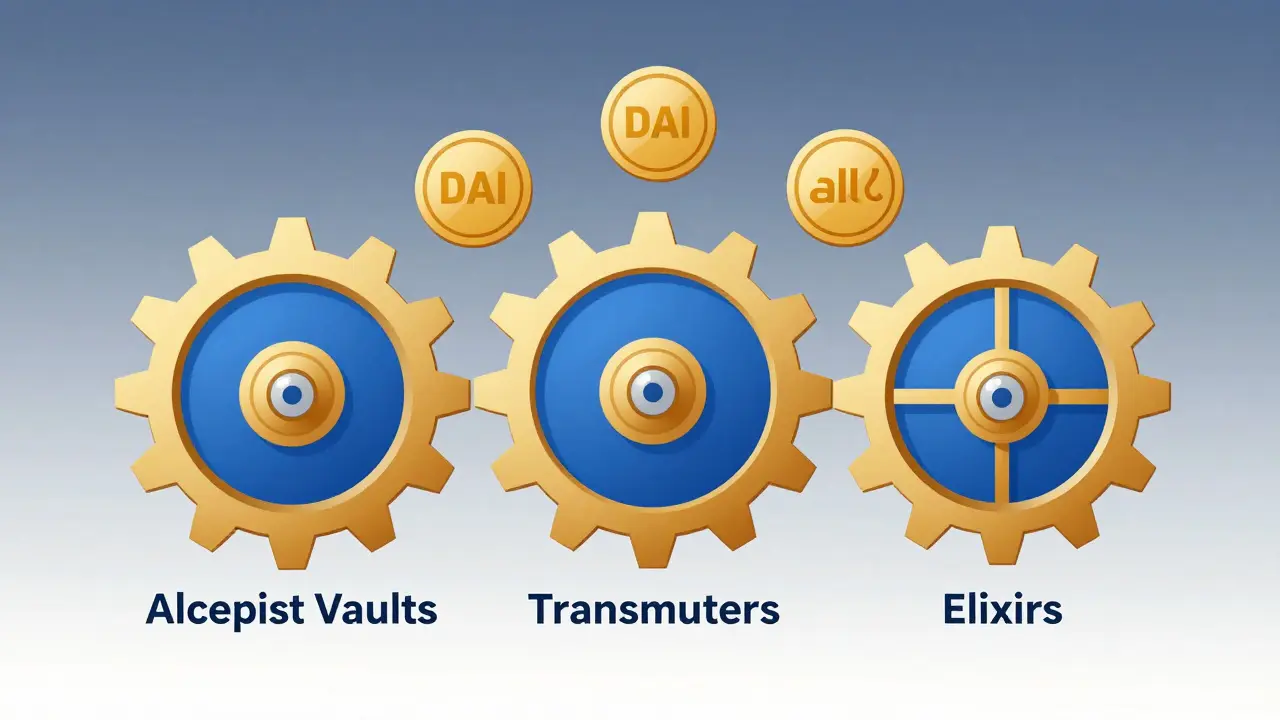
Alchemix doesn’t work by accident. It’s built on three smart contract systems that talk to each other like gears in a clock.
- Alchemist Vaults: These are where you deposit your DAI or ETH. They lock your assets, start generating yield, and issue your alUSD or alETH.
- Transmuters: These let you convert your alUSD back to DAI at a 1:1 rate. If you ever want your original money back, you send alUSD to the Transmuter, and it burns the alUSD while sending you DAI. It’s like cashing a check-no fees, no delays.
- Elixirs: These are automated market operations (AMOs) that own liquidity pools on decentralized exchanges. They earn trading fees and use that money to stabilize the alUSD peg and fund protocol growth. Think of them as the profit engine that keeps everything running.
All three work together to make sure alUSD stays worth exactly $1, even when the rest of crypto is swinging up and down. That stability is what lets people trust it as real money.
What is ALCX, really?
ALCX isn’t a currency you spend. It’s the voting card for Alchemix’s community. Every ALCX token gives you one vote in the Alchemix DAO-the decentralized autonomous organization that runs the protocol. If someone proposes a change-like increasing loan limits, switching yield strategies, or allocating funds to new development-you get to vote on it. The more ALCX you hold, the more influence you have.
ALCX is also an incentive. People who provide liquidity-like depositing alUSD into a pool on a DEX-earn new ALCX tokens as rewards. It’s how the protocol attracts early users. As of 2025, the protocol mints 2,200 ALCX per week. There’s no hard cap on supply, but emissions slow down over time, which means inflation drops. It’s designed to become more scarce, not more abundant.
Here’s something most people miss: 10% of all Yearn.Finance profits generated by Alchemix’s vaults go directly to the Alchemix DAO treasury. That’s tens of thousands of dollars every month. The community decides how to spend it-paying developers, funding research, or even supporting other DeFi projects. It’s not a company. It’s a cooperative.
Why alUSD matters more than you think
alUSD isn’t just a token. It’s a new kind of financial tool. Because it’s backed by yield-not by price-it behaves differently than other stablecoins. You can use alUSD to borrow more crypto, then deposit that crypto into another protocol to earn more yield. It’s a loop: borrow alUSD → buy ETH → deposit ETH → earn yield → repay alUSD → repeat.
This makes Alchemix ideal for people who want to leverage their holdings without getting liquidated. You can amplify your position safely. And since alUSD is pegged to $1, you can use it anywhere-unlike volatile assets like BTC or ETH. You can even use it to pay for services, buy NFTs, or send to friends. It’s stable. It’s programmable. And it’s yours.
Who uses Alchemix-and why?
Alchemix isn’t for everyone. But it’s perfect for three kinds of people:
- Long-term crypto holders: You believe in ETH or DAI long-term, but you need cash now. Instead of selling, you lock it up and get alUSD. Your assets keep earning, and your loan disappears on its own.
- Yield farmers: You want to maximize returns without constant monitoring. Alchemix lets you earn yield on your collateral, then use the synthetic token to earn more yield elsewhere. It’s yield stacking, automated.
- DeFi skeptics: You’ve been burned by liquidations before. You don’t want to watch charts 24/7. Alchemix removes the stress. Your loan pays itself. You sleep better.
As of early 2026, over 14,000 people hold ALCX. That’s not a huge number compared to Bitcoin, but it’s a tight, active community. Most users are experienced DeFi participants who value control, safety, and automation.

What’s next for Alchemix?
The team is working on Alchemix v3, which will bring major upgrades. Higher loan-to-value ratios mean you can borrow more against your collateral. Better peg stability means alUSD will stay closer to $1, even under extreme market pressure. And new yield strategies will let users choose between conservative (low risk) and aggressive (high yield) options.
There’s also talk of expanding beyond Ethereum-possibly to Layer 2 networks like Arbitrum or zkSync. That would mean lower fees and faster transactions. The community votes on all of it. If you hold ALCX, you’re not just watching. You’re shaping the future.
Price and market reality (as of March 2026)
ALCX is trading around $5.48. That’s down from its all-time high, but not unusual for a governance token in a bear market. Daily volume hovers around $2.4 million. That’s modest, but steady. Some analysts predict ALCX could reach $200-$700 if the protocol scales and adoption grows-but that’s speculative. What’s real is this: ALCX’s value comes from utility, not hype. If Alchemix keeps delivering on its promise-self-repaying loans that work without user intervention-it will keep attracting users. And users mean demand for ALCX.
Forget price predictions. Ask yourself: Would you rather have a coin that needs constant babysitting… or one that pays off your debt while you sleep?
Is Alchemix safe to use?
Alchemix is as safe as the smart contracts it runs on. It’s been audited multiple times by top firms like CertiK and Hacken. The protocol has no centralized control-no CEO, no team that can freeze your funds. Your assets are locked in open-source code. But no DeFi project is 100% risk-free. Bugs, exploits, or black swan events can still happen. Always start small. Never invest more than you can afford to lose.
Can I lose money using Alchemix?
You won’t lose money from liquidation-that’s the whole point. But you can still lose if the yield strategy fails. For example, if Yearn.Finance had a major exploit and stopped generating returns, your loan wouldn’t pay down. Or if alUSD temporarily lost its peg, you might get less DAI when you redeem it. The system is designed to minimize these risks, but they exist. Always understand the yield source before depositing.
Do I need to repay my loan manually?
No. That’s the whole innovation. The yield from your deposited collateral automatically pays down your alUSD debt over time. You don’t need to send transactions, make payments, or track due dates. Your loan repays itself. You can even withdraw your collateral at any time-but if you do, you’ll need to repay the remaining alUSD balance first.
How is alUSD different from DAI or USDC?
DAI and USDC are backed by reserves-cash, bonds, or other crypto. alUSD is backed by yield. It doesn’t hold dollars. It holds your DAI or ETH, and earns yield from them. That yield becomes the repayment engine. So while DAI is stable because it’s over-collateralized, alUSD is stable because it’s self-repaying. It’s a different kind of stability.
Can I earn ALCX without depositing crypto?
Yes. You can earn ALCX by providing liquidity to alUSD/DAI pools on decentralized exchanges like Curve or Uniswap. The protocol rewards liquidity providers with new ALCX tokens. You don’t need to borrow or deposit collateral-you just need to add alUSD and DAI to a liquidity pool. This is how many users build up their ALCX holdings over time.
Alchemix doesn’t try to be everything. It doesn’t chase trends. It solves one real problem: how to borrow against your crypto without the fear of losing it. And it does that with elegance. No panic. No babysitting. Just money working quietly in the background. If you’ve ever felt trapped by DeFi loans, Alchemix might be the first protocol that truly lets you breathe.
ann neumann
March 13, 2026 AT 03:14William Montgomery
March 14, 2026 AT 09:05Mara Alves Mariano
March 14, 2026 AT 17:12Adam Ashworth
March 14, 2026 AT 18:11Sharon Tuck
March 16, 2026 AT 12:38Jenni James
March 18, 2026 AT 04:22