What is AlphBanX (ABX)? A Guide to the Alephium Lending Protocol
 Aug, 5 2026
Have you ever wondered how to borrow money against your crypto without selling it? That’s exactly what AlphBanX is designed for. It’s a decentralized lending platform built specifically on the Alephium blockchain. Instead of dealing with banks or centralized exchanges, you interact directly with smart contracts. This gives you control over your assets and interest rates.
If you are new to the world of DeFi (Decentralized Finance), this might sound complicated. But think of it like a pawn shop where you keep the key to the safe. You put up collateral, get cash in return, and pay back the loan plus interest to get your collateral back. The twist here is that everything happens on the blockchain, automatically and transparently.
How AlphBanX Works: Borrowing on Your Terms
The core function of AlphBanX is lending. Specifically, it allows users to borrow a stablecoin called AlphBanX Dollar (ABD) using Alephium (ALPH) tokens as collateral.
Here is the process broken down simply:
- Deposit Collateral: You send ALPH tokens into the AlphBanX protocol. Let’s say you deposit 2,000 ALPH.
- Borrow Stablecoins: Based on the value of your ALPH, you can borrow ABD. In our example, you might borrow 300 ABD.
- Choose Your Rate: This is the unique part. Unlike many platforms that set fixed rates, AlphBanX lets you choose an interest rate between 1% and 30%. Higher risk means higher reward for lenders, but you decide what you’re comfortable paying.
- Repay and Retrieve: When you want your ALPH back, you repay the ABD plus the accrued interest. If you don’t repay, your collateral gets liquidated.
This system creates a collateralization ratio. In the example above, if your 2,000 ALPH is worth more than the 300 ABD you borrowed, you have a healthy buffer. The protocol monitors this closely. If the price of ALPH drops too much, your position could be at risk of liquidation unless you add more collateral or repay some debt.
Understanding ABD: The Stablecoin Anchor
You might ask, "Why not just borrow USDT or USDC?" Good question. AlphBanX created its own stablecoin, ABD, to stay within the Alephium ecosystem. This reduces dependency on external bridges or other chains, which can sometimes fail or charge high fees.
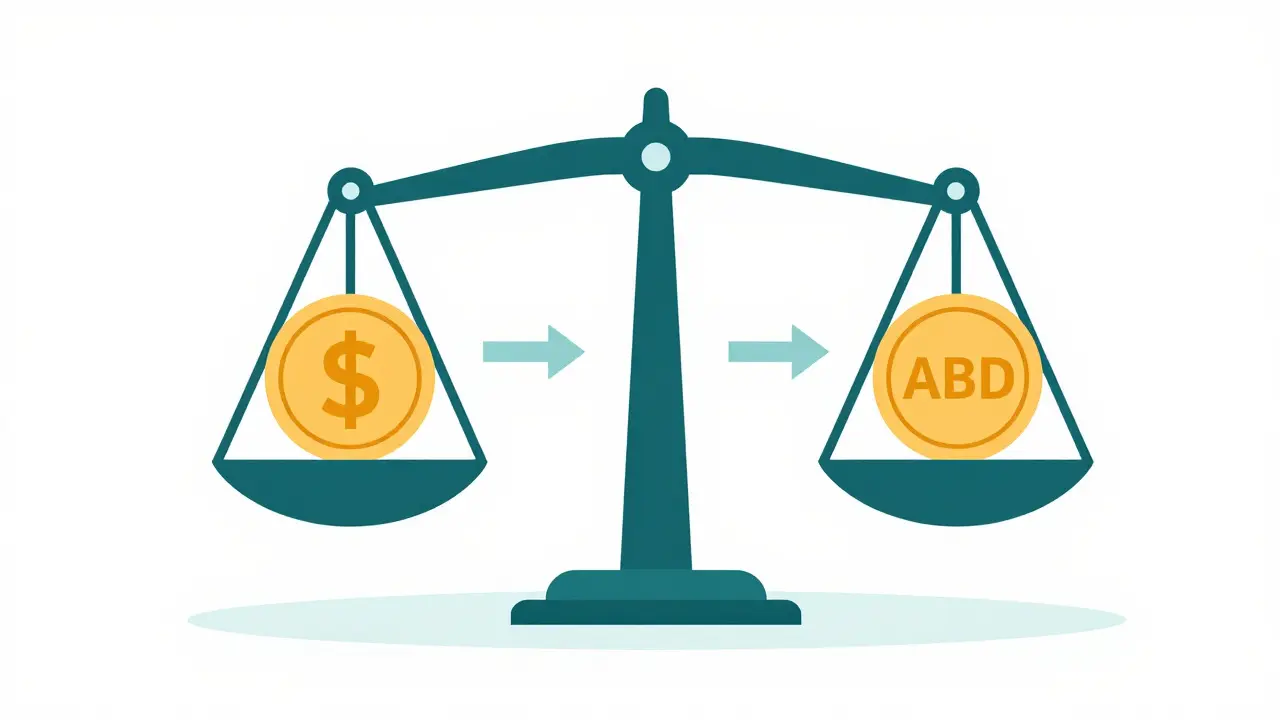
ABD is pegged to the US Dollar. How does it stay at $1? Through a mechanism called guaranteed redemption. Every ABD can be redeemed for exactly $1 worth of Alephium. This creates a natural balance. If ABD trades below $1, arbitrageurs will buy cheap ABD and redeem it for ALPH, pushing the price back up. If it trades above $1, people mint new ABD by locking up ALPH, increasing supply and lowering the price.
This design ensures that ABD remains stable relative to the dollar, providing a reliable medium for borrowing and trading within the Alephium network.
The Role of the ABX Token
So far, we’ve talked about ALPH (collateral) and ABD (the loan). What about ABX, the native token of the platform?
ABX serves several critical functions:
- Governance: Holders of ABX can vote on proposals that shape the future of the protocol. Want to change the minimum collateral ratio? You vote on it.
- Staking Rewards: You can stake your ABX tokens to earn a share of the protocol’s fees. The more loans taken out on the platform, the more fees generated, and the more rewards distributed to stakers.
- Premium Features: Some sources indicate ABX holders might get lower transaction fees or priority access to new features.
Think of ABX as the "ownership" share of the AlphBanX company. If the platform grows, the demand for ABX should theoretically increase, benefiting those who hold and stake it.
| Asset | Type | Primary Function | Risk Profile |
|---|---|---|---|
| Alephium (ALPH) | L1 Token | Collateral for loans | High (Price volatility) |
| AlphBanX Dollar (ABD) | Stablecoin | Borrowed asset / Medium of exchange | Low (Pegged to USD) |
| ABX | Governance Token | Voting, Staking, Fees | Medium-High (Speculative) |
Market Data and Performance Context
It’s important to look at the numbers. As of late 2023 data, AlphBanX had a Total Value Locked (TVL) of around $60.2 million. This shows significant trust from users willing to lock their assets in the protocol. However, the ABX token itself has seen volatility.
The market cap of ABX has ranged between $1.86 million and $2.43 million. Its price has fluctuated significantly, with reports showing declines of over 50% in some 30-day periods. This is common for smaller-cap DeFi tokens. The circulating supply is approximately 86.25 million ABX out of a total 100 million.
Trading volume is relatively low, often under $90,000 in a 24-hour period across exchanges like MEXC, LBank, and Phemex. Low liquidity means large trades can impact the price more dramatically. Always check current prices on multiple exchanges before making any moves.
Pros and Cons of Using AlphBanX
Before diving in, let’s weigh the advantages against the risks.
Advantages:
- User Control: You pick your interest rate. This flexibility is rare in traditional finance and even uncommon in DeFi.
- Ecosystem Synergy: Built natively on Alephium, it benefits from the blockchain’s sharding technology, which aims for high throughput and low fees.
- Yield Opportunities: Staking ABX provides passive income tied to platform usage.
Risks:
- Smart Contract Risk: Like all DeFi protocols, bugs in the code could lead to losses. Audits are crucial.
- Collateral Liquidation: If ALPH crashes, you lose your collateral if you don’t act fast.
- Token Volatility: ABX price swings can affect the value of your governance rights and staking rewards.
- Ecosystem Dependency: AlphBanX’s success is tied to Alephium’s adoption. If Alephium struggles, AlphBanX likely will too.
Who Is AlphBanX For?
AlphBanX isn’t for everyone. It suits users who:
- Already hold Alephium (ALPH) and want to leverage it without selling.
- Understand DeFi concepts like collateralization ratios and liquidation.
- Are comfortable with higher risk for potentially higher yields.
- Believe in the long-term growth of the Alephium ecosystem.
If you are a beginner just getting into crypto, you might want to start with simpler platforms. But if you’re looking to maximize the utility of your ALPH holdings, AlphBanX offers a specialized toolset.
Getting Started: Practical Steps
Ready to try it out? Here’s a general roadmap:
- Get a Wallet: Ensure you have a wallet compatible with Alephium, such as the official Alephium wallet.
- Acquire ALPH: Buy ALPH from an exchange and transfer it to your wallet.
- Connect to AlphBanX: Visit the official AlphBanX website and connect your wallet.
- Deposit Collateral: Select the amount of ALPH you wish to lock up.
- Borrow ABD: Choose your desired interest rate and borrow ABD.
- Monitor Your Position: Keep an eye on the price of ALPH and your collateralization ratio to avoid liquidation.
Remember, always do your own research (DYOR). Start small, especially when testing new DeFi protocols. Use testnets if available to familiarize yourself with the interface without risking real funds.
Is AlphBanX safe to use?
No DeFi platform is 100% safe. AlphBanX relies on smart contracts, which can have vulnerabilities. While it has a significant TVL indicating user trust, you should only invest what you can afford to lose. Check for recent security audits before depositing large amounts.
What happens if I choose a high interest rate?
Choosing a higher interest rate makes your loan more attractive to lenders, ensuring you can borrow quickly. However, you will pay more in interest over time. It’s a trade-off between speed/accessibility and cost.
Can I lose my ALPH collateral?
Yes. If the value of your ALPH collateral drops significantly compared to your ABD debt, your position may become under-collateralized. If you don’t add more collateral or repay debt, the protocol will liquidate your ALPH to cover the loan.
Where can I buy ABX tokens?
ABX is traded on select cryptocurrency exchanges such as MEXC, LBank, and Phemex. Availability may vary by region, so check which exchanges support your location.
How does ABD maintain its $1 peg?
ABD maintains its peg through over-collateralization and a redemption mechanism. Users can redeem ABD for ALPH worth $1. Arbitrageurs exploit price deviations to keep ABD close to $1, similar to how other algorithmic or collateralized stablecoins work.