What is CLV Crypto? A Deep Dive into the Former Clover Finance Token
 Nov, 4 2026
You might have seen CLV trending in your portfolio or heard it mentioned alongside Clover Finance. But what exactly is this coin? Is it a hidden gem waiting to explode, or a relic of the 2021 bull run that’s been left behind? If you’re digging into the CLV cryptocurrency, you’re likely looking for more than just a price chart. You want to know if the tech holds up, if the team is still active, and whether the risks outweigh the potential rewards.
Here’s the reality: CLV isn’t some new kid on the block. It’s the native token of a project that started life as Clover Finance, a Layer-1 blockchain built on Substrate with big dreams of becoming a "one-stop infrastructure platform" for the decentralized web. Today, as of November 2026, it occupies a peculiar niche-technically sophisticated but financially struggling. This guide cuts through the noise to explain what CLV actually does, how its technology works, and why its market value has dropped nearly 99% from its peak.
The Core Concept: More Than Just a Coin
At its heart, CLV is a utility and governance token for the CLV Chain. Think of the chain not just as a ledger, but as an operating system. The project rebranded from Clover Finance to simply "CLV" in April 2022, signaling a shift from being just a DeFi protocol to becoming broader infrastructure. The goal? To be a "Passport to the Omniverse," allowing users to move assets and data across different blockchains without the usual friction.
Why should you care about an "operating system" blockchain? Because most chains are silos. Ethereum talks to Ethereum; Solana talks to Solana. CLV aims to bridge these gaps. It’s designed to be EVM-compatible, meaning developers can deploy smart contracts written for Ethereum directly onto CLV without rewriting code. At the same time, it uses Substrate-the same framework powering Polkadot-to ensure high performance and interoperability. It’s a hybrid approach trying to get the best of both worlds.
How the Technology Actually Works
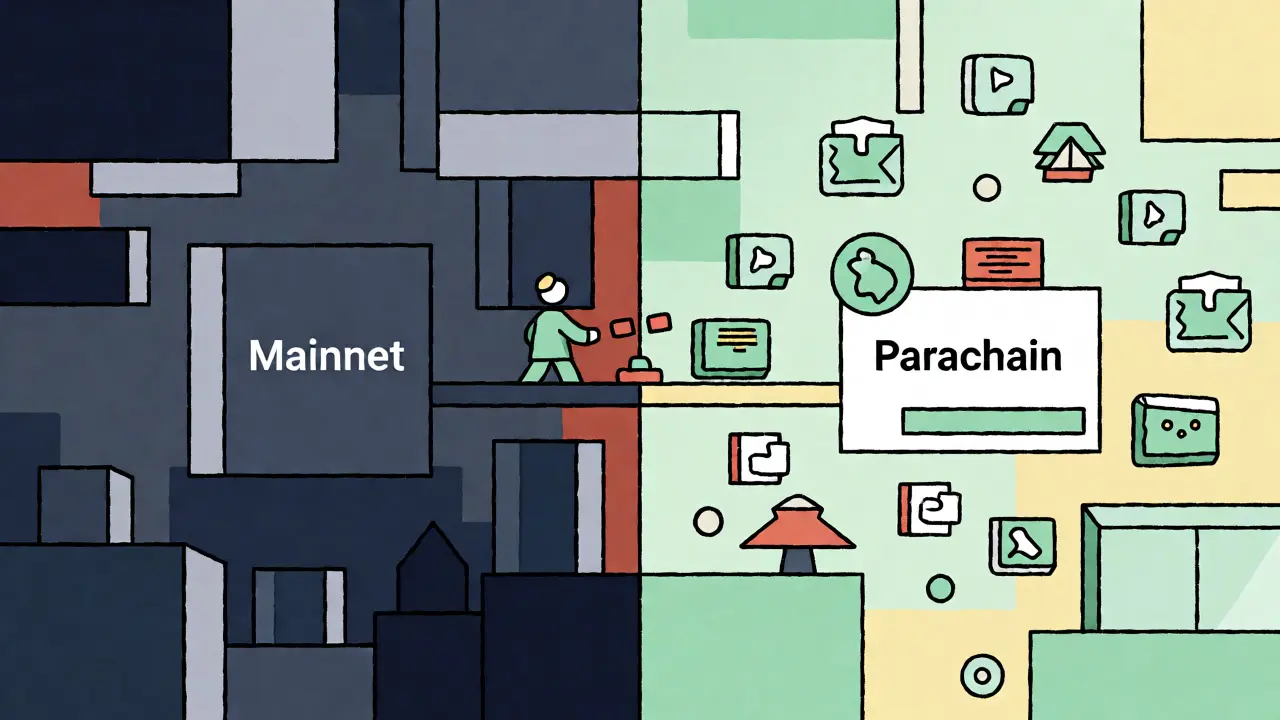
To understand CLV, you need to grasp its dual-environment architecture. The network splits responsibilities between two main areas:
- CLV Mainnet: This is where the heavy lifting happens for network security. Staking, governance voting, and validator operations occur here. If you want to help secure the network, you interact with the mainnet.
- CLV Parachain: This is where applications live. Smart contracts, dApps, and cross-chain transactions happen here. Because it’s a Polkadot parachain (specifically, it won the fifth slot in December 2021), it benefits from Polkadot’s shared security model.
The technical stack relies heavily on Rust and Substrate. Rust is known for memory safety, which reduces common bugs found in other languages. Substrate provides the modular components for consensus and networking. For developers, the standout feature is EVM compatibility. This means tools like MetaMask, Hardhat, and Truffle work out of the box. You don’t need to learn a new language like Solidity’s rival, Move, or Cairo. You keep using what you know.
There’s also a unique fee mechanism. Instead of forcing everyone to hold CLV just to pay gas fees, the network supports flexible payments. In some cases, relayers can pay the base-chain gas fee and get compensated in the token being transacted. This lowers the barrier to entry for new users who might not have CLV in their wallets yet.
Tokenomics: The Supply and Demand Puzzle
Let’s talk numbers, because this is where things get tricky. If you look at older reports, you’ll see a maximum supply of 1 billion CLV. However, current data from late 2026 shows a circulating supply of over 1.2 billion and a total supply of 2 billion. What gives?
The discrepancy comes down to inflation and revised accounting. CLV adopted a Polkadot-style inflation model. Validator rewards aren’t fixed; they dynamically range from 2.25% to 20% annually depending on how many people are staking. When fewer people stake, inflation rises to incentivize participation. This means the supply isn’t capped in the way Bitcoin is. It’s elastic.
Here’s a breakdown of the initial allocation based on early CoinList data, though note that vesting schedules have long since passed for most categories:
| Category | Percentage | Vesting Period |
|---|---|---|
| Ecosystem Incentives | 40% | 36 Months |
| CoinList Public Sale | 15% | N/A (Immediate) |
| Foundation | 12% | 36 Months |
| Team | 10% | 36 Months |
| Early Backers | 10% | 36 Months |
| Marketing | 7.5% | 36 Months |
| Contributors’ Grants | 3% | 36 Months |
| Private Sale | 2.5% | 18 Months |
As of November 2026, CLV trades at approximately $0.001833. That’s a far cry from its all-time high of $2.17 in August 2021. We’re talking about a decline of roughly 99.9%. The market cap sits around $2.2 million, making it a micro-cap asset with very low liquidity. Daily volume hovers near $13,000. This means buying or selling large amounts can significantly impact the price.
Utility: What Can You Actually Do With CLV?
So, beyond speculation, what is the token used for? CLV serves four primary functions:
- Governance: Holders can vote on proposals. This includes electing council members who manage the treasury and influence the direction of the protocol. It’s not just a passive holding; it’s a ticket to shape the network.
- Staking: You can lock CLV to earn rewards. Validators stake CLV to participate in proof-of-stake consensus. Regular users can nominate validators to share in those rewards. This helps secure the network while generating yield.
- Fees: Transaction fees on the network are paid in CLV. While there are flexible payment options, CLV remains the base currency for settling costs.
- Smart Contract Deployment: Developers use CLV to deploy contracts and launch EVM instances on the parachain.
The ecosystem also includes the CLV Wallet, a non-custodial tool that lets you manage assets across multiple chains. It reached 350,000 downloads by late 2021, showing decent early interest. The wallet integrates with the dApp interaction protocol, aiming to simplify the user experience of jumping between different blockchain environments.

Risks and Red Flags You Need to Know
If you’re considering investing, you need to look past the tech whitepapers. The market data tells a harsh story. The drop from $2.17 to fractions of a cent suggests that either the product didn’t find product-market fit, or the tokenomics were too dilutive for the demand.
A major concern is security verification. As of October 2026, platforms like CER.live reported no listed token audit, no platform audit, and no ongoing bug bounty program. This doesn’t mean the code is broken, but it means you’re relying on internal testing rather than third-party validation. In crypto, unaudited smart contracts are a significant risk vector.
Community sentiment is mixed. Some Reddit discussions highlight weak marketing and insufficient developer traction compared to competitors like Cosmos or LayerZero. Others see the tiny market cap as a lottery ticket-if adoption spikes even slightly, the percentage gains could be massive. But that’s speculative. There’s no guarantee of a revival.
Also, beware of scams. Because the project had a high-profile launch followed by a steep decline, fake support accounts often target holders. One user reported losing funds after sharing a QR code with someone claiming to be support. Always verify links through official channels and never share your seed phrase.
Who Should Pay Attention to CLV?
CLV isn’t for everyone. It’s best suited for two types of people:
- Infrastructure Nerd: If you’re fascinated by Substrate-based chains and Polkadot’s ecosystem, CLV offers a case study in hybrid EVM/Substrate design. Watching how it handles cross-chain traffic can provide insights into future interoperability solutions.
- High-Risk Speculator: If you have money you can afford to lose entirely, the sub-$3 million market cap means any news of a partnership or major dApp launch could send the price soaring. But treat it like venture capital, not blue-chip investment.
For the average investor looking for stable returns, CLV currently lacks the liquidity and proven adoption to compete with giants like Ethereum, Solana, or even established Polkadot peers like DOT itself.
Is CLV the same as Clover Finance?
Yes. CLV is the rebranded name for Clover Finance. The project officially changed its name to CLV in April 2022 to reflect its evolution from a specific finance protocol to a broader infrastructure platform. The token symbol remained CLV throughout the transition.
Why did CLV price drop so much?
The price dropped primarily due to a combination of factors: intense competition in the Layer-1 space, lower-than-expected user adoption, and tokenomics that may have led to excessive sell pressure from vested tokens unlocking. Additionally, the general crypto bear market from 2022 to 2024 disproportionately affected small-cap altcoins with low liquidity.
Can I stake CLV for rewards?
Yes, you can stake CLV. Staking occurs on the CLV Mainnet, not the parachain. By locking your CLV, you contribute to network security and earn inflationary rewards. The reward rate varies dynamically between 2.25% and 20% annually, depending on the overall staking participation rate of the network.
Is CLV audited?
As of late 2026, independent security trackers like CER.live indicated that CLV lacked publicly listed audits for its token and platform, nor did it have an active bug bounty program. Prospective users should exercise caution and verify the latest status on official channels, as audit statuses can change.
Where can I buy CLV?
CLV is traded on several exchanges, including Binance, Coinbase, OKX, KuCoin, Gate.io, and MEXC. However, liquidity is low, with daily volumes often under $20,000. Be mindful of slippage when trading larger amounts.