What is Elephant Money (TRUNK) Crypto? A Guide to the DeFi Stablecoin
 Oct, 25 2026
You might have seen Elephant Money (TRUNK) flash across your portfolio tracker with a price hovering around three cents and wondered: what exactly is this thing? Is it a meme coin? A serious financial instrument? Or just another ghost from the 2021 bull run? The truth is a bit more complex. TRUNK isn't just a speculative asset; it’s the backbone of a decentralized finance (DeFi) protocol that tries to solve one of crypto's oldest problems: how to create a stable dollar-pegged asset without relying entirely on centralized banks.
If you are looking for a simple "buy and hold" explanation, you won't find it here. Elephant Money is a system. It involves smart contracts, collateral pools, and a secondary token called ELEPHANT. Understanding TRUNK means understanding how these pieces fit together, why the project suffered a massive hack in 2022, and where it stands today in 2026 as a niche player on BNB Chain and Solana. Let’s break down what TRUNK actually does, how it’s backed, and whether it has any real utility left in the current market landscape.
The Core Concept: What Makes TRUNK Different?
At its heart, Elephant Money is a DeFi protocol designed to generate sustainable yield while providing a stablecoin called TRUNK. Unlike traditional stablecoins like USDT or USDC, which are fully backed by cash in a bank account, TRUNK uses a hybrid model. It is partially collateralized. Specifically, 75% of TRUNK's value is guaranteed by BUSD (a Binance-backed stablecoin), and the remaining 25% is backed by the protocol’s native governance token, ELEPHANT.
This design choice creates a unique dynamic. When you mint TRUNK, you deposit BUSD. The protocol takes that BUSD, swaps it for WBNB, and then buys ELEPHANT tokens. This buying pressure pushes the price of ELEPHANT up. In theory, as the ecosystem grows and ELEPHANT appreciates, the collateralization ratio of TRUNK improves, potentially pushing it toward full backing. It’s an attempt to make stability self-reinforcing through economic incentives rather than just fiat reserves.
| Feature | TRUNK (Stablecoin) | ELEPHANT (Utility/Governance) | EMT (Trumpet Asset) |
|---|---|---|---|
| Primary Role | Medium of exchange, collateral | Governance, yield source | Store of value, linear growth |
| Backing Mechanism | 75% BUSD, 25% ELEPHANT | Protocol revenue & liquidity | 100% Backed by TRUNK vaults |
| Volatility Profile | Low (Pegged to $1.00) | High (Speculative) | Low (Linear growth curve) |
| Blockchain Support | BNB Chain, Solana | BNB Chain, Solana | BNB Chain |
How the Collateral Model Works in Practice
To understand TRUNK, you have to look at the mechanics of minting and redeeming. This isn't magic; it's code. When a user wants to create new TRUNK tokens, they send BUSD into the Elephant Money reserve contract. The protocol doesn't just sit on that BUSD. It actively trades it. By swapping BUSD for WBNB and then purchasing ELEPHANT on the open market, the protocol injects demand into the ELEPHANT token.
This serves two purposes. First, it provides the 25% non-fiat backing for TRUNK. Second, it rewards existing ELEPHANT holders with price appreciation driven by new users entering the system. However, this mechanism relies heavily on accurate price feeds. If the oracle reporting the price of ELEPHANT is manipulated, the entire system can unravel. We’ll get to that risk later, but for now, know that TRUNK’s stability is tied directly to the health and price stability of ELEPHANT.
Redemption works in reverse. You burn your TRUNK tokens, and the protocol returns your BUSD. Ideally, you get back the same amount you put in. But because 25% of the backing is volatile ELEPHANT tokens, there is always a slight risk of under-collateralization if ELEPHANT crashes hard. During normal market conditions, the protocol aims to keep TRUNK pegged to $1.00 USD. In reality, during periods of high volatility, the peg can drift, as we saw during the 2022 crisis.
The April 2022 Exploit: A Cautionary Tale
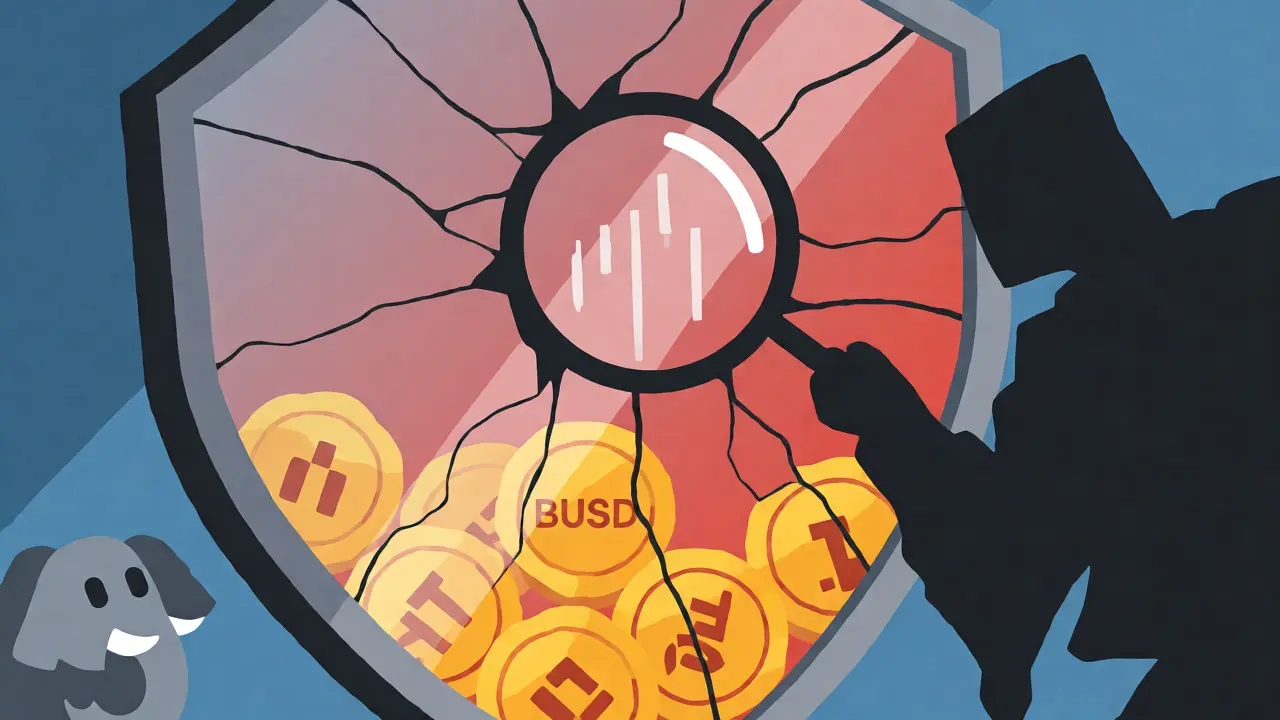
No discussion of Elephant Money is complete without addressing the elephant in the room: the massive security breach in April 2022. This event didn't just hurt the price; it exposed fundamental flaws in how the protocol handled price oracles and flash loans.
Attackers used a technique called flash-loan manipulation. They borrowed huge amounts of capital, swapped it to artificially inflate the price of ELEPHANT, minted large amounts of TRUNK based on that inflated price, and then redeemed those TRUNK for actual assets before the price corrected itself. The result was devastating. Estimates vary, but sources like De.Fi and Rekt.News place the total loss between $11.2 million and $22.2 million when accounting for stolen ELEPHANT tokens.
The aftermath was rough. The price of ELEPHANT dropped by nearly 90%, and TRUNK fell about 40% from its $1.00 peg, trading as low as $0.78 at one point. The team paused all minting and redemption functions to patch the contracts. While the protocol survived and eventually resumed operations, this event permanently altered community sentiment. It highlighted that even audited protocols (Solidity Finance had audited Elephant Money prior to the hack) can miss critical logic errors related to external price feeds.
Cross-Chain Expansion: From BNB Chain to Solana
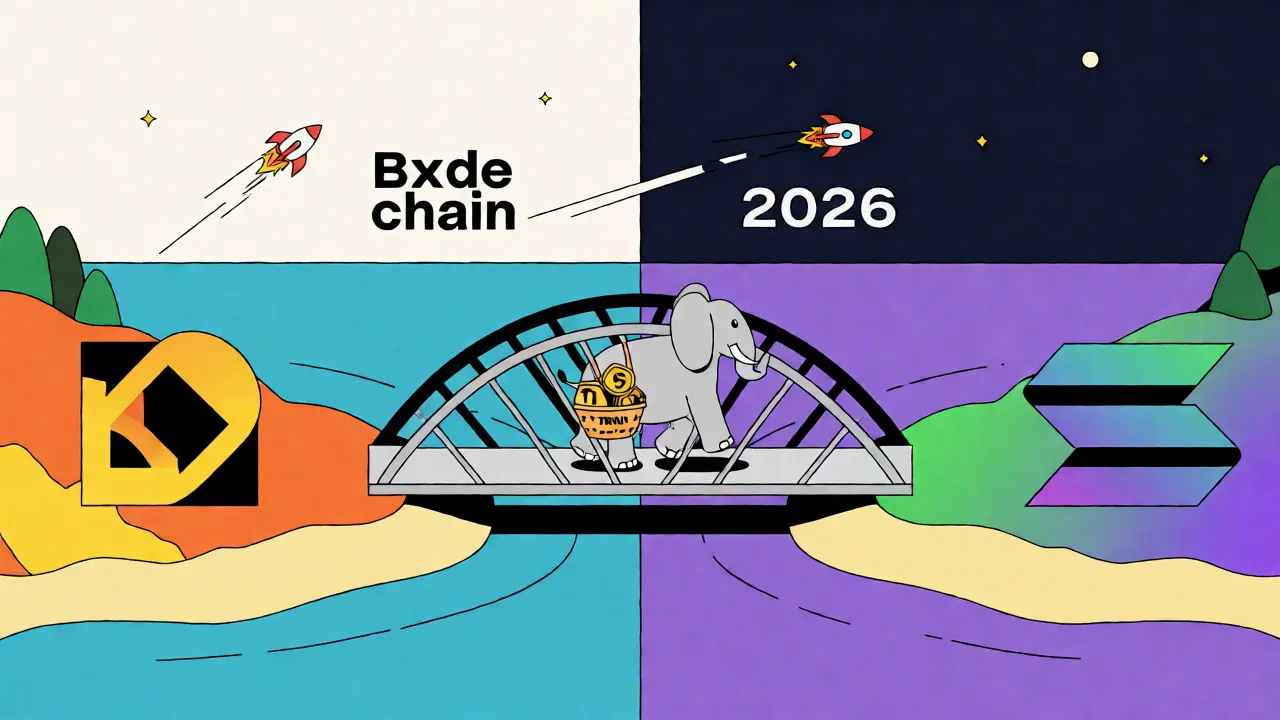
Originally, Elephant Money was strictly a BNB Chain (formerly Binance Smart Chain) phenomenon. Its integration with PancakeSwap made it popular among yield farmers looking for high APYs. However, by 2026, the project has evolved. Listings on CoinMarketCap and Forbes Digital Assets describe TRUNK as a cross-chain deflationary utility token. It now exists on both BNB Chain and Solana.
This expansion allows users to leverage Solana’s high throughput and low transaction fees. For many traders, moving TRUNK to Solana reduces the friction of interacting with DeFi protocols. It also diversifies the risk away from a single blockchain’s congestion issues. On Solana, TRUNK functions similarly-as collateral in various DeFi ecosystems-but benefits from the network’s speed. This dual-chain presence suggests the team is trying to stay relevant by adapting to where liquidity flows, rather than staying rigidly committed to one chain.
Current Market Status and Viability in 2026
So, where does TRUNK stand today? As of mid-2026, the data tells a story of a niche survivor. According to CoinGecko, TRUNK trades at approximately $0.0335 USD. That’s a far cry from its original $1.00 target, but it reflects the dilution and market cap adjustments following the exploit and subsequent tokenomics changes. With a circulating supply of 120 million tokens, the market capitalization sits around $4 million.
Is it dead? No. Daily trading volumes hover around $20,000 to $25,000. This indicates active, albeit small, trading interest. It’s not a top-tier asset you’d use for large institutional settlements, but it remains tradable on decentralized exchanges. The introduction of Trumpet (EMT), a derivative asset backed by TRUNK, adds another layer of utility. EMT is designed to grow linearly in value, offering a store-of-value option for users who want exposure to the Elephant Money ecosystem without the volatility of ELEPHANT.
Compared to giants like USDT or USDC, TRUNK is tiny. It represents less than 0.2% of the incremental stablecoin value added to BNB Chain by newer entrants in recent years. It occupies the long tail of DeFi-specialized, risky, and dependent on a dedicated community rather than broad adoption.
Pros and Cons of Holding TRUNK Today
If you are considering interacting with Elephant Money, weigh these factors carefully:
- Pro - Yield Potential: Historically, Elephant Money offered some of the highest yields on BNB Chain. While rates have normalized, staking mechanisms still exist for those willing to take the risk.
- Pro - Cross-Chain Utility: Availability on Solana increases accessibility and lowers gas costs for smaller transactions.
- Con - Peg Stability Risk: Unlike fully collateralized stablecoins, TRUNK’s hybrid model leaves it vulnerable to sharp drops in the underlying ELEPHANT token.
- Con - Security History: The 2022 hack is a red flag for conservative investors. While patches were applied, the precedent of oracle manipulation lingers.
- Con - Low Liquidity: With daily volumes in the tens of thousands, large trades can move the price significantly, leading to slippage.
Who Should Use Elephant Money?
TRUNK is not for everyone. It’s best suited for experienced DeFi users who understand smart contract risks and are comfortable with niche assets. If you are already engaged with the Elephant Money ecosystem and want to farm yield or provide liquidity, TRUNK is essential. It acts as the base layer for many strategies within the protocol.
For the average crypto investor looking for a safe haven, TRUNK is likely too risky. The historical volatility and the complexity of its collateral model make it a poor substitute for USDC or USDT. However, for speculators betting on a revival of the Elephant Money brand or specific yield opportunities, it offers a low-entry-price asset with potential upside if the protocol regains traction.
Is Elephant Money (TRUNK) a true stablecoin?
TRUNK is marketed as a stablecoin, but it is technically a partially collateralized algorithmic-hybrid stablecoin. It aims to maintain a $1.00 peg, but unlike fully backed stablecoins like USDC, it relies on a mix of BUSD and the volatile ELEPHANT token. This means it can deviate from the peg during market stress, as seen in 2022.
What happened to the price of TRUNK after the 2022 hack?
Following the April 2022 exploit, TRUNK lost approximately 40% of its value, dropping from near $1.00 to around $0.78. While it recovered somewhat over time, it never fully regained its original dominance. By 2026, it trades at a fraction of a cent due to tokenomics adjustments and market dilution, though it remains active.
Can I buy TRUNK on Coinbase or Binance?
TRUNK is primarily traded on decentralized exchanges (DEXs) like PancakeSwap on BNB Chain and various DEXs on Solana. It is generally not listed on major centralized exchanges like Coinbase or Binance directly, so you will likely need a Web3 wallet like MetaMask or Phantom to acquire it.
What is the difference between TRUNK and ELEPHANT?
TRUNK is the stablecoin component used for transactions and collateral, aiming for price stability. ELEPHANT is the governance and utility token, which is highly volatile and drives the protocol’s economic incentives. You use TRUNK to interact with the stable side of the ecosystem, while ELEPHANT holders benefit from protocol growth and governance rights.
Is Elephant Money still active in 2026?
Yes, the protocol remains active. Data from CoinGecko and CoinMarketCap shows ongoing trading volume and a maintained circulating supply. The team continues to support features like Trumpet (EMT) and cross-chain deployments on Solana, indicating sustained development despite its reduced market size.