What is ETH-CHAN (ETHCHAN) Crypto? The Ethereum Mascot Explained
 Nov, 19 2026
You might have seen the ticker ETHCHAN popping up in your wallet or on a DEX screener and wondered if it’s some new layer-2 solution or just another hype cycle. It’s neither. ETH-CHAN is a community-driven memecoin on the Ethereum blockchain, designed as an anime-style mascot for the network itself. Created by artist Shiro, this token embodies the speculative hope that Ethereum will eventually hit a $10,000 price point. But here’s the catch: the data surrounding this coin is messy. Depending on where you look, the supply is either 4.2 billion or one quadrillion tokens. This article cuts through the noise to explain what ETH-CHAN actually is, how its tokenomics work, and why the numbers don’t always add up.
The Origin Story: An Anime Mascot for Ethereum
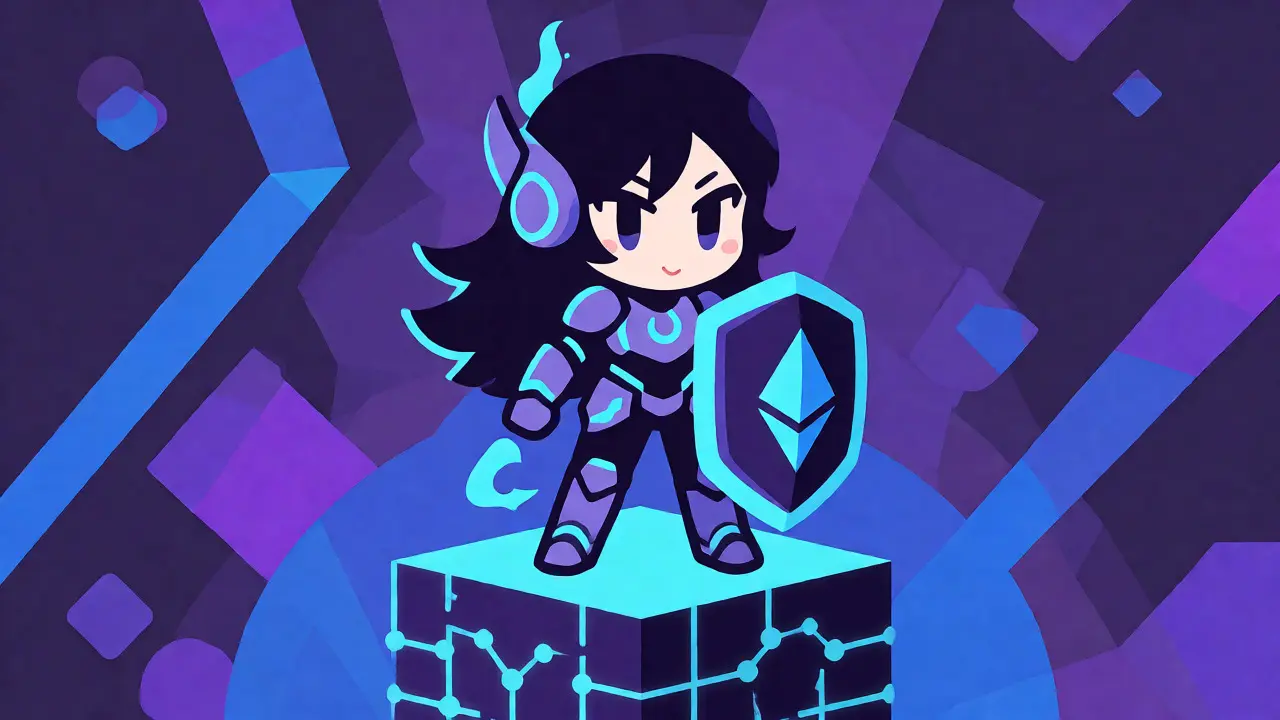
Most cryptocurrencies try to solve technical problems like scalability or privacy. ETH-CHAN doesn’t pretend to do that. Its value proposition is purely cultural. The character was conceived by Shiro, a visionary artist who wanted to create a visual representation of "Ethereum culture." Think of it less as a financial instrument and more as a digital fandom badge.
The narrative is simple: ETH-CHAN is the "protector and queen" of the chain. This branding leans heavily into the belief that Ethereum’s future is bright, specifically targeting the psychological milestone of $10,000 per ETH. While no formal partnership with the Ethereum Foundation exists, the project gained visibility when Vitalik Buterin, Ethereum’s co-founder, followed Shiro on X (formerly Twitter). For many holders, this informal nod from a key figure serves as enough validation to buy in, even if it’s not a technical endorsement.
Tokenomics Confusion: 4 Billion or 1 Quadrillion?
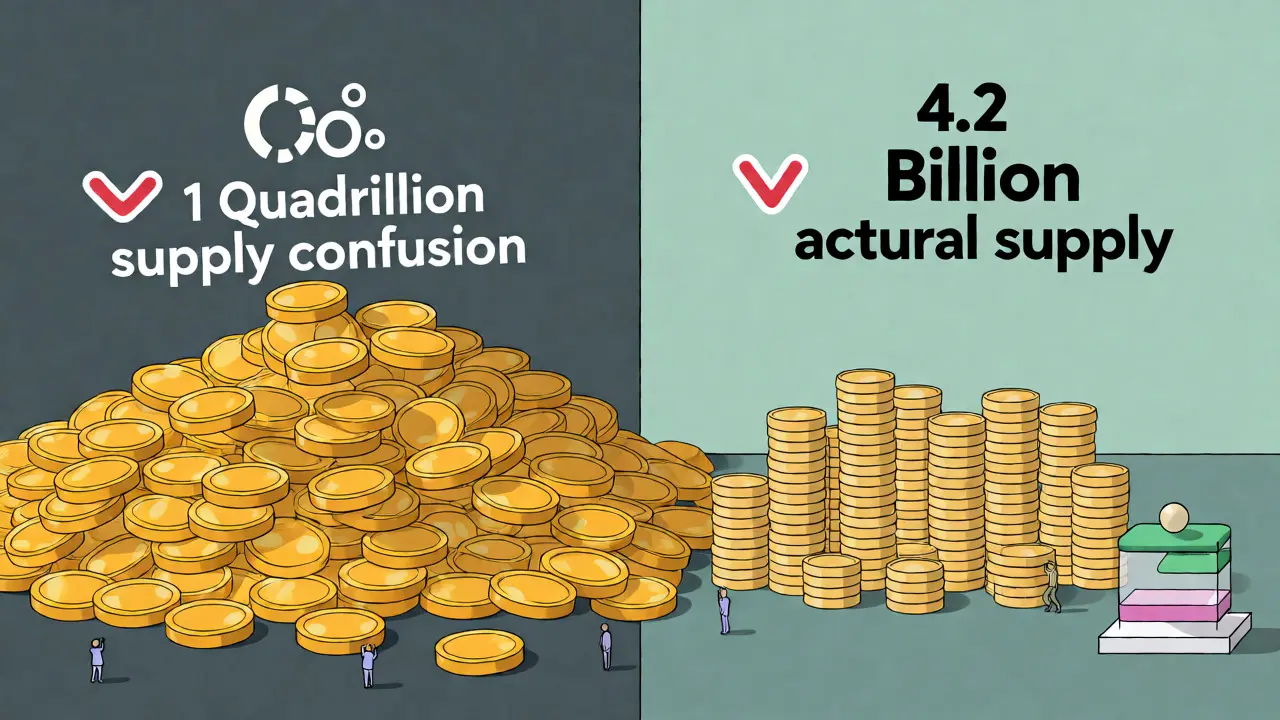
If you dig into the data, you’ll find a glaring discrepancy that every potential investor needs to understand. Two different supply models are circulating under similar names, leading to significant confusion about market capitalization and valuation.
| Source Type | Reported Total Supply | Context |
|---|---|---|
| CoinCodex | 1 Quadrillion (1,000,000,000,000,000) | Often lists older or parallel configurations; suggests hyper-inflated model. |
| CoinStats / Phantom | ~4.21 Billion | Aligns with on-chain data for the primary ERC-20 contract. |
| GeckoTerminal | ~4.21 Billion | Used for calculating FDV based on active liquidity pools. |
Why does this matter? Market cap is calculated by multiplying price by supply. If a platform uses the 1-quadrillion figure, the price per token looks infinitesimally small, making it seem like you can buy millions of tokens for pennies. However, the ERC-20 token actively traded on major decentralized exchanges typically has a supply closer to 4.21 billion. Always verify the contract address before trusting a supply number.
Technical Details: Where Does ETHCHAN Live?
ETH-CHAN is a standard ERC-20 token deployed on the Ethereum mainnet. It doesn’t have its own blockchain, consensus mechanism, or smart contract functionality beyond basic transfers. This means it relies entirely on Ethereum’s security and infrastructure.
The canonical contract address most traders use is 0x5417994ae69E6CCb283Bb6dBdbA3006b3d3F9f95. You won’t find this token listed with significant volume on centralized exchanges like Binance or Coinbase. Instead, it lives in the DeFi ecosystem, primarily within Uniswap V2 and Uniswap V4 liquidity pools. This makes it a niche asset for users comfortable with Web3 wallets like MetaMask, Phantom, or Bitget Wallet.
Market Performance and Liquidity Risks
As of mid-2026, ETH-CHAN remains a micro-cap asset. Its market capitalization hovers between $360,000 and $475,000, depending on the snapshot date. To put that in perspective, top-tier memecoins often command billions in market cap. ETH-CHAN is several orders of magnitude smaller, placing it firmly in the "high-risk, high-reward" speculation tier.
Liquidity is fragmented. While one major Uniswap V2 pool might hold over $112,000 in liquidity, other smaller pools may have less than $10. Trading in these thin pools can lead to massive slippage, meaning you might pay significantly more than the displayed price to execute a trade. In May 2025, daily volumes spiked to nearly $1.9 million, but by May 2026, typical daily volume had settled around $28,000 to $33,000. This drop indicates that while interest persists, the initial hype wave has cooled.
How to Buy and Trade ETHCHAN
Since you can’t easily buy ETHCHAN with a credit card on a major exchange, you need to navigate the DeFi landscape. Here’s the practical path:
- Get a Web3 Wallet: Install Phantom, MetaMask, or Bitget Wallet and ensure you have some ETH for gas fees.
- Find the Right Pool: Use aggregators like GeckoTerminal or DexScreener to locate the pool with the highest liquidity (look for the contract ending in ...9f95).
- Swap ETH for ETHCHAN: Execute the swap directly in your wallet interface. Be mindful of slippage settings; set them higher than default to ensure transaction success in volatile markets.
- Monitor Price Discrepancies: Remember that Binance might list "ETH-CHAN" at a near-zero price due to lack of trading activity there, while DEX prices reflect actual market clearing. Trust the DEX data.
Is ETH-CHAN a Good Investment?
This depends entirely on your risk tolerance. ETH-CHAN has no roadmap for utility, staking rewards, or governance rights. Its value is derived solely from community sentiment and meme culture. If you believe in the "mascot" narrative and think the Ethereum community will rally behind this specific aesthetic, it offers speculative upside. However, without fundamental development or institutional backing, it is vulnerable to sudden drops if attention shifts to newer memes.
The lack of clear tokenomics consistency adds another layer of risk. If a large holder dumps their position in a low-liquidity pool, the price can crash instantly. It’s not an asset for long-term portfolio stability; it’s a tool for short-term speculation within the Ethereum subculture.
What is the total supply of ETH-CHAN?
There is conflicting data. Major tracking platforms like CoinStats and GeckoTerminal report a supply of approximately 4.21 billion tokens, which aligns with the active ERC-20 contract. However, some sources like CoinCodex list a supply of 1 quadrillion, likely referring to an older or differently configured instance. Always check the contract address to confirm which version you are buying.
Can I buy ETHCHAN on Binance?
Technically, yes, but practically, no. Binance lists an asset named "ETH-CHAN," but it shows zero trading volume and negligible market cap. Most meaningful trading activity occurs on decentralized exchanges like Uniswap. Buying via Binance may result in poor execution or inability to sell due to lack of liquidity.
Does ETH-CHAN have any real utility?
No. ETH-CHAN is a memecoin. It does not offer staking, governance voting, or access to a specific service. Its "utility" is social-acting as a symbol of support for Ethereum and its culture, driven by the anime mascot character created by artist Shiro.
Who created the ETH-CHAN character?
The character was created by an artist known as Shiro. The project gained some visibility when Ethereum co-founder Vitalik Buterin followed Shiro on social media, though this was not a formal endorsement or partnership.
Where is the best place to trade ETHCHAN?
The best place is usually the largest liquidity pool on Uniswap V2 or V4 on the Ethereum mainnet. Use analytics tools like GeckoTerminal or DexScreener to identify the pool with the highest depth to minimize slippage during trades.