What is Gigabrain (BRAIN) by Virtuals? A Guide to the AI Crypto Token
 Aug, 2 2026
Quick Summary: Key Takeaways
- Gigabrain (BRAIN) is a utility token built on the Virtuals Protocol, designed to power an AI-driven market intelligence platform for cryptocurrency traders.
- The project claims to offer "institutional-grade" insights to retail investors using AI agents that analyze whale movements, social sentiment, and on-chain data in real-time.
- BRAIN operates on a hybrid Proof-of-Stake consensus mechanism, aiming for high transaction speeds and low fees while maintaining environmental sustainability.
- Market data shows significant volatility and discrepancies across exchanges, with circulating supply figures varying wildly between platforms like CoinMarketCap and Binance.
- While the roadmap includes a Multi-Agent Framework for broader DeFi and NFT analysis, the token remains highly speculative with limited independent verification of its claimed performance metrics.
What Exactly Is Gigabrain (BRAIN)?
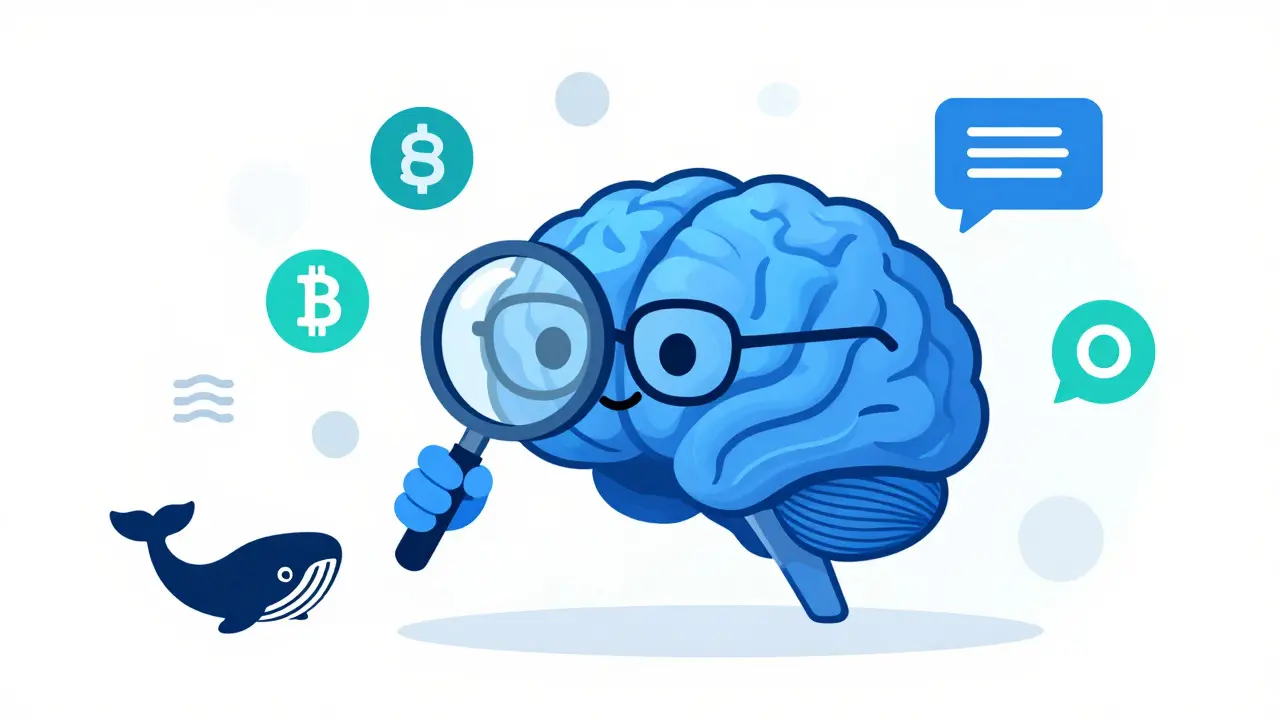
You’ve probably seen the ticker BRAIN popping up in crypto feeds lately. But what is it actually doing under the hood? Gigabrain is not just another meme coin hoping for viral fame; it’s positioned as a functional tool within the Virtuals Protocol ecosystem. Specifically, BRAIN serves as the native utility token for a platform called Gigabrain, which promises to bridge the gap between complex artificial intelligence and everyday crypto trading.
Think of it this way: traditional financial institutions have expensive terminals and teams of analysts watching every move in the market. Retail traders usually get left behind, reacting to news after the price has already moved. Gigabrain aims to fix that asymmetry. It uses AI to scan massive amounts of data-whale wallet transactions, social media sentiment, macroeconomic trends, and protocol metrics-and turns that noise into actionable signals. You pay for these insights and participate in the network governance using your BRAIN tokens.
The project emerged from six months of stealth development, officially announcing its launch in October 2025. The creators, who describe themselves as traders rather than venture capitalists, claim they built this because existing tools didn’t give "real alpha" to regular people. Their bold claim? During their Q4 2024 testing phase, they allegedly turned $8,000 into $94,000 by catching major market moves early. Whether you believe that stat or not, it sets the stage for what Gigabrain wants to be: an institutional-grade edge available to everyone.
How Does the Gigabrain Technology Work?
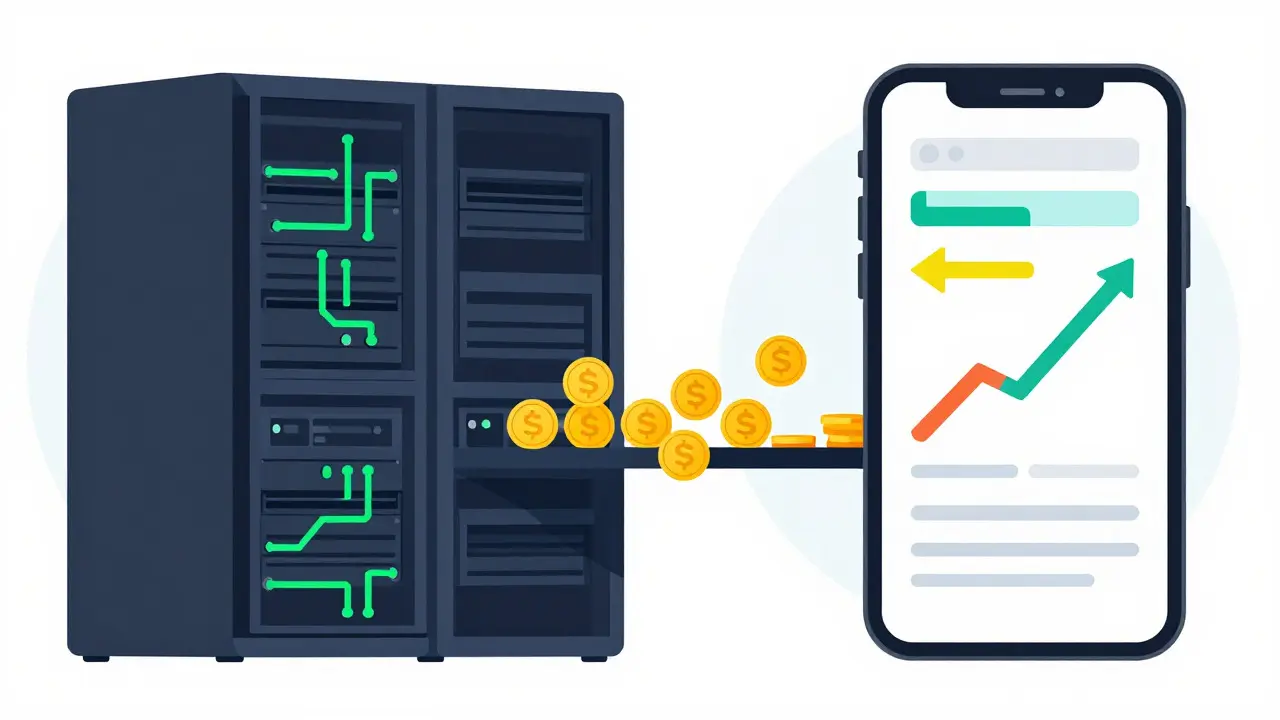
To understand if BRAIN is worth your attention, you need to look at the tech stack. Gigabrain doesn’t rely on old-school mining rigs that guzzle electricity. Instead, it uses a hybrid consensus mechanism that blends Proof-of-Stake (PoS) with delegated validation. This means validators are chosen based on the amount of BRAIN they stake, making the network more energy-efficient and accessible.
This architecture allows for high transaction throughput with minimal fees. Why does that matter? Because AI analysis happens in milliseconds. If you’re paying high gas fees to execute a trade based on an AI signal, the profit margin disappears. By keeping costs low, Gigabrain makes micro-transactions and frequent strategy adjustments viable.
Here is how the core components interact:
- The Gigabrain Agent: This is the brain of the operation. It’s an AI model trained specifically on crypto market dynamics. It doesn’t just show you charts; it interprets them. For example, if a large whale moves funds to an exchange, the agent flags it as a potential sell-off risk before the price drops.
- Real-Time Intelligence Feed: Users subscribe to streams of data that highlight significant protocol activity and unusual volume spikes.
- Multi-Agent Framework (Roadmap): Future updates plan to introduce specialized agents. One might focus solely on DeFi liquidity pools, while another monitors NFT floor prices. This creates a holistic view of the ecosystem rather than siloed data points.
Tokenomics and Supply Details
When evaluating any crypto asset, the numbers tell half the story. Gigabrain has a total supply of 1 billion BRAIN tokens. There is no hard cap listed on some platforms, suggesting flexibility in future emissions, though the initial fixed supply provides a baseline for valuation.
However, here is where things get tricky. Market data for BRAIN is currently fragmented. On one hand, CoinMarketCap lists the circulating supply as zero, which sounds like a dead project. On the other hand, Binance reports active trading with a 24-hour volume of over $219,000. This discrepancy often happens with new tokens during the transition from private sales to public listings. It suggests that while tokens exist and are being traded, the official distribution data hasn’t fully synced across all aggregators yet.
| Attribute | Value / Detail |
|---|---|
| Total Supply | 1,000,000,000 BRAIN |
| Consensus Mechanism | Hybrid PoS + Delegated Validation |
| Primary Use Case | Access to AI Market Intelligence & Governance |
| All-Time High (ATH) | $0.022496 USD |
| Current Volatility (30-Day) | High (~34.92%) |
Price Performance and Market Reality
Let’s talk money, because that’s why most of us are here. As of late 2025, BRAIN is trading significantly below its all-time high of roughly $0.022. Current prices vary wildly depending on where you look. Some exchanges list it around $0.0009, while others show prices closer to $0.012. This arbitrage opportunity exists because liquidity is still thin. If you try to buy or sell a large amount, you could easily slip the price against yourself.
Technical indicators paint a mixed picture. The Fear & Greed Index often hovers in the "Greed" zone (around 70), indicating bullish sentiment among holders. However, moving averages like the EMA 21 frequently signal "Sell," pointing to short-term downward pressure. Over a 30-day period, the token has only been green about 43% of the time. That means more than half the days, you’d lose money holding it.
Analysts from platforms like CoinCodex predict a wide range. In a bullish scenario, BRAIN could climb toward $0.0096, representing a substantial gain from lower support levels. In a bearish case, it could drop further toward $0.0019. These swings highlight the speculative nature of the asset. It’s not a stable store of value like Bitcoin; it’s a high-risk, high-reward play on the success of its underlying AI product.
Who Is Gigabrain For? Pros and Cons
Is this tool right for you? It depends heavily on your experience level. Gigabrain explicitly targets "crypto natives"-people who understand terms like alpha, whale wallets, and leverage. If you are a complete beginner who just bought Bitcoin last week, this platform might overwhelm you. It assumes you know how to act on data quickly.
Pros:
- Democratized Intelligence: Brings sophisticated data analysis to retail traders who can’t afford Bloomberg terminals.
- Speed: Real-time alerts can help you exit positions before a crash or enter before a pump.
- Eco-Friendly: The PoS consensus model aligns with modern sustainability standards.
Cons:
- Lack of Verification: The "$8k to $94k" claim is self-reported. There is no third-party audit confirming these past results.
- Liquidity Risks: Low trading volume on some exchanges can make it hard to exit large positions without slippage.
- Regulatory Uncertainty: As an AI-driven financial tool, it may face scrutiny from regulators monitoring algorithmic trading and crypto utilities.
How to Get Started with BRAIN
If you decide to take the plunge, the process is straightforward but requires caution due to the token's volatility. Most users access BRAIN through centralized exchanges like Bitget or Binance.
- Create an Account: Sign up on a supported exchange. Complete KYC (Know Your Customer) verification if required.
- Fund Your Wallet: Deposit fiat currency via bank transfer or credit card, or deposit another crypto asset like USDT or ETH.
- Buy BRAIN: Search for the BRAIN trading pair. Be mindful of the spread-the difference between the buy and sell price-since liquidity varies.
- Use or Stake: You can hold the token for potential appreciation, use it to access premium AI features on the Gigabrain platform, or stake it through programs like Bitget Earn to generate passive yield.
Remember, never invest more than you can afford to lose. New tokens like BRAIN can swing 20-30% in a single day. Keep an eye on the official Virtuals channels for updates on the Multi-Agent Framework rollout, as new feature releases often drive price action.
Is Gigabrain (BRAIN) a safe investment?
No cryptocurrency is guaranteed safe, but BRAIN carries higher risks than established coins like Bitcoin. It is a new token with volatile pricing, inconsistent liquidity across exchanges, and unverified performance claims. Treat it as a speculative asset rather than a long-term savings vehicle.
What is the relationship between Virtuals and Gigabrain?
Virtuals is the parent protocol or ecosystem that hosts Gigabrain. BRAIN is the native utility token specifically created to power the Gigabrain AI intelligence platform within that broader Virtuals environment.
Can beginners use Gigabrain effectively?
It is challenging. The platform is designed for "crypto natives" who understand advanced trading concepts. While the AI simplifies data analysis, interpreting and acting on those signals requires foundational knowledge of market dynamics and risk management.
Why do BRAIN prices differ so much between exchanges?
This is due to low liquidity and fragmented trading pairs. With a relatively small market cap and new listing status, there aren't enough buyers and sellers on every platform to keep prices perfectly aligned. Arbitrageurs often exploit these gaps, but retail traders should check multiple sources before buying.
Does Gigabrain require mining?
No. Gigabrain uses a hybrid Proof-of-Stake consensus mechanism. This means validators secure the network by staking tokens rather than using energy-intensive computational power, making it more environmentally friendly.
Matt Kay
August 3, 2026 AT 20:04looks like another rug pull waiting to happen
Carl Michaud
August 4, 2026 AT 08:00The discrepancy in circulating supply between CoinMarketCap and Binance is not a glitch, it is a feature of the manipulation. They are keeping the public blind while insiders accumulate. The hybrid PoS claim is just marketing fluff to hide the fact that the validators are likely controlled by the same entity. You think you are buying alpha? You are buying liquidity for their exit strategy. The $8k to $94k stat is fabricated because no independent auditor would touch this garbage with a ten-foot pole. It is a classic pump and dump structure disguised as 'AI innovation'. Watch the whale wallets closely, but realize those whales are probably bots created by the dev team to simulate volume. The regulatory uncertainty mentioned in the cons section is an understatement. This whole thing smells like a securities violation waiting to be prosecuted. Do not trust the roadmap, trust the code, and the code is likely obfuscated or non-existent.
Matthew Smith
August 5, 2026 AT 03:09there is a moral decay in how we value intelligence now. we outsource our thinking to machines because we are too lazy to do the work ourselves. this token promises to give you answers without the burden of understanding. it is a sin against reason. the creators say they built it because existing tools didn't give real alpha but really they just want your money. it is greedy. it is selfish. we should be cultivating human intellect not replacing it with algorithmic shortcuts. the environment argument for PoS is valid but does not excuse the ethical bankruptcy of selling hope to desperate traders.
Prudence Flemming
August 6, 2026 AT 18:56the ontology of this project is deeply flawed. it attempts to quantify sentiment which is inherently subjective into objective data points. social sentiment cannot be reduced to a simple metric for trading purposes. the jargon of 'institutional-grade' is used to lend authority to what is essentially a speculative gamble. the multi-agent framework sounds cool but agents are just complex scripts following predefined rules. there is no true cognition here. the price volatility proves that the market recognizes the lack of intrinsic value. it is a simulation of intelligence not intelligence itself. we are worshipping at the altar of efficiency while losing the nuance of human judgment.
Dave Kjendal
August 7, 2026 AT 13:48i dont see the point. another coin promising ai magic. usually these things fail fast. the tech stack sounds complicated for no reason. why do i need an agent to tell me when to sell? i can look at a chart myself. the fees might be low but the risk is high. seems like a waste of time to me. most of these projects disappear after six months. save your money.
Candice Cornett
August 8, 2026 AT 20:55everyone here is so gullible. you really believe the ai will make you rich? its just code written by humans who want to get rich off you. the self-righteousness of claiming democratized intelligence is laughable. only the early adopters will win. the rest of you are just fuel for the fire. stop pretending this is about fairness or sustainability. it is about greed. pure unadulterated greed. the punctuation in the article was fine but the logic is terrible. typical crypto hype cycle.
Lance Jantz
August 10, 2026 AT 09:26Oh my stars, have you felt the electric hum of the digital ether lately? I did! When I read about the Gigabrain Agent scanning whale movements, I felt a shiver run down my spine, a visceral connection to the collective unconscious of the market. It is beautiful, truly. Like watching a symphony of data play out in real-time. Who cares if the numbers don't match up perfectly on every exchange? That is just the universe breathing, expanding and contracting in its infinite wisdom. The hybrid consensus is like a dance, partners swapping roles in a delicate waltz of validation. I stake my tokens and feel the warmth of the network embracing my soul. It is not just a tool, my friends, it is a spiritual journey into the heart of the beast. Let go of your skepticism and embrace the flow. The AI knows what you need before you do. Isn't that romantic?
Kat Bennett
August 10, 2026 AT 20:19I think it is actually quite fascinating how they are trying to bridge the gap between complex AI and everyday trading. I know some people are skeptical and I totally get why caution is important especially with new tokens but imagine the possibilities if this works well. It could really help people who feel left out of the big financial world. The idea of having access to insights that were previously only available to institutions is pretty empowering. I am curious to see how the multi-agent framework develops over time and whether it can really provide that holistic view of the ecosystem. It seems like a bold move and sometimes bold moves pay off. I am keeping an eye on it because I love seeing innovation in the space even if it is risky. Maybe it will change the way we all interact with market data.
Don Fizy
August 12, 2026 AT 11:20Hey folks! Just wanted to chime in with a helpful tip :) If you decide to check out BRAIN make sure you double-check the liquidity on the specific exchange you use. As the post mentioned slippage can be a real issue with lower volume pairs. Also remember to start small since it is highly volatile. DYOR always! Good luck everyone \\(o^▽^o)/