What is MANTRA (OM) Crypto? RWA Layer-1 Explained
 Nov, 14 2026
You might have seen the ticker OM on your exchange watchlist and wondered what it actually does. Or maybe you saw the new name MANTRA pop up in news feeds and got confused by the sudden change. You are not alone. The project has undergone a massive transformation from a simple governance token to a full-fledged Layer-1 blockchain focused on real-world assets (RWAs). If you are trying to figure out if this coin is just hype or a serious infrastructure play, you need to understand the shift from legacy ERC-20 tokens to the native MANTRA chain.
This article breaks down exactly what MANTRA is, why the ticker changed, how the technology works, and the critical risks involved. We will look past the marketing fluff to see the actual mechanics of staking, governance, and the controversial market history that defines this asset today.
The Core Identity: From DAO Token to Layer-1 Infrastructure
MANTRA is a Cosmos-SDK Layer-1 blockchain designed specifically for decentralized finance and regulated real-world asset tokenization. Originally launched as MANTRA DAO with an ERC-20 token named OM on Ethereum in 2020, the project pivoted to build its own sovereign network. This wasn't just a rebrand; it was a fundamental architectural upgrade. In February 2024, community holders voted overwhelmingly (82.17% approval) to migrate the OM token to become the native coin of the new MANTRA Chain. The mainnet officially launched on October 10, 2024, marking the transition from a passive governance tool to an active utility asset used for fees, staking, and security.
Why does this matter to you? Because holding "OM" on Ethereum today is different from holding "MANTRA" on the MANTRA Chain. The old token was primarily for voting in a DeFi protocol. The new native coin secures a blockchain where institutions can tokenize things like Dubai real estate or private credit funds. It combines the modularity of the Cosmos ecosystem with the developer familiarity of Ethereum Virtual Machine (EVM) compatibility. This hybrid approach aims to solve a specific problem: traditional blockchains lack compliance tools, while traditional finance lacks blockchain efficiency.
How MANTRA Works: Technology and Architecture
At its technical core, MANTRA is built using the Cosmos SDK and CometBFT consensus engine. Think of Cosmos SDK as a toolkit that lets developers build their own custom blockchains rather than building apps on top of someone else's chain. This gives MANTRA control over its own rules, such as inflation rates and transaction types. However, unlike many isolated Cosmos chains, MANTRA integrates an EVM module. This means developers can write smart contracts in Solidity-the language of Ethereum-and deploy them directly on MANTRA without rewriting code.
The network uses a Delegated Proof-of-Stake (DPoS) model. Validators propose and confirm blocks using cryptographic signatures. As a regular user, you don't need to run a validator node yourself. Instead, you can delegate your MANTRA coins to a validator. In return, you earn staking rewards funded by network inflation. The architecture also supports the Inter-Blockchain Communication (IBC) protocol, allowing MANTRA to transfer assets and data seamlessly with other Cosmos-based chains like Osmosis or Injective. This interoperability is crucial for an RWA-focused chain, as it allows liquidity to flow between specialized financial networks.
| Feature | MANTRA Chain | Ethereum | Solana |
|---|---|---|---|
| Primary Focus | Regulated RWAs & Compliance | General Purpose DeFi | High-Speed Payments |
| Tech Stack | Cosmos SDK + EVM Module | EVM Native | Rust / SVM |
| Interoperability | IBC (Cosmos Ecosystem) | Bridges / Rollups | Limited Native IBC |
| Regulatory Stance | VARA Licensed (Dubai) | Unclear / Fragmented | Unclear / Fragmented |
The Great Redenomination: Why OM Became MANTRA
If you check your wallet today, you might see two different assets: "MANTRA" and "MANTRA (old)" or "OM." This confusion stems from a major nomenclature change that occurred on March 2, 2026, at block 13,000,000. The project executed a non-dilutive 1:4 split. One old OM token became four new MANTRA coins. Consequently, the maximum supply increased nominally from roughly 888 million to 10 billion MANTRA. Importantly, this did not change your percentage ownership of the network; it simply adjusted the unit price to make transactions more practical for micro-payments and institutional accounting.
For users who held the legacy ERC-20 OM tokens on Ethereum, a migration process was required. A one-way bridge allowed holders to swap their Ethereum-based OM for native MANTRA coins on the mainnet. The documented window for this easy migration closed on January 15, 2026. If you missed this window, you may still hold legacy tokens that require manual bridging or are stuck in older contract addresses. Always verify the contract address before sending funds. Exchanges often list these separately, so depositing "OM" into a "MANTRA" withdrawal address can result in lost funds if the network isn't specified correctly.

Real-World Assets and Institutional Partnerships
The primary value proposition of MANTRA is its focus on Real-World Assets (RWAs). While Bitcoin tries to be digital gold and Ethereum hosts memecoins, MANTRA targets the trillions of dollars in physical assets-real estate, commodities, and bonds-that are moving onto blockchains. The project secured a significant regulatory win when Dubai’s Virtual Assets Regulatory Authority (VARA) approved a license for MANTRA’s relevant entity. This allows them to operate as a virtual-asset exchange and provide broker-dealer services within the UAE jurisdiction.
Partnerships drive this narrative. MANTRA announced agreements with major entities like DAMAC Group, aiming to place $1 billion of assets on-chain, and MAG, targeting $500 million in luxury property tokenization. Additionally, Google Cloud became a primary validator and infrastructure provider, lending credibility to the network's stability. There is also an RWA accelerator program backed by Google Cloud experts to support projects building on MANTRA. However, treat these numbers with caution. These are target values and partnership announcements, not necessarily proof that $1.5 billion in assets are currently locked and liquid on the chain. Independent verification of Total Value Locked (TVL) remains limited compared to giants like Ethereum.
Market Volatility and the April 2025 Crash
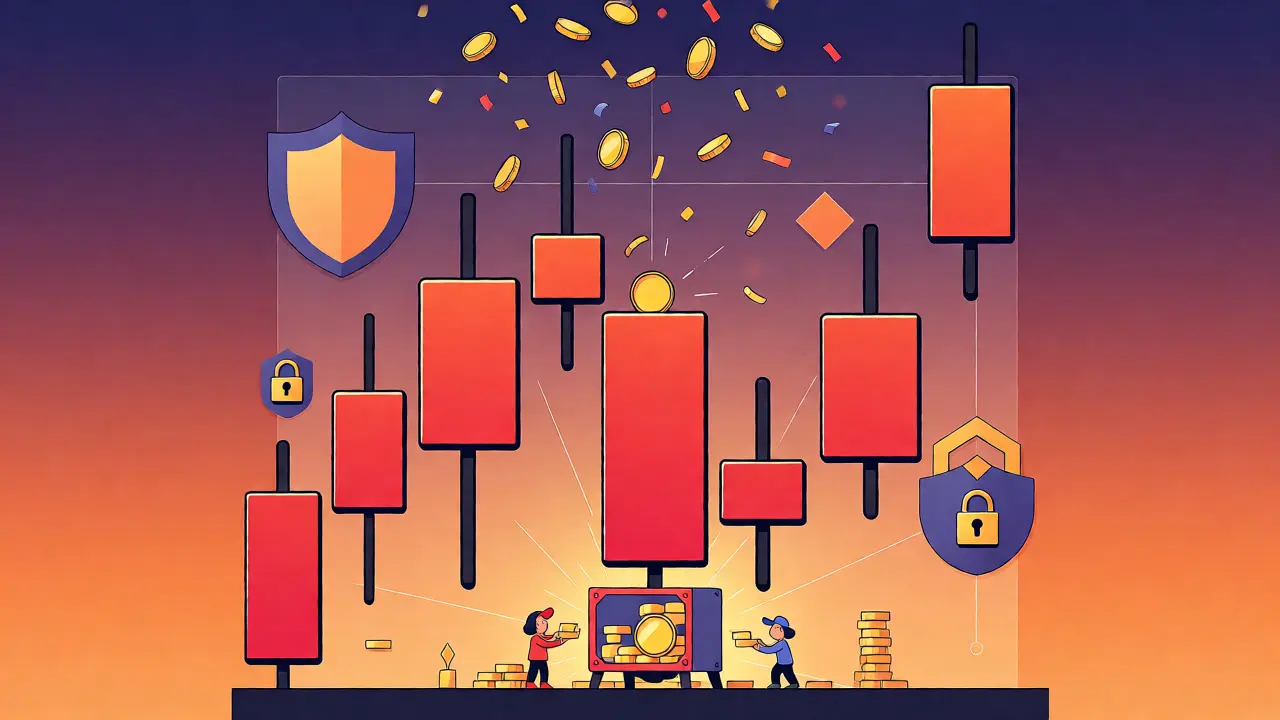
You cannot discuss MANTRA without addressing its turbulent price history. The token experienced extreme volatility. Legacy OM reached an all-time high of approximately $9.04 in February 2025. Then, in mid-April 2025, the price collapsed by nearly 90%, dropping to around $0.45 in a matter of days. Co-founder John Patrick Mullin attributed this to forced liquidations of leveraged positions on centralized exchanges. He argued that the protocol itself remained secure and operational during the crash.
However, community sentiment tells a different story. Critics alleged insider selling, coordinated exchange deposits, and a lack of transparency regarding token concentration. Some reports suggested that a large portion of the circulating supply was controlled by insiders or early investors who sold into the panic. Third-party audits have raised further concerns. A Code4rena review identified several vulnerabilities, and another audit by 8Blocks gave the tokenomics a low score, citing issues with burn mechanisms and vesting schedules. Whether this was a market manipulation event or a structural flaw remains debated, but it serves as a stark warning about the liquidity risks associated with smaller-cap Layer-1 tokens.
Tokenomics: Inflation, Supply, and Staking Rewards
MANTRA's monetary policy is governed dynamically through on-chain proposals, which adds complexity for long-term holders. Initially, Proposal 2 set annual inflation at 8%. Later, Proposal 5 reduced it to 3% in early 2025, only for Proposals 17 and 18 to restore it to 8% later that year. Currently, 60% of inflation goes to staking rewards for delegators and validators, while 40% funds the MANTRA Chain Association for ecosystem incentives.
Staking is the primary way to generate yield on MANTRA. By delegating your coins to a validator, you help secure the network and earn rewards. However, these rewards are variable and funded by new token issuance (inflation), not by transaction fees alone. This means your nominal balance grows, but your purchasing power depends on whether the token price appreciates faster than the inflation rate. With a max supply of 10 billion MANTRA post-split, dilution is a constant factor. Unvested tokens from early rounds continue to unlock according to their original schedules, converting at the 1:4 ratio, which keeps selling pressure present in the market.
Practical Guide: How to Use MANTRA Today
If you decide to participate in the MANTRA ecosystem, here is the practical workflow:
- Wallet Selection: Use a wallet compatible with Cosmos SDK chains, such as Keplr or Leap. Ensure it supports the MANTRA mainnet network.
- Acquisition: Buy MANTRA on major exchanges like Binance, KuCoin, or Gate.io. Verify you are buying the post-split MANTRA asset, not legacy OM.
- Staking: Delegate your coins to a reputable validator. Check the validator's commission rate (typically 5-10%) and uptime history. Avoid validators with low self-bond amounts.
- Governance: Vote on proposals to influence inflation rates, software upgrades, and treasury spending. Your voting power is proportional to your staked amount.
- Development: Developers can deploy Solidity contracts using standard EVM tools like Hardhat or Foundry, interacting with MANTRA-specific precompiles for staking and governance functions.
Verdict: High Risk, High Potential Utility
MANTRA is not a safe haven asset. It is a speculative bet on the future of regulated tokenization. Its strength lies in its specialized architecture-combining Cosmos modularity with EVM compatibility-and its aggressive pursuit of regulatory licenses in key jurisdictions like Dubai. The backing of Google Cloud and partnerships with real estate giants provide a tangible use case beyond speculation.
However, the risks are substantial. The April 2025 crash exposed vulnerabilities in liquidity and trust. Tokenomics changes via governance create uncertainty. And the competition from Ethereum, Polygon, and Avalanche in the RWA space is fierce. For now, MANTRA is best suited for investors who believe that compliance-friendly blockchains will dominate the next cycle of institutional adoption, and who can tolerate significant price swings.
Is OM the same as MANTRA?
Not exactly. OM was the original ERC-20 token on Ethereum. MANTRA is the native coin of the MANTRA Chain. Due to a 1:4 redenomination in March 2026, 1 OM converted to 4 MANTRA. They represent the same economic stake but exist on different networks with different tickers and contract addresses.
Why did MANTRA change its name from OM?
The name change aligned the brand with the launch of its own Layer-1 blockchain, MANTRA Chain. The previous name, MANTRA DAO, referred to the governance organization. The new name reflects the broader infrastructure platform for real-world assets, distinct from the original DeFi protocol.
Can I still buy OM on exchanges?
Most major exchanges now list the new MANTRA token. Some may still show "OM" or "MANTRA (old)" for legacy records. Be careful to select the correct asset corresponding to the current MANTRA Chain mainnet. Depositing legacy OM to a MANTRA address without bridging can lead to loss of funds.
Is MANTRA good for real-world assets?
It is designed for it. MANTRA offers compliance tools, KYC integration capabilities, and regulatory licenses (like VARA in Dubai) that general-purpose chains lack. This makes it attractive for institutions tokenizing real estate or securities, though widespread adoption is still developing.
What caused the OM price crash in 2025?
The crash was attributed to a combination of factors including forced liquidations of leveraged positions, potential insider selling, and broader market conditions. Official statements blamed exchange mechanics, while community critics pointed to token concentration and lack of transparency. No single cause has been definitively proven.