What is Metacraft (MCT) Crypto Coin? A Realistic Look at the Play-to-Earn Token
 Aug, 12 2026
Have you ever wondered if playing video games can actually pay your bills? That promise has fueled the rise of play-to-earn (P2E) cryptocurrencies, and Metacraft (MCT) is a cryptocurrency token designed as the native utility for a fantasy role-playing game built on the BNB Chain. Launched in early 2023, Metacraft positions itself as an accessible entry point into the blockchain gaming world. But before you buy any tokens or mint expensive non-fungible tokens (NFTs), you need to know exactly what this project is, how it works, and whether it’s worth your time.
The Basics: What Is Metacraft?
At its core, Metacraft is a fantasy RPG that runs on the blockchain. Unlike traditional games where your progress stays locked inside a company’s server, Metacraft uses digital ownership. You build unique characters, explore locations like 'Sky City,' hunt dragons, and complete quests. The catch? Your character and your rewards are tied to the MCT token and NFTs.
The project operates on the BNB Smart Chain (now commonly referred to as BNB Chain). This choice is significant because it means transactions are fast and cheap compared to Ethereum. However, it also ties the fate of MCT closely to the health and popularity of the BNB ecosystem. As of late 2023 data, which serves as our baseline for understanding its market position, MCT traded with a market capitalization around $36 million. It was ranked roughly #217 among all cryptocurrencies, placing it firmly in the mid-tier category-not a household name like Bitcoin, but not a micro-cap ghost town either.
One key detail to note immediately: the development team behind Metacraft is anonymous. There are no publicly disclosed founder names or corporate entities linked to the project. In the crypto world, anonymity is a double-edged sword. It allows for privacy, but it also removes accountability. If things go wrong, there’s no CEO to call.
How Does the Gameplay Work?
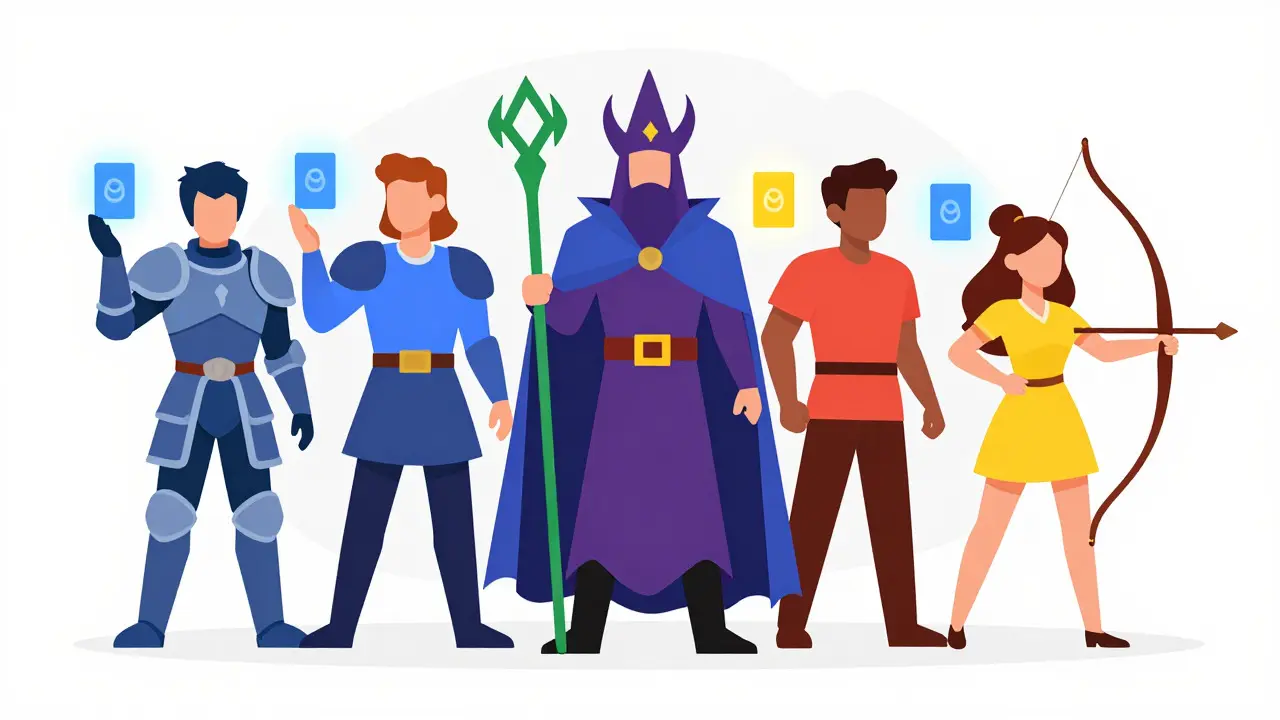
Metacraft isn’t just a trading chart; it’s supposed to be a game. The mechanics revolve around collecting and customizing NFT characters. Think of it like building a party in a classic RPG, except each member is a unique digital asset you own. Players use these characters to battle monsters, solve puzzles, and earn rewards.
The platform integrates social attributes, giving players a unique identity within the game world. You aren’t just a wallet address; you’re a knight, a mage, or whatever class you’ve crafted. The goal is to create an immersive experience that keeps players engaged long enough for the token economy to function.
- Character Creation: Users mint NFTs representing their avatars. These NFTs have varying rarities and stats.
- Exploration: The game features distinct zones, including treasure caves and legendary dragon territories.
- Earning Mechanism: Rewards are distributed in MCT tokens based on gameplay performance and quest completion.
However, don’t expect AAA graphics or complex narratives right out of the gate. Community feedback suggests the visual fidelity and story depth are modest. The focus is heavily on the economic loop rather than pure entertainment value.
Tokenomics and Market Performance
Understanding the token is crucial. MCT serves as the fuel for the ecosystem. You use it to buy NFTs, pay for transaction fees (gas), and potentially stake for additional rewards. Let’s look at some hard numbers from its active period in 2023 to understand its volatility.
| Metric | Value / Detail |
|---|---|
| All-Time Low | $0.045 (January 2023) |
| Typical Trading Price (2023) | $0.66 - $1.09 (varies by exchange) |
| Market Cap | ~$36.8 Million |
| Daily Volume | $11K - $25K (relatively low) |
| Blockchain | BNB Smart Chain (BEP-20) |
Notice the daily trading volume. At $25,000, it’s quite thin. Compare that to giants like Axie Infinity, which often sees hundreds of millions in daily volume. Low volume means high slippage. If you try to sell a large amount of MCT quickly, you might crash the price significantly. This lack of liquidity is a major red flag for serious investors.
Price discrepancies were also common. One exchange might list MCT at $0.66 while another shows $1.09. This happens because there aren’t enough arbitrageurs moving money between platforms to equalize prices. For a trader, this looks like opportunity. For a casual player, it’s a headache trying to figure out the real value.
Risks You Can’t Ignore
If everything sounds too good to be true, it probably is. Here are the specific risks associated with Metacraft that every user should weigh carefully.
- Anonymity Risk: With no known founders, there’s no way to verify the team’s track record. Could they abandon the project tomorrow? Yes. Has it happened in other P2E projects? Absolutely.
- Liquidity Crisis: The low trading volume makes it difficult to exit positions without losing value. If panic sets in, the price could drop faster than you can click “sell.”
- Technical Bugs: User reports on forums like Reddit and Trustpilot mention frequent glitches. Some users reported losing rare NFTs due to wallet sync errors with zero recourse. Remember, in crypto, code is law-and if the code fails, your assets might vanish.
- Regulatory Uncertainty: Gaming tokens face increasing scrutiny from bodies like the SEC. If MCT is classified as a security, it could face delisting from exchanges or legal hurdles that stifle growth.
Security audits are another concern. As of late 2023, there were no independent security audits publicly documented for the smart contracts. This leaves the door open for potential exploits or hacks.
How Metacraft Compares to Competitors
You wouldn’t buy a car without looking at other models, so why do it with crypto? Let’s compare MCT to the industry leaders.
| Feature | Metacraft (MCT) | Axie Infinity (AXS) | The Sandbox (SAND) |
|---|---|---|---|
| Primary Focus | NFT Character RPG | Creature Breeding/Battle | Virtual Land Ownership |
| Market Cap Tier | Mid-Tier (~$36M) | Top-Tier ($2.8B+) | High-Tier ($480M+) |
| Exchange Listings | Few (Limited Liquidity) | 120+ (High Liquidity) | Many (Good Liquidity) |
| Entry Cost | Low | Medium-High | Medium-High |
| Team Transparency | Anonymous | Public | Public |
Metacraft wins on accessibility. You can start playing with very little money. Axie Infinity requires buying multiple NFTs to begin, which can cost hundreds of dollars. But Metacraft loses badly on stability and trust. AXS and SAND have public teams, massive communities, and deep liquidity pools. They are safer bets, albeit with higher barriers to entry.

User Experience: Is It Fun?
Let’s talk about the actual fun factor. Reviews are polarized. On Trustpilot, Metacraft holds a 3.7/5 rating. Positive reviews praise the "immersive game world" and "low entry barrier." People enjoy the simplicity of setting up a MetaMask wallet and jumping into the game within 15 minutes.
But the negative reviews tell a different story. Complaints about unresponsive customer support and buggy gameplay are common. One user reported earning only $2.30 in their first week after spending $15 on an NFT. That’s a return on investment that barely covers inflation, let alone gas fees. Another user lost a rare dragon NFT due to a technical error, highlighting the fragility of the platform.
For many, Metacraft feels less like a polished game and more like a job with poor pay. The average earnings per hour were reported around $0.85, which is significantly below the sector average of $2.40. Unless you love the fantasy RPG aesthetic specifically, the grind might outweigh the reward.
Future Outlook and Roadmap
The developers have outlined plans for expansion. Their roadmap includes creating a "meta universe game," integrating cross-chain functionality, and introducing animated scenes. They aim to allow players to interact across different blockchains, which would reduce dependence on BNB Chain alone.
However, execution is key. Many crypto projects promise the moon and deliver mud. Analysts remain cautious. While some see potential in community-driven narrative development, others warn of a "high risk" profile due to concentrated supply-over 78% of tokens held by the top 100 wallets. This centralization means a few "whales" could manipulate the price easily.
If Metacraft can fix its bugs, increase liquidity, and perhaps reveal its team, it might survive the next bear market. But as it stands, it remains a speculative niche product rather than a mainstream gaming solution.
Is Metacraft (MCT) a safe investment?
Metacraft carries high risk. It has an anonymous team, low liquidity, and limited security audits. It is suitable only for speculative investors who can afford to lose their entire principal. It is not considered a safe or stable investment compared to established cryptocurrencies.
Which blockchain does Metacraft use?
Metacraft operates on the BNB Smart Chain (formerly Binance Smart Chain). This means you need a BEP-20 compatible wallet like MetaMask or Trust Wallet to store and trade MCT tokens and NFTs.
How much can you earn playing Metacraft?
Earnings vary widely, but community reports suggest an average of $0.85 per hour of gameplay. This is below the industry average for play-to-earn games. Earnings depend on your NFT rarity, time invested, and current token price volatility.
Who created Metacraft?
The development team behind Metacraft is anonymous. There are no publicly verified founder names or corporate entities associated with the project, which adds to the investment risk.
Can I lose my NFTs in Metacraft?
Yes. Users have reported losing NFTs due to wallet sync errors and game bugs. Since the platform lacks robust customer support and insurance mechanisms, recovering lost assets is difficult or impossible.
Matt Kay
August 14, 2026 AT 06:49its just another rug pull waiting to happen. low volume means u cant sell anyway. waste of time.
Dave Kjendal
August 16, 2026 AT 05:23people really think they can beat the system with an anonymous team? its basic economics. if the entry barrier is low and the rewards are high, everyone joins until the value hits zero. metacraft is just faster at hitting zero than most. dont be that guy who chases ghosts.
Kat Bennett
August 17, 2026 AT 10:30i actually tried this out for a bit and while the graphics are definitely not next gen i found the character customization pretty fun in a weird way. sure the earnings are terrible right now but maybe if the community grows and they fix those wallet sync bugs it could stabilize? i mean we all know crypto is volatile so expecting steady income is unrealistic but as a hobby game it has potential if they keep updating it regularly.
Lance Jantz
August 17, 2026 AT 16:51oh look another peasant trying to explain why their digital rocks aren't worth real money. the beauty of metacraft lies in its sheer audacity to exist on bnb chain while pretending to be innovative. it's like watching a dog try to do calculus-adorable but ultimately pointless. yet here we are discussing it because the human psyche craves validation from worthless tokens.
Phil Babb
August 18, 2026 AT 02:19LISTEN UP!!! if you want to make money you need to look at the fundamentals! metacraft has low liquidity which is BAD! but wait! there is always hope! you just need to believe in the roadmap! cross-chain integration is coming! don't let the haters stop you! stay strong and keep grinding!
Harman Singh
August 19, 2026 AT 06:24my friend lost his nft dragon yesterday and support said nothing. it feels so bad when your hard work disappears like that. why do they lie to us about security? i feel so drained thinking about my wallet being empty.
Qolbina Islami
August 19, 2026 AT 06:48THIS IS A SCAM!!! the anonymous team is hiding something big!! america needs to regulate these foreign coins immediately!! they are stealing our future!! wake up people!!
SUBHAM CHOUDHURY
August 20, 2026 AT 17:43hey everyone just remember that every journey starts with a single step. even if the market cap is small right now the community spirit is what matters most. keep supporting each other and maybe one day we will see the true potential of p2e gaming. you got this!