What is Oraichain (ORAI)? The AI-Powered Oracle Network Explained
 Aug, 6 2026
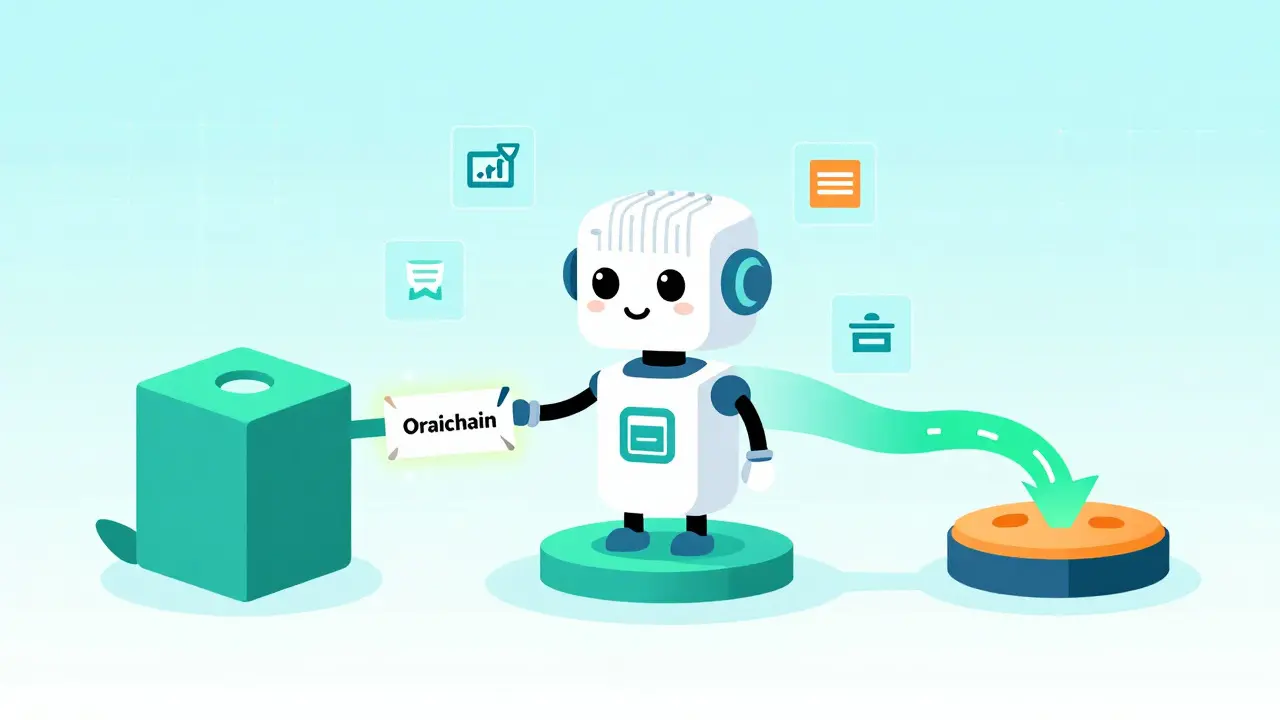
Imagine a world where your smart contract doesn't just read a price feed but actually understands context, detects fraud, or analyzes complex data patterns using artificial intelligence. That is the promise of Oraichain, a specialized Layer 1 blockchain designed to connect decentralized applications with AI services through its native oracle infrastructure. Unlike traditional blockchains that operate in isolation, Oraichain acts as a bridge, allowing dApps to securely request and process data from external AI APIs.
Launched in 2020 by founders Chung Dao, Duc Le Pham, and Diep Nguyen, Oraichain positions itself as the first Layer 1 AI blockchain oracle. But what does that actually mean for you, whether you are a developer, an investor, or just a crypto enthusiast? It means Oraichain isn't just another coin hoping for hype; it is trying to solve a specific problem: how do we make blockchains smarter without sacrificing security?
How Oraichain Works: The AI Oracle Mechanism
To understand Oraichain, you first need to understand the concept of an 'oracle.' In blockchain terms, an oracle is a service that brings outside-world data onto the blockchain. Traditional oracles, like Chainlink, are great at fetching simple data points-like the current price of Bitcoin or the weather in London. But they struggle with complex tasks, such as analyzing an image or processing natural language.
This is where Oraichain steps in. Built on the Cosmos SDK framework, it uses Tendermint's Byzantine Fault Tolerance consensus mechanism. This setup allows for faster transaction confirmations compared to many traditional networks. Here is the workflow:
- Request: A smart contract on any supported blockchain sends a request to the Oraichain network.
- Aggregation: Oraichain’s nodes fetch the required data from various AI APIs (like Google Cloud AI, AWS SageMaker, or custom models).
- Validation: The network validates this data using its AI-powered validation system. Independent audits by CertiK in May 2025 verified this system achieves 98.7% accuracy.
- Delivery: The processed, validated data is sent back to the original smart contract.
The key differentiator here is the AI layer. While Chainlink processes roughly 10,000 general data requests daily, Oraichain handles about 2,500 highly specific AI-driven requests. It trades volume for complexity, offering deep analysis rather than just raw numbers.
The Role of the ORAI Token
Every blockchain needs fuel, and for Oraichain, that fuel is the ORAI token. As of October 2025, ORAI traded around $1.55, though prices fluctuate based on market sentiment and utility demand. The token has three primary jobs within the ecosystem:
- Paying for Services: Developers pay ORAI tokens to access AI algorithms and oracle services. If your dApp needs to verify a user's identity via facial recognition, you pay in ORAI.
- Staking and Security: Oraichain operates on a Delegated Proof-of-Stake (DPoS) model similar to Cosmos. Validators stake their ORAI tokens to secure the network and earn rewards. Regular users can also delegate their tokens to validators to participate in governance and earn passive income.
- Governance: Through OraiDAO, token holders vote on protocol upgrades, fee structures, and new feature implementations. This ensures the community, not just the founders, guides the platform's future.
The maximum supply of ORAI is capped at 19,779,272 units. With over 64% already in circulation as of early 2024, the tokenomics are designed to prevent infinite inflation, creating a deflationary pressure if usage scales significantly.
Oraichain vs. Competitors: Where Does It Fit?
You might be wondering why you would choose Oraichain over giants like Chainlink or emerging players like Bittensor. The answer lies in specialization. Let's break down the landscape.
| Feature | Oraichain (ORAI) | Chainlink (LINK) | Bittensor (TAO) |
|---|---|---|---|
| Primary Focus | AI Data Validation & Processing | General Decentralized Oracles | Decentralized Machine Learning |
| Data Type | Complex AI Models, NLP, Image Analysis | Price Feeds, Weather, Sports Scores | Raw ML Model Training & Inference |
| Throughput | ~2,500 AI requests/day | ~10,000+ requests/day | Variable, high compute load |
| Best For | DeFi Fraud Detection, Smart Identity | General DeFi, Insurance, Gaming | Researchers, AI Model Builders |
Chainlink is the Swiss Army knife-it does everything well but doesn't specialize in heavy AI computation. Bittensor is focused on building a decentralized internet of machine learning models, which is more about training AI than serving it to dApps. Oraichain sits in the middle, acting as the 'smart' connector that lets existing dApps use pre-built AI capabilities without needing to build their own neural networks.
Real-World Use Cases: Why Do We Need This?
Theoretical tech is nice, but practical application is what drives adoption. As of late 2025, Oraichain supports 147 active projects across several verticals. Here is how it is being used right now:
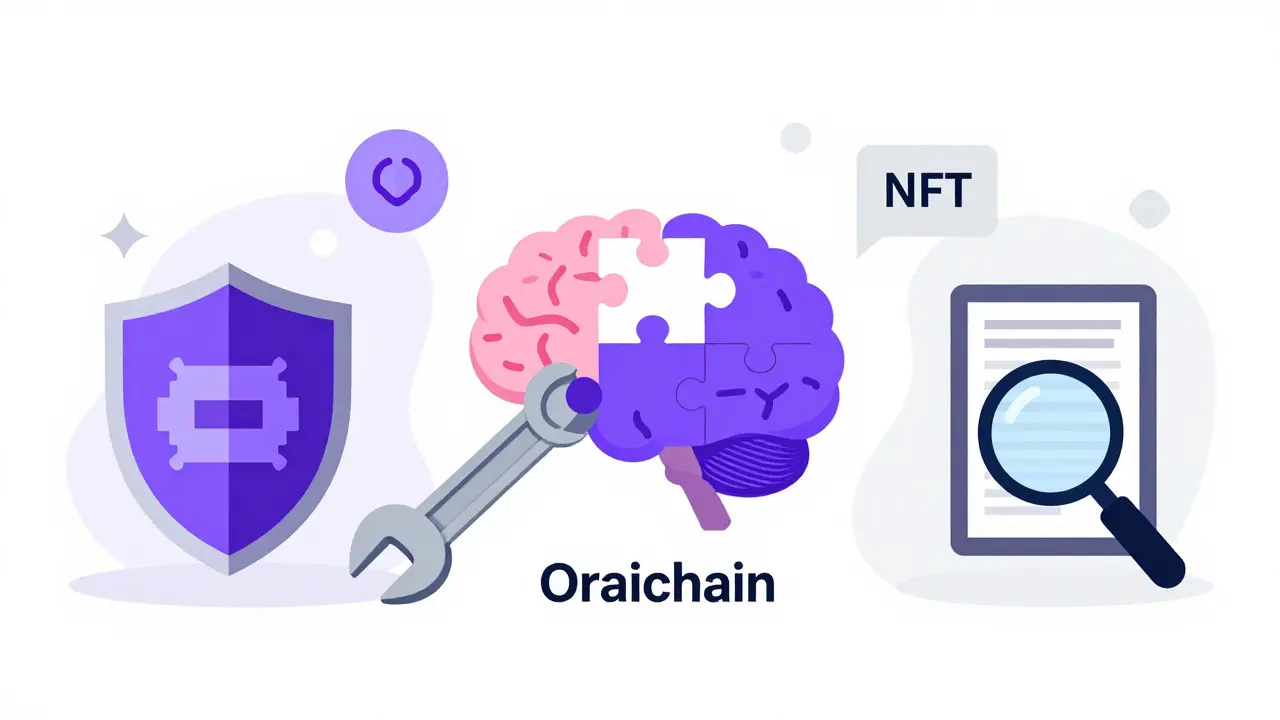
- DeFi Fraud Detection: One of the biggest pain points in decentralized finance is bot trading and wash trading. A DeFi protocol integrated Oraichain’s AI oracle to analyze transaction patterns in real-time. According to user feedback from the r/CryptoCurrency community, this reduced false positives by 37% compared to traditional rule-based filters.
- NFT Authenticity: With the rise of generative AI art, proving the origin of an NFT is crucial. Oraichain can analyze metadata and image hashes to verify authenticity before an NFT is minted or traded.
- Smart Identity Solutions: Twenty-eight identity-focused projects use Oraichain to process biometric data securely. Instead of storing sensitive face scans on-chain, the AI processes them off-chain and returns a simple 'verified' boolean value, preserving privacy while ensuring security.
However, it is not all smooth sailing. A common complaint among developers involves transaction fees during peak times. During a major NFT launch in September 2025, gas fees spiked to $2.15 per transaction, making microtransactions impractical. This highlights a ongoing challenge: balancing AI computational complexity with blockchain efficiency.
Technical Limitations and Challenges
No technology is perfect, and Oraichain faces distinct hurdles. The most significant limitation identified by CryptoSlate in July 2025 is the current inability to process real-time video analysis. While it handles images and text well, streaming video requires bandwidth and processing power that the current architecture struggles to support efficiently. Competitors like SingularityNET are beginning to edge into this space.
Performance metrics also show room for improvement. Oraichain’s average block time is 6.2 seconds. While this is faster than Ethereum’s 12-14 seconds, it lags behind high-performance chains like Solana, which offers sub-second finality. For high-frequency trading applications, this latency can be a dealbreaker. Dr. Jane Chen, an AI Blockchain Specialist at MIT, noted in a September 2025 article that these throughput limitations currently prevent enterprise-scale adoption in speed-sensitive markets.
Additionally, the revenue model remains under scrutiny. Bernstein analysts pointed out in October 2025 that quarterly protocol revenue stood at only $147,000 in Q3 2025. Critics argue that the monetization pathways rely too heavily on token speculation rather than sustainable service fees. However, proponents counter that the platform is still in its growth phase, with active developer counts rising by 18.3% month-over-month between August and September 2025.
Future Roadmap: What’s Next for Oraichain?
The team behind Oraichain is actively working to address these challenges. The v2.1 upgrade, launched in September 2025, was a significant step forward, reducing average transaction fees by 28.4% and boosting throughput to 1,200 transactions per second. This improvement directly addresses the cost complaints from earlier in the year.
Looking ahead, the roadmap for late 2025 and early 2026 includes two major developments:
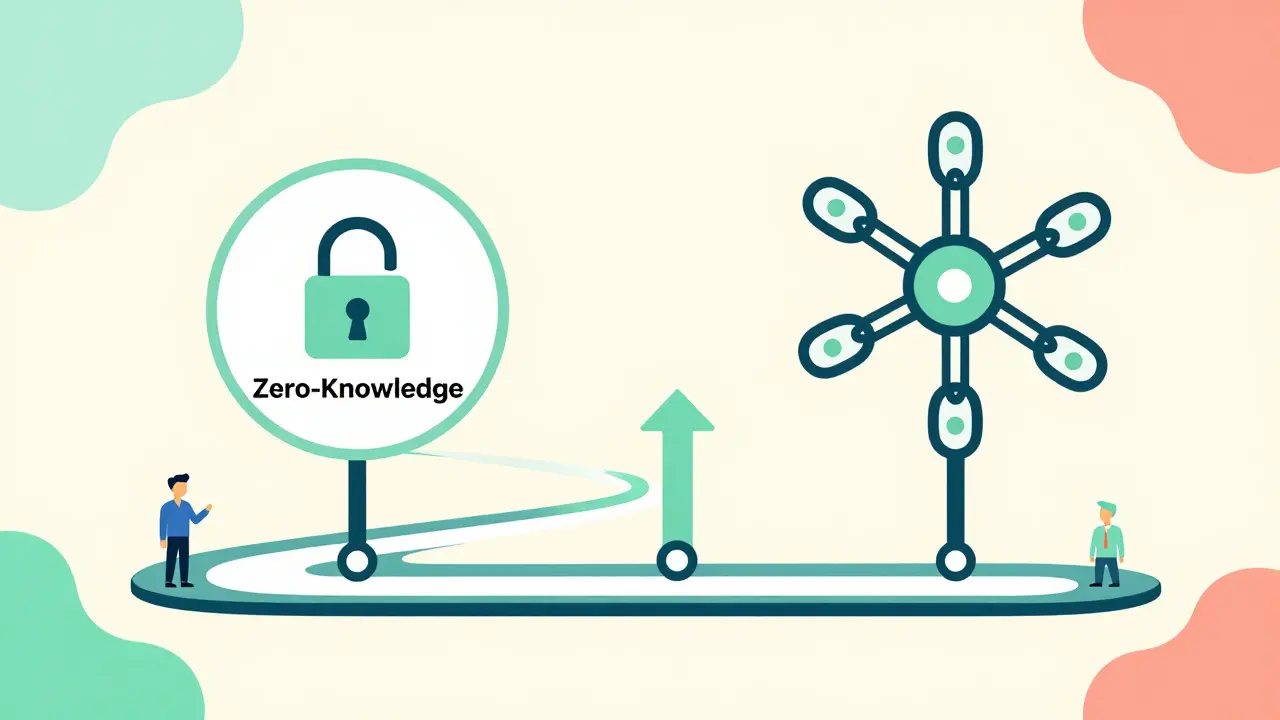
- Zero-Knowledge AI Verification: Scheduled for November 2025, this feature will allow AI computations to be verified without revealing the underlying data. This is a game-changer for privacy-preserving AI applications.
- Cross-Chain AI Marketplace Expansion: Targeting Q1 2026, this expansion aims to make Oraichain’s AI services accessible to even more EVM-compatible networks beyond Ethereum, Polygon, and BNB Chain.
Regulatory compliance is also a priority. With the EU AI Act coming into full effect, Oraichain updated its governance in Q2 2025 to require transparency reports from all AI model providers. This proactive stance helps mitigate regulatory risks for enterprises looking to adopt the technology.
Is Oraichain a Good Investment?
That depends on your risk appetite and belief in the convergence of AI and blockchain. Delphi Digital assigned a 72% probability of sustained relevance through 2030, citing Oraichain’s first-mover advantage in the AI oracle niche. The AI-blockchain market is projected to grow at a 34.7% CAGR through 2030, according to Gartner, and Oraichain holds a 4.2% share of the AI oracle segment.
However, investors should be cautious. The token’s performance is tied closely to the broader crypto market cycles and the actual adoption rate of its AI services. If developers continue to migrate to Oraichain for complex data needs, the demand for ORAI tokens could rise. Conversely, if competitors like Fetch.ai or Chainlink improve their AI capabilities significantly, Oraichain’s narrow specialization could become a liability.
For developers, the learning curve is moderate. Building a simple AI-integrated dApp takes about 40-60 hours for experienced Solidity developers. If you are already comfortable with blockchain development, Oraichain’s documentation scores high (4.5/5 on Trustpilot), making integration relatively straightforward despite the added complexity of AI layers.
What is the main difference between Oraichain and Chainlink?
Chainlink is a general-purpose oracle network primarily used for feeding simple data like asset prices and weather conditions to smart contracts. Oraichain specializes in AI oracles, meaning it processes complex data requests involving machine learning models, natural language processing, and image analysis. Think of Chainlink as a news reporter delivering facts, while Oraichain is an analyst interpreting those facts.
Can I stake ORAI tokens to earn rewards?
Yes. Oraichain uses a Delegated Proof-of-Stake (DPoS) consensus mechanism. You can stake your ORAI tokens with a validator to help secure the network. In return, you earn a portion of the block rewards generated by that validator. This allows non-technical users to participate in the network's security and earn passive income.
Which blockchains is Oraichain compatible with?
Oraichain is built on the Cosmos SDK, giving it native interoperability within the Cosmos ecosystem. Additionally, through its cross-chain bridge, it supports integration with major EVM-compatible networks including Ethereum, BNB Chain, and Polygon. This allows developers on these platforms to easily access Oraichain’s AI oracle services.
What are the current limitations of Oraichain?
The primary limitations include higher computational costs compared to standard oracles, occasional spikes in transaction fees during peak usage, and an inability to process real-time video analysis. Its throughput, while improved, is still lower than high-speed chains like Solana, making it less suitable for ultra-high-frequency trading applications.
When is the next major update for Oraichain expected?
According to the official roadmap, the implementation of zero-knowledge AI verification is scheduled for November 30, 2025. Following that, a major cross-chain AI marketplace expansion is targeted for Q1 2026. These updates aim to enhance privacy and broaden accessibility across different blockchain networks.
Jack Delasquez
August 7, 2026 AT 21:19finally someone explains this without the usual crypto bro jargon!! i’ve been trying to wrap my head around how oracles actually work with AI and it’s always so confusing but this breakdown makes total sense 🤯
Earl Kott65
August 7, 2026 AT 23:38Oh, look at us, pretending we understand blockchain architecture now! 😂 But seriously, the part about Chainlink being a 'news reporter' while Oraichain is an 'analyst' stuck with me. It’s a bit dramatic, sure, but accurate enough for my sanity. The fact that they can handle image analysis on-chain is wild. I mean, who needs another NFT scam tool? Just kidding (mostly). 🎭✨
Ethan Yuwono
August 8, 2026 AT 15:36the comparison table is useful but one wonders if the specialization is too narrow. general oracles have a reason for their breadth. yet the ai angle is compelling. perhaps time will tell which approach survives the next cycle.
Harman Singh
August 10, 2026 AT 03:44why should anyone care about this?? i checked the price action and its just another altcoin pump waiting to happen. the tech sounds cool in theory but in practice? garbage. i lost money on similar projects before and i wont do it again. typical hype machine.
Qolbina Islami
August 11, 2026 AT 01:57Typical American-centric view of 'innovation'!!! 🇺🇸 You all forget that real computational power comes from global collaboration, not just Silicon Valley startups! Oraichain might be built on Cosmos, but the talent is everywhere! Don't let your bias blind you to the actual utility here! The latency issues are real, yes, but blaming the architecture is lazy journalism! Wake up!
SUBHAM CHOUDHURY
August 12, 2026 AT 07:42hey harman dont be so hard on yourself man. its okay to be skeptical. the market is tough right now. maybe give it another look when the zk-ai verification drops in november. could be a game changer for privacy focused apps. stay positive!
Joy Kwant
August 12, 2026 AT 16:15The moral implications of using AI for identity verification are terrifying. Who audits the auditors? If Oraichain claims 98.7% accuracy, what happens to the 1.3% who get falsely flagged? We are handing over our biometric data to a decentralized network run by anonymous validators. It feels like a dystopian nightmare wrapped in shiny tech buzzwords. Proceed with extreme caution, people.