What is peaq (PEAQ) crypto coin? The machine economy blockchain explained
 Jan, 19 2026
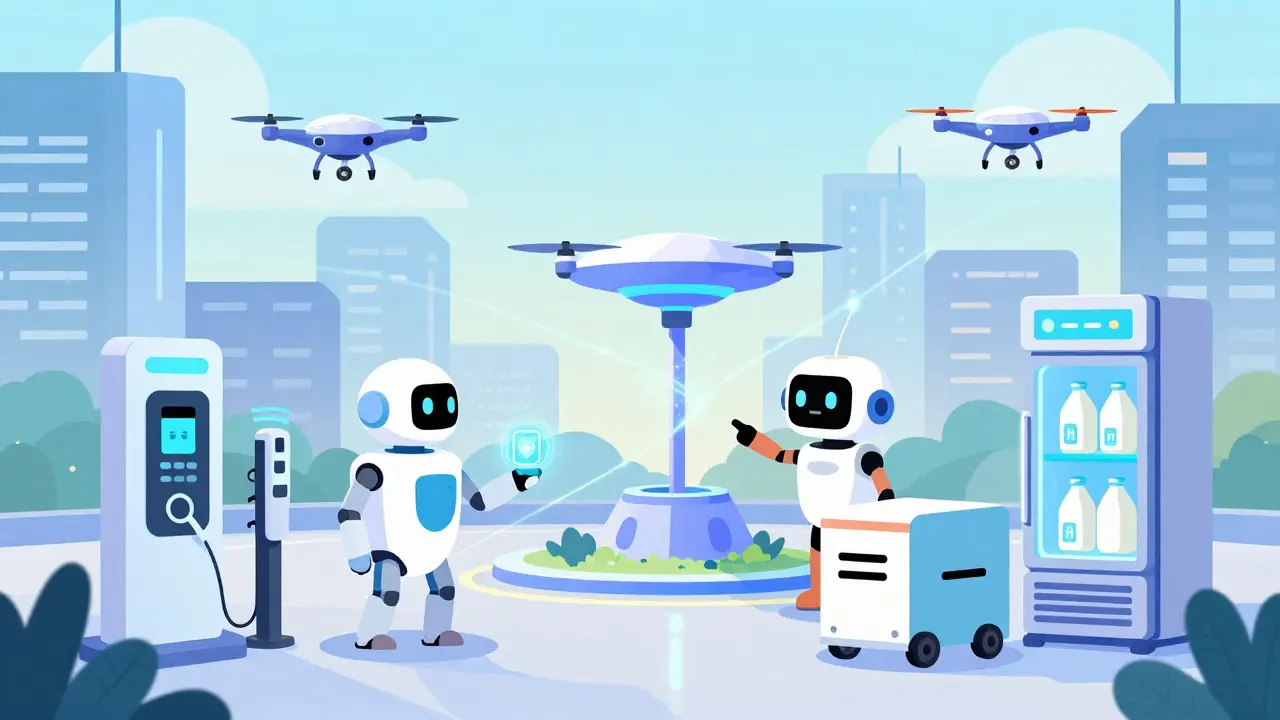
Most people think of cryptocurrency as digital money for buying things or trading on exchanges. But peaq (PEAQ) isn’t just another coin. It’s a blockchain built for machines - robots, cars, smart sensors, and even wind turbines - to talk to each other, pay for services, and run on their own, without humans stepping in.
What exactly is peaq?
peaq is a Layer-1 blockchain launched in November 2024 after seven years of development. It’s not trying to replace Bitcoin or Ethereum. Instead, it’s designed for something newer: the Economy of Things (EoT). Think of it like the Internet of Things (IoT), but with blockchain underneath. Instead of your smart fridge just telling you when milk is low, imagine it automatically paying a delivery service for more milk using crypto - no human clicking ‘buy’ needed.
The network was created by Till Wendler, Leonard Dorlöchter, and Max Thake, and is backed by EoT Labs. It runs on Substrate, the same framework as Polkadot, which means it can connect with other blockchains. But unlike Polkadot or Ethereum, peaq doesn’t focus on DeFi or NFTs. It focuses on real-world hardware.
How does peaq work with machines?
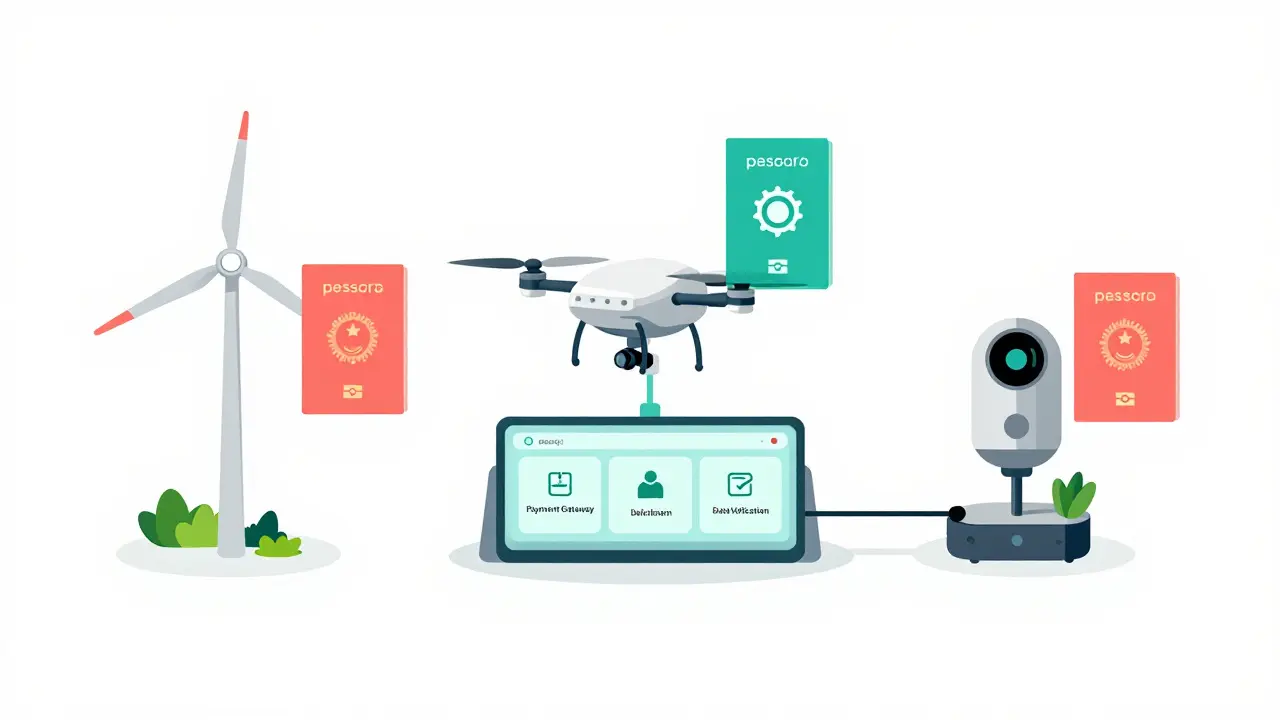
peaq gives every machine a unique digital identity - a Machine ID. This isn’t just a username. It’s a verified, tamper-proof digital passport that lets a robot, drone, or electric vehicle prove who it is on the network. Once identified, machines can:
- Pay for charging stations using PEAQ tokens
- Automatically rent out unused storage space on a smart warehouse server
- Sign contracts with suppliers when inventory drops below a threshold
- Share sensor data (like air quality or road conditions) and get paid for it
Right now, over 850,000 machines - from delivery drones in Germany to agricultural sensors in Brazil - are already connected to the peaq network. These machines are part of more than 30 live projects across 20+ industries. That’s not theoretical. It’s happening now.
Why is peaq different from other blockchains?
Most blockchains are like general-purpose highways. peaq is a specialized factory line built for autonomous vehicles.
Compare it to other Layer-1 chains:
- Bitcoin is digital gold - store of value.
- Ethereum is a global computer for apps and smart contracts.
- Alephium and Kaspa focus on speed and scalability for trading.
- peaq is built for machines to transact, autonomously, at scale.
peaq’s secret sauce? Modular DePIN Functions. These are pre-built tools developers can plug into their apps - like “Machine ID,” “Data Verification,” or “Payment Gateway for Devices.” Instead of coding everything from scratch, a startup building a fleet of autonomous delivery robots can use peaq’s ready-made modules. That cuts development time from months to weeks.
It’s also EVM-compatible. That means if you know how to build on Ethereum, you can build on peaq without learning a whole new language. Solidity developers can deploy their smart contracts directly. No need to rewrite everything.
How is PEAQ the token used?
PEAQ is the native token of the network. It’s not mined. You can’t mine it like Bitcoin. Instead, it’s earned through staking.
peaq uses Delegated Proof of Stake (DPoS). That means token holders can stake their PEAQ to become validators or nominate others to validate transactions. In return, they earn rewards - usually around 5-8% APY depending on network conditions. This keeps the network secure and decentralized without burning massive amounts of electricity.
There’s also a disinflationary model. The token supply starts with 3.5% annual inflation, but that rate drops by 10% every year until it hits a floor of 1%. This encourages early adoption while protecting long-term value. It’s a smart balance - not too greedy, not too slow.
As of January 2026, PEAQ trades at $0.1222 USD. In the past week, it jumped 35.3%, outperforming the broader crypto market, which only rose 7.5%. The most traded pair is PEAQ/USDT, making up nearly 70% of all volume. You can trade it on major exchanges like Bitget, Bithumb, Gate.io, and XT.
Who’s backing peaq?
peaq didn’t just launch with hype. It had serious funding.
- In March 2024, it raised $15 million from top crypto investors like Animoca Brands and Borderless Capital.
- In May 2024, it raised another $20 million through a token sale on CoinList.
These aren’t random VCs. Animoca Brands has backed major Web3 projects like The Sandbox and Axie Infinity. Borderless Capital has deep ties to enterprise blockchain adoption. Their involvement signals confidence that peaq isn’t just a crypto experiment - it’s infrastructure for the next wave of automation.
Over 5 million people and machines are already part of the ecosystem. And 60+ applications are being built on peaq - from smart agriculture to autonomous shipping logistics to AI-powered drone networks.
Can developers actually build on it?
Yes. And it’s designed to be easy.
peaq offers a full JavaScript SDK with step-by-step tutorials. Want to connect a solar panel to the network so it can sell excess energy? There’s a guide for that. Want to build a fleet of robots that coordinate deliveries and split payments automatically? The tools are there.
The documentation is clear, well-organized, and updated regularly. You’ll find API references, code samples, deployment guides, and even sandbox environments to test your apps before going live. It’s not just marketing - developers are already shipping products.
What’s the future of peaq?
The machine economy is growing fast. By 2030, analysts expect over 75 billion connected devices worldwide. Most of them will need a way to transact securely, cheaply, and autonomously.
peaq is positioned as the backbone for that future. It’s not trying to be everything. It’s trying to be the best at one thing: enabling machines to be economic agents.
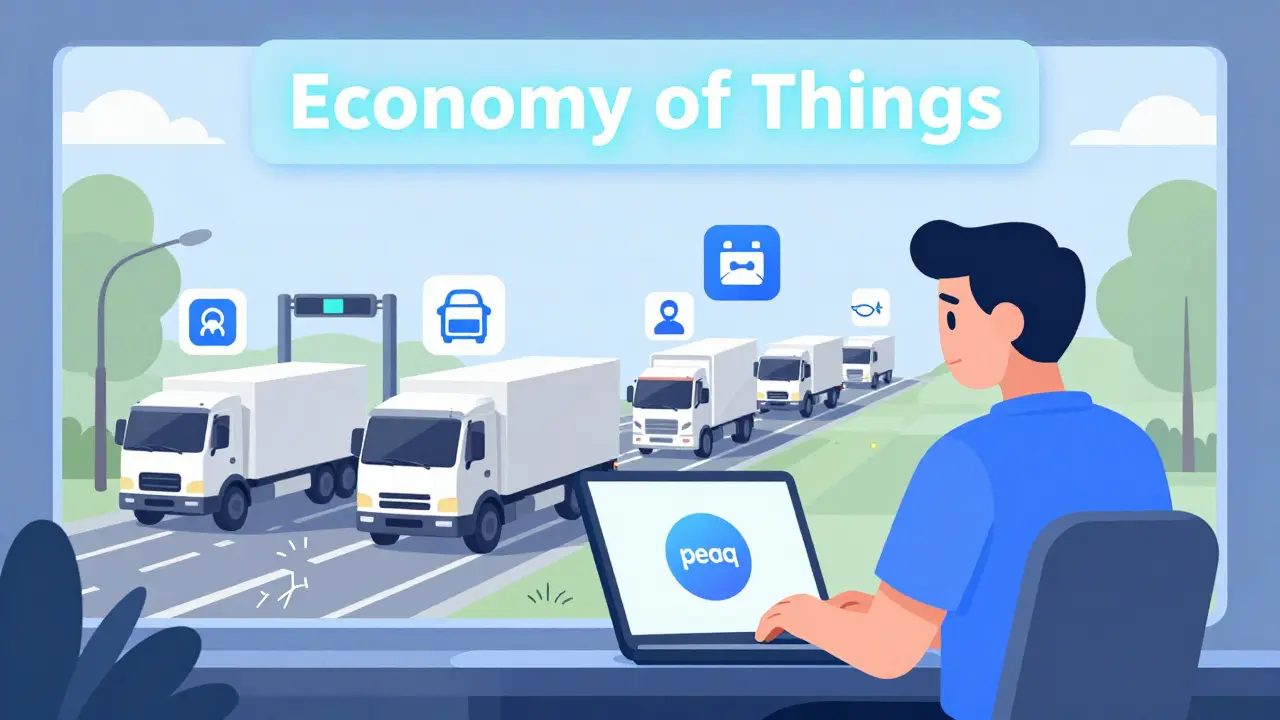
Imagine a self-driving truck that pays tolls, charges its batteries, and reports road damage - all on its own. Or a smart city where streetlights adjust brightness based on foot traffic and sell unused energy back to the grid. These aren’t sci-fi ideas anymore. They’re peaq use cases.
With institutional backing, real-world adoption, and a clear technical roadmap, peaq is moving from concept to reality faster than most crypto projects ever do.
Is peaq right for you?
If you’re a crypto investor looking for the next big thing, peaq offers exposure to a growing sector - DePIN and machine automation - that’s still early but gaining serious traction.
If you’re a developer, peaq gives you a powerful, low-friction platform to build real applications that solve tangible problems - not just speculative ones.
If you’re just curious, think of it this way: Bitcoin let machines (computers) exchange value. peaq lets physical machines - the ones that move, sense, and act in the real world - do the same. That’s not just an upgrade. It’s a new category.
Is peaq (PEAQ) a good investment?
Whether PEAQ is a good investment depends on your goals. If you believe in the growth of the machine economy and DePIN networks, then peaq is one of the most focused projects in the space. It has real adoption, institutional backing, and a clear technical edge over general-purpose blockchains. But like all crypto, it’s volatile. The token price can swing based on market sentiment, even if the underlying tech is solid. Only invest what you can afford to lose.
Can I mine PEAQ tokens?
No, you cannot mine PEAQ. The peaq network uses Delegated Proof of Stake (DPoS), not Proof of Work. That means mining rigs won’t work. Instead, you can earn PEAQ by staking your existing tokens to help secure the network. Staking is more energy-efficient and accessible - all you need is a wallet and some PEAQ to lock up.
What industries are using peaq right now?
peaq is already live in over 20 industries. Examples include autonomous logistics (delivery robots), smart agriculture (soil sensors that auto-order fertilizer), energy grids (solar panels selling excess power), and urban mobility (EVs paying for charging stations). There are also projects in maritime shipping, air quality monitoring, and even space-based IoT sensors. The network’s modular design makes it easy to adapt to new use cases.
How does peaq compare to Polygon or Solana?
Polygon and Solana are optimized for fast, cheap transactions for apps like DeFi or NFTs. peaq is optimized for physical devices doing real-world tasks. It’s not about trading tokens - it’s about machines paying for services, sharing data, and executing contracts without humans. While Polygon and Solana might power a DeFi app, peaq powers the robot that delivers the product that app sells. They’re complementary, not direct competitors.
Where can I buy PEAQ tokens?
You can buy PEAQ on major exchanges including Bitget, Bithumb, Gate.io, and XT. The most popular trading pair is PEAQ/USDT, which accounts for nearly 70% of volume. Make sure to use a secure wallet that supports ERC-20 or Substrate-based tokens (like Polkadot.js or Keplr) to store your PEAQ safely after purchase.
Is peaq only for big companies?
No. While big enterprises are using peaq for fleet management and infrastructure, the platform is built for developers of all levels. The SDK, documentation, and modular tools are designed to lower the barrier to entry. A single developer with an idea for a smart irrigation system can build and deploy on peaq without needing a team of engineers or millions in funding.
Jonny Lindva
January 19, 2026 AT 08:12Man, I’ve been watching peaq for months and this is the first time I’ve seen a crypto project that actually makes sense for real life. My buddy runs a small farm in Iowa and he’s testing peaq-enabled soil sensors that auto-order fertilizer when nutrients drop. No more guessing. No more wasted money. Just machines doing their job. This isn’t vaporware - it’s happening right now.
Tselane Sebatane
January 19, 2026 AT 18:35Okay I’m not even kidding - I just spent three hours reading every whitepaper and GitHub commit on peaq and I’m convinced. This isn’t just another blockchain trying to be Ethereum 2.0. It’s like someone finally built the plumbing for the machine economy. Every robot, drone, and smart sensor needs an identity and a wallet. PEAQ gives them both. And the DPoS model? Genius. No energy waste. No ASIC farms. Just people staking and earning while keeping the network alive. I’ve been staking since launch and my APY’s been steady at 6.8%. The real win? Developers aren’t begging for funding - they’re shipping. I saw a guy on Reddit build a solar panel payment module in 48 hours using the SDK. That’s the future.
Adam Lewkovitz
January 20, 2026 AT 02:44Another crypto scam pretending to be revolutionary. Machines paying each other? LOL. Who’s gonna police a robot that steals energy from a charging station? Who’s gonna sue when a drone crashes because its payment contract failed? This isn’t innovation - it’s fantasy wrapped in blockchain buzzwords. Real infrastructure doesn’t need tokens to function. It needs regulation. And we don’t need a thousand new coins to make that happen. Just stop feeding these hype cycles.
Brenda Platt
January 22, 2026 AT 00:04YESSSS this is the kind of project I’ve been waiting for 🙌 I’ve been teaching high schoolers about Web3 and now I have something tangible to show them - not just NFT monkeys but actual robots paying for things. My student built a prototype where a classroom smart thermostat sells excess heat data to a local grid. It runs on peaq. We did it in two weeks. No dev team. No VC money. Just curiosity and the peaq SDK. This is what decentralized tech should look like - accessible, useful, and human-centered.
Clark Dilworth
January 23, 2026 AT 22:02peaq’s modular DePIN functions represent a paradigm shift in decentralized infrastructure architecture. The EVM compatibility layer enables seamless composability with legacy Ethereum ecosystems while the Machine ID protocol introduces cryptographically verifiable identity at the edge. This is not merely a Layer-1 blockchain - it’s a substrate for autonomous economic agents operating within the physical domain. The 850K+ connected devices represent the first wave of a distributed machine economy that will eclipse DeFi in utility by 2030.
Barbara Rousseau-Osborn
January 24, 2026 AT 09:21Ugh another one of these ‘machine economy’ scams. Everyone’s jumping on the bandwagon because they think it’s the next AI hype. But let’s be real - who’s gonna pay for all this? The robots? You think a drone in Brazil is gonna care about staking PEAQ? This is just Wall Street repackaging IoT as crypto to lure in dumb investors. And don’t even get me started on the 35% pump - classic rug pull setup. Save your money. Buy gold instead.
Harshal Parmar
January 25, 2026 AT 18:36I’m from India and we’ve got a ton of small farmers here who can’t afford fancy tech. But peaq? It’s perfect. I’ve seen pilot projects where soil sensors send data and get paid in PEAQ to buy seeds from local cooperatives. No middlemen. No delays. Just machines talking to machines and people getting fair value. The best part? Even people with basic phones can participate - no need for fancy hardware. I showed my uncle how to stake 100 PEAQ and he’s now earning more than his monthly pension. This isn’t tech for Silicon Valley - it’s tech for the real world.
Dave Ellender
January 26, 2026 AT 05:28Interesting project, but I’ve got to ask - what happens when a machine’s identity gets compromised? You say it’s tamper-proof, but what’s the recovery process? Who’s liable if a self-driving truck pays for a toll and then gets hijacked? I’m not against innovation, but I’ve seen too many ‘decentralized’ systems collapse under edge cases. Transparency on the security model would help.
Darrell Cole
January 27, 2026 AT 21:30PEAQ is garbage. You think machines need crypto? They don’t. They need firmware updates and maintenance schedules. This is just another way for VCs to cash out. Animoca Brands? They backed Axie Infinity - remember how that turned out? And you’re telling me a drone in Germany is going to care about a 5% APY? Wake up. The only thing growing here is the hype. And the people who bought in early are already dumping. Don’t be the last one holding the bag.
Linda Prehn
January 28, 2026 AT 01:06I just read this entire post and I’m so emotionally drained. Why does everything have to be blockchain? Can’t a fridge just beep when it’s out of milk? Why does it need a digital passport and a token to buy yogurt? This isn’t progress - it’s overengineering with a side of crypto bros. I miss when technology was simple. Now everything’s a ‘paradigm shift’ and I just want to make coffee without signing a smart contract.