What is Project 32 (32) crypto coin? The truth behind the obscure token
 Mar, 23 2026
There’s a coin called Project 32, or just "32," that shows up on some crypto price trackers. But if you try to find out what it actually is - who made it, what it does, or why it exists - you hit a wall. No whitepaper. No team. No roadmap. No real community. And the price data? It’s all over the place.
Price chaos: Which number is real?
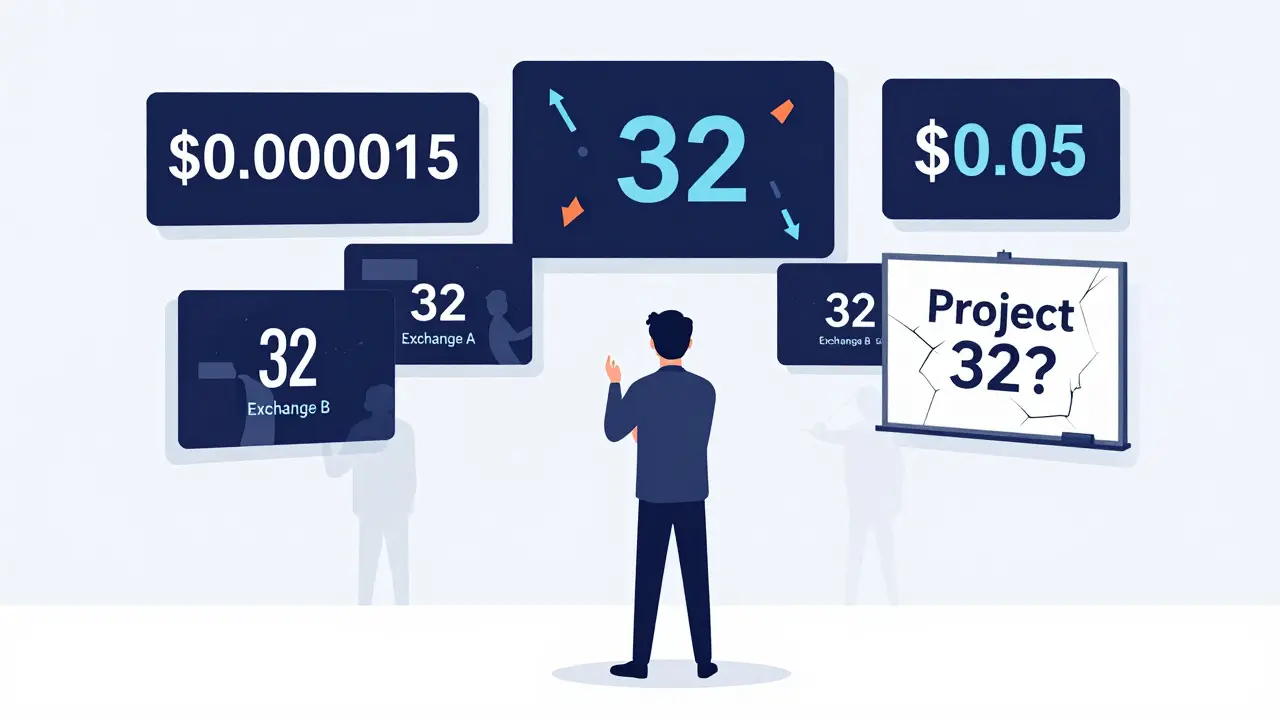
Look up Project 32 on Crypto.com, and you’ll see it trading at around $0.00001568. On CoinCodex? It’s listed at $0.052084. That’s more than 3,000% difference. CoinGecko says the 24-hour volume is just $4.44. Crypto.com claims it’s $2.58 million. One source says it’s up 0.63% in a day. Another says it crashed 93.8%. These aren’t minor discrepancies - they’re red flags that scream "data is broken or manipulated." This kind of inconsistency doesn’t happen with legitimate coins. Bitcoin, Ethereum, even lesser-known tokens like Solana or Polygon - their prices might swing, but the underlying data is consistent across platforms because their blockchains are transparent. Project 32 has no public blockchain explorer. No transaction history you can verify. No smart contract address you can check on Etherscan or BscScan. That’s not normal. It’s not just obscure - it’s invisible.No one knows who’s behind it
Every real cryptocurrency has a story. Bitcoin had Satoshi Nakamoto. Ethereum had Vitalik Buterin. Even obscure altcoins usually have a GitHub profile, a Telegram group, or a Twitter account where developers post updates. Project 32 has none of that. No team members. No LinkedIn profiles. No press releases. No announcements on CoinDesk or Cointelegraph. No Reddit threads. No Discord servers. Nothing. And then there’s the name. "Project 32"? That sounds like a placeholder. A code name from a dev who never finished the job. Even weirder: the token symbol is just "32." Most coins use 3-5 letter symbols - like BTC, ETH, SOL. "32" isn’t a symbol. It’s a number. It’s confusing. It’s unprofessional. And it’s not how real projects name their tokens.What’s it even used for?
Here’s the biggest question: What does Project 32 do? Is it a payment coin? A DeFi token? A meme coin? A utility token for a platform? There’s no answer. No website explains its purpose. No whitepaper describes its tech. No roadmap shows future plans. Compare that to even the most random meme coins. Dogecoin started as a joke, but it had a community, a logo, a Twitter account, and eventually got listed on Coinbase. Shiba Inu had a burning mechanism, a decentralized exchange, and a massive social media push. Project 32 has none of that. It’s just a ticker on a few obscure exchanges with no clear reason to exist.
Is it even on a real blockchain?
We don’t know. Is it an ERC-20 token on Ethereum? A BEP-20 on Binance Smart Chain? Or is it on some private chain no one can access? There’s no blockchain explorer link. No contract address published anywhere. That means you can’t verify transactions. You can’t check how many tokens are in circulation. You can’t see who holds the majority supply. In legitimate crypto, this stuff is public. You can look up the contract, see the balance of every wallet, and track every transfer. Project 32? Zero visibility. That’s not just privacy - it’s secrecy. And in crypto, secrecy usually means risk.Why does it even have a price?
If no one knows what it is, why are people trading it? The answer is likely pump-and-dump schemes. Low-volume tokens with unclear fundamentals are perfect targets for manipulators. A small group buys a few thousand tokens, pushes the price up on a sketchy exchange, posts fake news on Twitter, and then sells off before anyone else catches on. The fact that CoinGecko shows $4.44 in daily volume while Crypto.com shows $2.58 million suggests two possibilities: either one platform is reporting fake data, or there are multiple tokens with the same name. Maybe "Project 32" is being used by several different scam projects across different blockchains. That’s not uncommon. It’s how scammers confuse investors - create 10 different "Project 32" tokens and hope one of them gets traction.What do experts say?
No reputable analyst has written about Project 32. Not CoinDesk. Not Cointelegraph. Not Weiss Ratings - they listed it, but gave no analysis. No academic paper has studied it. No financial regulator has issued a warning - not because it’s safe, but because it’s too insignificant to even merit attention. The SEC has a list of warning signs for crypto scams: no clear team, no utility, no transparency, inconsistent data. Project 32 checks every box.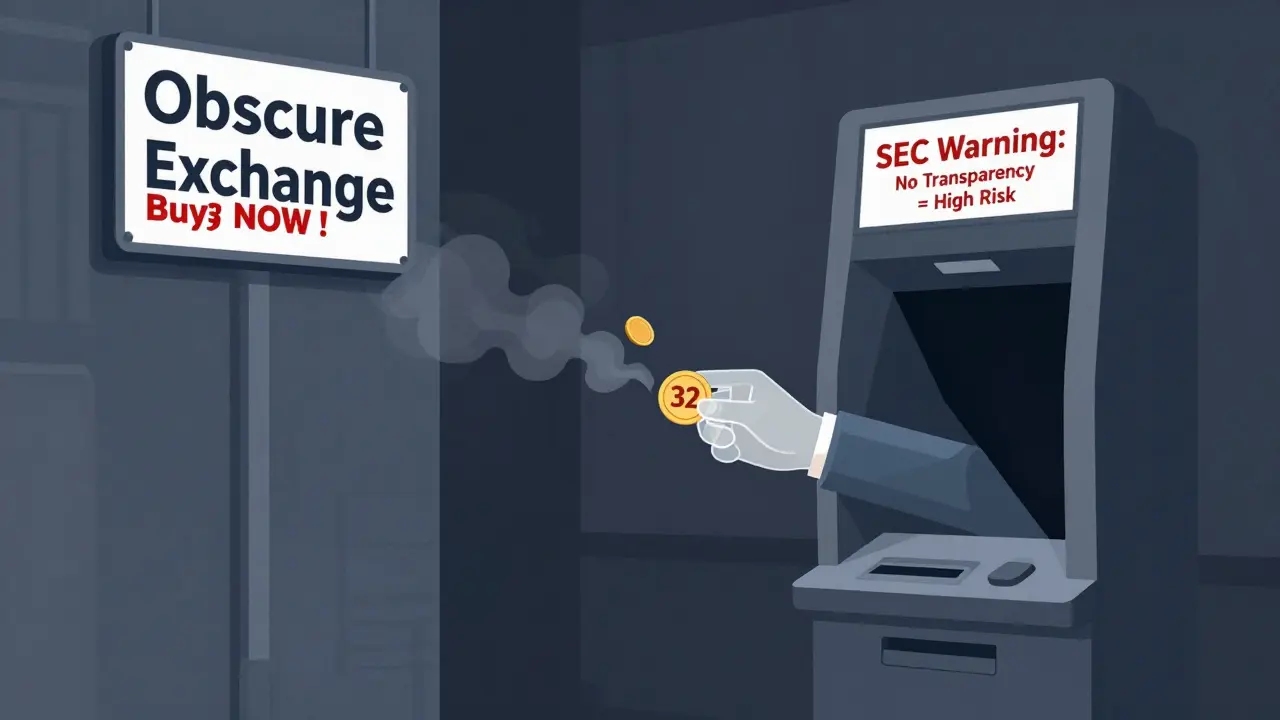
Should you buy it?
Short answer: No. Even if you think you’re getting in on the ground floor, you’re not. You’re gambling on data that doesn’t make sense. You’re trusting a token with no history, no purpose, and no oversight. If you lose money on this, there’s no recourse. No customer support. No refund policy. No legal protection. There are thousands of legitimate cryptocurrencies with real teams, real use cases, and transparent ledgers. Why risk your money on one that doesn’t even have a website?What’s the real story here?
Project 32 doesn’t look like a failed project. It looks like a never-started one. Or worse - a deliberate deception. The lack of information isn’t accidental. It’s intentional. Scammers rely on obscurity. They count on people not asking questions. If you see this token on a new exchange you’ve never heard of, with no trading volume history and no community, walk away. It’s not a hidden gem. It’s a trap.Final takeaway
Project 32 (32) isn’t a cryptocurrency you can invest in. It’s a warning sign. A lesson in how crypto scams hide in plain sight - not with flashy ads or big promises, but with silence, inconsistency, and zero transparency. Don’t confuse obscurity with opportunity. If you can’t find the basics - who made it, what it does, where it lives - then it’s not a coin. It’s a gamble with no odds.Is Project 32 a real cryptocurrency?
No, Project 32 doesn’t meet the basic criteria of a legitimate cryptocurrency. It lacks a whitepaper, development team, blockchain details, utility, or transparent transaction history. Most authoritative sources can’t verify its existence beyond inconsistent price data, which suggests it may be a scam, a data error, or multiple fake tokens using the same name.
Why do different websites show different prices for Project 32?
The wildly different prices - from $0.000015 to over $0.05 - point to either major data errors or multiple tokens using the "32" symbol. Legitimate coins have consistent pricing across platforms because their blockchain data is public and verifiable. Project 32 has no public blockchain explorer, so its prices are likely pulled from low-liquidity, unregulated exchanges where manipulation is common.
Can I buy Project 32 on Coinbase or Binance?
No, Project 32 is not listed on any major exchange like Coinbase, Binance, or Kraken. It only appears on obscure, low-traffic platforms that don’t require strict verification. Trading it there puts your funds at high risk of loss or theft.
Is Project 32 built on Ethereum or Binance Smart Chain?
There is no verified information about which blockchain Project 32 uses. No contract address has been published, and no blockchain explorer shows any transactions tied to this token. This lack of technical transparency is a major red flag for any cryptocurrency.
What should I do if I already bought Project 32?
If you already bought it, don’t invest more. Monitor the price closely, but be ready to sell quickly if you see any movement. Since there’s no official wallet or support, you’re on your own. Avoid holding it long-term - there’s no reason to believe it will gain value, and high volatility means you could lose everything overnight.
Are there any legitimate alternatives to Project 32?
Yes. Instead of chasing obscure tokens with no history, look at coins with clear use cases and transparent teams - like Litecoin, Chainlink, or Polkadot. Even small-cap coins with active development, public GitHub repositories, and community discussions are safer bets than Project 32. Always research before investing.
Lorna Gornik
March 23, 2026 AT 07:42Kevin Da silva
March 24, 2026 AT 04:56JOHN NGEH
March 24, 2026 AT 08:03vu phung
March 24, 2026 AT 10:13Andrew Midwood
March 25, 2026 AT 17:15Kayla Thompson
March 27, 2026 AT 15:52Joshua T Berglan
March 27, 2026 AT 22:05Ananya Sharma
March 28, 2026 AT 22:49Jenni Moss
March 29, 2026 AT 08:55Brijendra Kumar
March 31, 2026 AT 04:48