What is Solidus Ai Tech (AITECH)? Token, Use Cases, and Risks Explained
 Jun, 18 2026
You’ve probably seen the buzz around AI and blockchain merging. It’s one of the hottest narratives in crypto right now. But when you hear a name like Solidus Ai Tech (AITECH), do you know what it actually does? Or are you just guessing based on the hype?
AITECH isn’t just another meme coin hoping for a quick pump. It positions itself as a utility token for a decentralized artificial intelligence infrastructure platform. In simple terms, it tries to connect people who need computing power for AI tasks with people who have that power available. But before you buy or build on it, you need to understand the mechanics, the market reality, and the significant risks involved.
What Exactly Is Solidus Ai Tech?
Solidus Ai Tech is a blockchain-based platform that integrates AI computing power with cryptocurrency technology to create a decentralized marketplace for AI computational resources. Founded in 2021 by Paul Farhi and Adrian Stoica, the company aims to solve a specific problem: AI models require massive amounts of processing power, which is expensive and often centralized.
The core idea is straightforward. Instead of renting servers from giants like Amazon or Google, users can access a peer-to-peer network of high-performance computers. The native currency for this ecosystem is the AITECH token. You use these tokens to pay for AI services, or you earn them by contributing your own hardware’s processing power to the network.
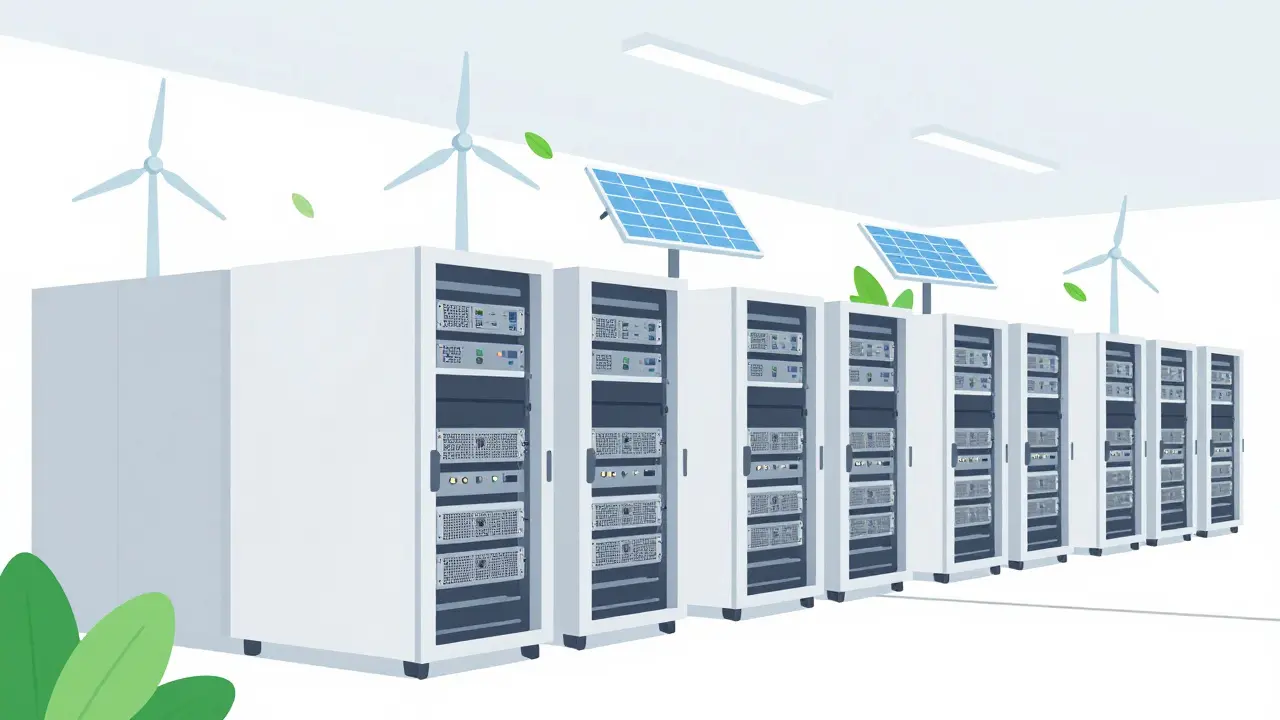
Headquartered in Dubai, United Arab Emirates, the project has put its money where its mouth is regarding physical infrastructure. They operate an 8,000-square-foot data center in Bucharest, Romania. This facility is designed to be eco-friendly, running on renewable energy sources. The goal is to achieve Tier 3 compliance by 2025, a standard that ensures high availability and reliability for enterprise-grade operations.
How the AITECH Token Works
Understanding the tokenomics is crucial because this determines how you interact with the platform. Launched in August 2023, AITECH is marketed as a "deflationary AI infrastructure utility token." Let’s break down what that means for you.
- Utility: The primary use case is paying for services within the Solidus ecosystem. Whether you are training a machine learning model or using their no-code tools, you spend AITECH.
- Earning Mechanism: Unlike Bitcoin, which uses proof-of-work mining that consumes huge amounts of electricity, AITECH rewards users for contributing idle GPU resources. If you have powerful hardware sitting unused, you can lend it to the network and earn tokens.
- Staking: Holders can stake their tokens to earn passive income through annual percentage yields (APY). This locks up your tokens for a set period, reducing circulating supply and potentially supporting price stability.
- Deflationary Aspect: The term suggests mechanisms are in place to reduce the total supply over time, theoretically increasing scarcity. However, you should always verify the current burning rates and emission schedules in their official whitepaper, as these change.
As of late 2024, the circulating supply was around 1.7 billion tokens out of a maximum supply of roughly 1.98 billion. This means a significant portion of tokens are already in circulation, which impacts volatility compared to projects with smaller floats.
The Technology: Agent Forge and Decentralized Compute
Talking about "decentralized AI" is easy. Building it is hard. Solidus Ai Tech attempts to bridge this gap with two main technological pillars.
First is the distributed computing model. The platform connects multiple nodes equipped with high-performance GPUs. These nodes handle AI workloads like natural language processing, computer vision, and predictive analytics. Smart contracts on the Ethereum blockchain manage the transactions, ensuring that when you pay for compute, the service is delivered securely and transparently.
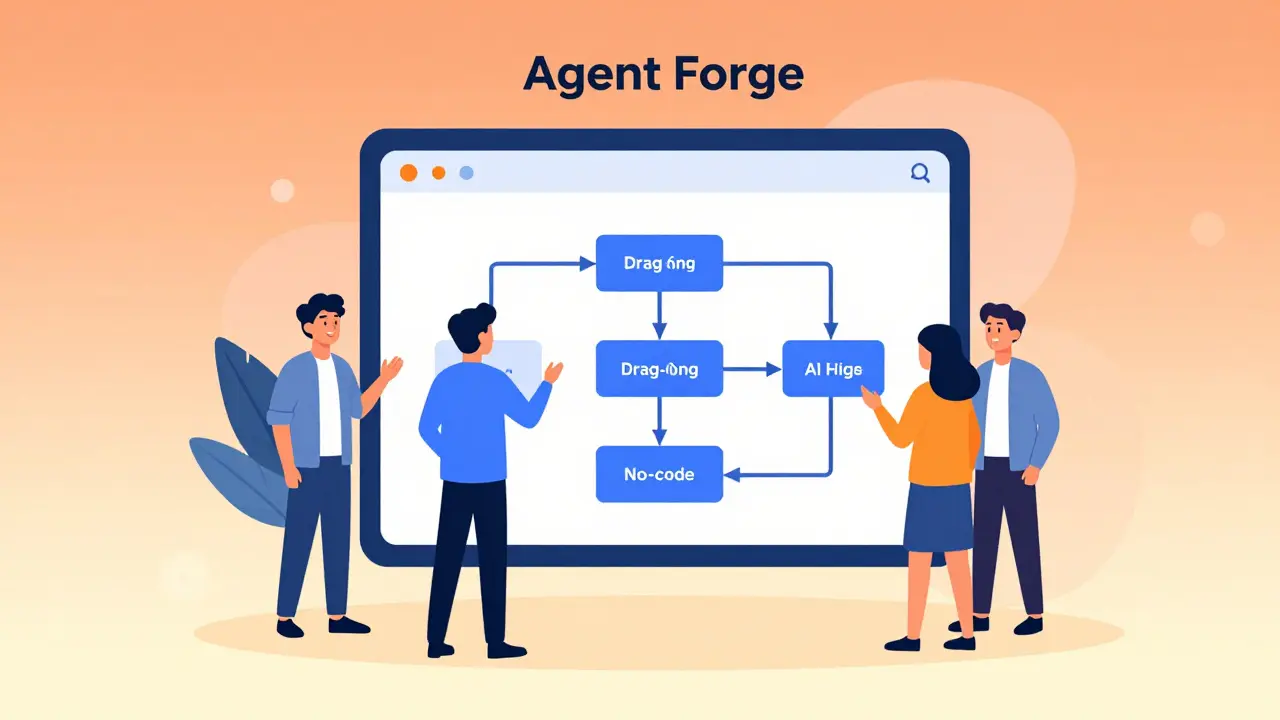
Second is Agent Forge. This is a standout feature for non-technical users. It’s a no-code platform that allows anyone to create, deploy, and monetize autonomous AI agents. You don’t need to write Python or C++ code. You define what you want the agent to do, and the platform handles the rest. This lowers the barrier to entry significantly, allowing small businesses or individuals to leverage AI without hiring a team of developers.
| Feature | Solidus Ai Tech (AITECH) | Traditional Cloud (AWS/Google) |
|---|---|---|
| Cost Structure | Pay-per-use, often lower due to P2P model | Subscription or hourly rates, can be high at scale |
| Transparency | Blockchain-based, transparent logs | Opaque, proprietary systems |
| Sustainability | Focus on renewable energy data centers | Mixed, often criticized for high energy use |
| Accessibility | No-code options (Agent Forge) | Requires technical expertise |
| Reliability | Dependent on node uptime; evolving SLAs | Enterprise-grade SLAs guaranteed |
Market Performance and Volatility Risks
Here is where we need to get real. While the technology sounds promising, the financial performance of the AITECH token tells a different story. Crypto markets are brutal, and AI-themed coins are particularly volatile.
In mid-2023, AITECH held a market rank of #355 with a market cap over $110 million. By late 2024, that rank had dropped to #631, with a market cap hovering around $34 million. That is a massive decline in value and market confidence. Why did this happen?
- Competition: The AI crypto space is crowded. Competitors like SingularityNET (AGIX) and Fetch.ai (FET) have larger ecosystems and more established partnerships.
- Liquidity Issues: Lower market cap means lower liquidity. This makes it harder to buy or sell large amounts without moving the price drastically against you.
- Adoption Hurdles: Despite having ~15,000 active users in Q3 2024, this is a tiny fraction of the global AI market. Enterprise adoption requires trust and reliability that new decentralized networks struggle to prove initially.
Analysts have been mixed. Some predicted potential growth if the project executes its roadmap, while others warned of short-term losses. For example, Changelly analysts noted significant downward pressure and advised caution for short-term traders. Gate.com analysts saw long-term potential but acknowledged the high volatility.
If you are considering investing, remember this: AITECH is a high-risk asset. Its value is tied not just to the success of its technology, but to the broader sentiment of the crypto market and the hype cycle surrounding AI.
Who Should Use or Invest in AITECH?
Not every crypto project is for everyone. Here is how different types of users might view Solidus Ai Tech.
For Developers and AI Enthusiasts: If you need cheap GPU power for training models and want to avoid big cloud providers, the decentralized marketplace could save you money. The API integration supports popular frameworks, making it technically viable for experiments.
For Non-Technical Users: Agent Forge is your gateway. If you want to build a chatbot or an automated assistant without coding, this tool is designed for you. However, expect a learning curve. User reports suggest it takes 2-3 weeks to become proficient with the platform’s core features.
For Investors: This is speculative. If you believe in the long-term thesis of decentralized AI infrastructure and sustainable computing, AITECH fits the narrative. But you must be prepared for sharp price swings. Dollar-cost averaging (DCA) is often recommended for such volatile assets to mitigate timing risk.
Regulatory and Future Outlook
The regulatory landscape for AI and crypto is shifting rapidly. The EU AI Act, for instance, sets strict standards for transparency and safety in AI development. Solidus Ai Tech’s European presence and blockchain-based transparency could align well with these regulations, potentially giving them an edge over opaque competitors.
Looking ahead, the project’s success hinges on execution. Key milestones include achieving Tier 3 compliance for their Bucharest data center and expanding beyond Ethereum to other blockchains for better scalability and lower fees. If they can secure major enterprise clients and increase active user numbers significantly, the token’s utility-and potentially its value-could grow.
However, skepticism remains valid. The gap between promising whitepapers and real-world product-market fit is wide in crypto. Keep an eye on their quarterly updates and actual usage metrics, not just price charts.
Is AITECH a good investment in 2026?
No one can guarantee future returns. AITECH is a high-risk, high-reward asset. Its value depends on the adoption of its decentralized AI infrastructure. Given its past volatility and drop in market rank, thorough research and risk management are essential. Never invest more than you can afford to lose.
How do I buy AITECH tokens?
You can typically buy AITECH on major cryptocurrency exchanges like Gate.io or MEXC. Ensure you have a secure wallet, such as MetaMask or Trust Wallet, that supports ERC-20 tokens, as AITECH operates on the Ethereum blockchain. Always verify the contract address to avoid scams.
What is Agent Forge?
Agent Forge is a no-code platform within the Solidus Ai Tech ecosystem. It allows users to create, deploy, and monetize autonomous AI agents without needing programming skills. It simplifies access to AI capabilities for non-technical users.
Is Solidus Ai Tech environmentally friendly?
Yes, sustainability is a key part of their mission. Their data center in Bucharest, Romania, runs on renewable energy sources. Additionally, their decentralized model aims to utilize idle computing resources more efficiently than traditional energy-hungry data centers.
How does AITECH differ from Bitcoin?
Bitcoin is a store of value and digital currency secured by proof-of-work mining. AITECH is a utility token used to access AI services and contribute computing power. It does not use proof-of-work mining; instead, it rewards users for providing GPU resources to the network.