What Is U Crypto Coin? Meme Token vs. United Stables Explained
 Oct, 23 2026
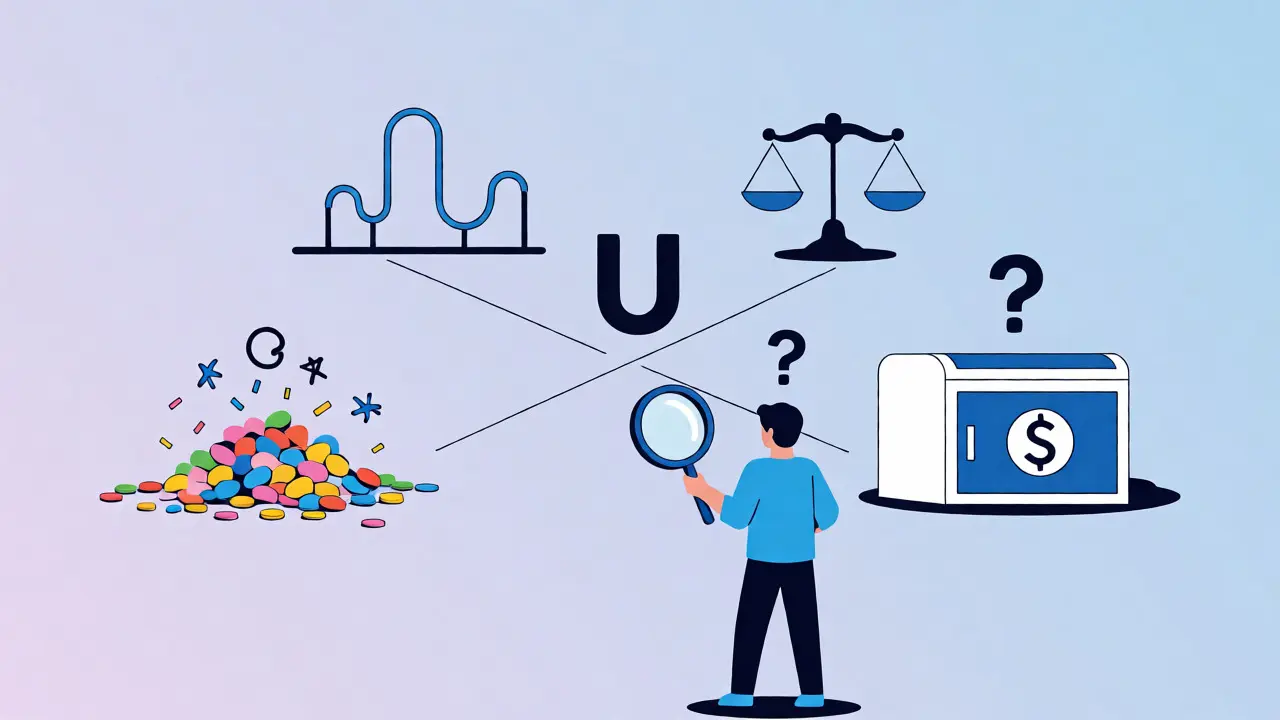
You search for "U" on a crypto tracker and hit a wall of confusion. One result is a tiny meme coin worth pennies; another is a sophisticated stablecoin aiming to fix global payments. They share the same ticker, but they are worlds apart. If you clicked this article hoping to know which one is the "real" U, you’re in the right place. The short answer? There isn’t just one. This guide breaks down the two main contenders: the speculative U (U) meme token on BNB Smart Chain and the institutional-grade United Stables dollar-pegged stablecoin. We’ll look at what they do, why they exist, and how to tell them apart before you risk your capital.
The Ticker Trap: Why "U" Is Ambiguous
In cryptocurrency, tickers are like street names-they can be duplicated across different neighborhoods (blockchains). The symbol "U" is currently used by several unrelated projects. When you see "U" in your wallet or on an exchange, it’s critical to check the contract address and the project name. Confusing these assets is a common mistake that leads to holding the wrong bag. For instance, the generic "U" listing on major aggregators often refers to a small-cap asset with no utility, while other projects use the same letter for serious financial infrastructure. Always verify the issuer. A ticker alone tells you almost nothing about the underlying value or risk.
The BNB Chain Meme Token: Speculation Over Substance
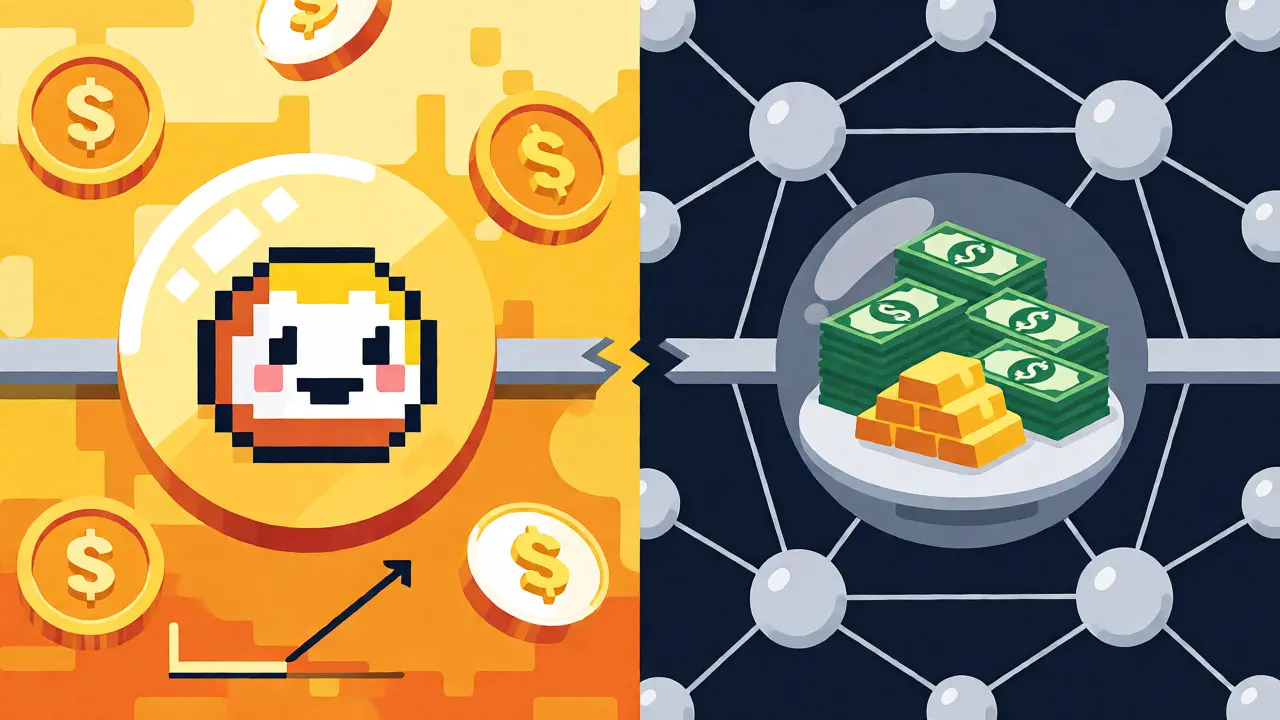
Let’s start with the most common search result: the generic U token on BNB Smart Chain a blockchain network compatible with Ethereum Virtual Machine. This asset markets itself as the "Official mascot of $U," born to trigger FOMO (Fear Of Missing Out). It is a classic meme coin. There is no whitepaper detailing complex technology, no audited reserves, and no named development team in public records. Its primary purpose is trading attention and community hype rather than solving a technical problem.
As of late 2026, this token has a market capitalization hovering around $34,000 to $125,000, depending on which aggregator you trust. The daily trading volume is incredibly low-sometimes under $50. This means if you buy a significant amount, you might struggle to sell it without crashing the price. The contract address for this specific token is typically cited as 0x6f88dbed8f178f71f6a0c27df10d4f0b8ddf4444. Without a locked liquidity pool or verified audits, this asset carries extreme risk. It is purely a speculative play, suitable only for money you can afford to lose entirely.
United Stables: The Serious Stablecoin Contender
On the other end of the spectrum is United Stables a British Virgin Islands business company issuing a dollar-pegged stablecoin. This project launched its native U token on BNB Chain and Ethereum in December 2025. Unlike the meme coin, United Stables aims to consolidate fragmented liquidity across centralized exchanges, DeFi protocols, and even AI-agent transactions. Think of it as a unified settlement layer designed for both retail users and institutions.
The goal here is stability and utility. United Stables claims U is backed 1:1 by US dollars and approved USD-backed stablecoins like USDC and USDT. The issuer states that reserves include bank cash, time deposits, and U.S. Treasury securities. They publish monthly reserve reports and undergo quarterly third-party attestations. While this doesn’t mean it’s insured by the FDIC, it provides a level of transparency that meme coins simply lack. The token is integrated with major wallets like Binance Wallet and Trust Wallet, signaling broader adoption ambitions.
How United Stables Works: Reserves and Technology
United Stables uses a hybrid reserve model. Instead of relying solely on cash, it accepts collateral from established stablecoins. This approach aims to reduce reliance on traditional banking rails, which can be slow and restrictive. The smart contracts are upgradeable via a transparent proxy pattern, controlled by a 4-of-6 multisignature arrangement. This means six people must approve changes, and four signatures are required to execute them-a security measure against single points of failure.
Technically, U supports EIP-3009, a standard that allows for gasless transfers using digital signatures. This feature is crucial for future applications where AI agents need to pay for API calls or compute resources instantly without worrying about gas fees. The whitepaper also mentions x402, a protocol for automated machine-to-machine payments. These features position U not just as a store of value, but as a functional currency for the emerging AI economy.
| Feature | BNB Chain Meme U | United Stables U |
|---|---|---|
| Type | Meme Coin / Speculative Asset | Stablecoin / Settlement Layer |
| Backing | None (Market Sentiment) | USD, USDC, USDT, Treasuries |
| Utility | Trading, Community Hype | Payments, DeFi, AI Transactions |
| Audits | Not publicly documented | Quarterly Third-Party Attestations |
| Market Cap (Approx.) | $34K - $125K | Growing Institutional Adoption |
Risks You Need to Know
Neither asset is risk-free. For the meme coin, the biggest danger is illiquidity. With such low trading volume, large sell orders can wipe out the price. There is also no guarantee the project won’t abandon the token tomorrow. For United Stables, the risks are more structural. The issuer notes that U is not registered under major regulations like the EU’s MiCA or the U.S. GENIUS Act. It is not offered to residents of the US, EU, or Hong Kong due to compliance restrictions. Furthermore, the reserve segregation is operational, not statutory. If the issuer or their custodian goes bankrupt, recovering funds depends on local law, not a guaranteed trust structure.
Depegging is another concern. Even stablecoins can drift from $1.00 during market stress. United Stables limits any single institution to 25% of reserves to mitigate counterparty risk, but no system is perfect. Smart contract bugs, though less likely in audited projects, remain a threat. Always consider the regulatory landscape when holding stablecoins, especially those issued offshore.
How to Verify Which U You Own
Don’t guess. Use these steps to confirm your asset:
- Check the Contract Address: On BscScan or Etherscan, paste the token address. Compare it to the official website. The meme token usually starts with
0x6f88.... - Review Liquidity: Look at the DEX pool. If the liquidity is unlocked or very low, treat it with caution.
- Read the Whitepaper: United Stables has a detailed version 1.0 document. Meme tokens rarely have one.
- Check Exchange Listings: Legitimate stablecoins are listed on major platforms with high volume. Meme coins often appear only on smaller decentralized exchanges.
Is U crypto coin a good investment?
It depends on which U you mean. The BNB Chain meme token is highly speculative with low liquidity, suitable only for high-risk traders. United Stables U is a stablecoin designed for utility and stability, making it more suitable for preserving capital and facilitating transactions, though it carries regulatory and custodial risks.
Who issues United Stables U?
United Stables Limited, a business company registered in the British Virgin Islands, issues the token. They state that U is backed by USD and approved stablecoins held in regulated institutions.
Can I buy U in the USA?
United Stables explicitly states that U is not offered to residents of the United States due to regulatory constraints. Access may require geofencing bypasses, but this carries legal uncertainty for US persons.
What is the difference between U and Union U?
Union U is a separate asset related to zero-knowledge inter-blockchain infrastructure, focusing on network security and governance. It is distinct from both the meme coin and the United Stables stablecoin.
Does U pay interest?
Holders of United Stables U do not receive automatic interest, dividends, or voting rights from the issuer. Yield generation requires deploying the token into DeFi protocols or lending platforms.