Why Angola Banned Crypto Mining: Energy Crisis & Crackdown
 Sep, 2 2026
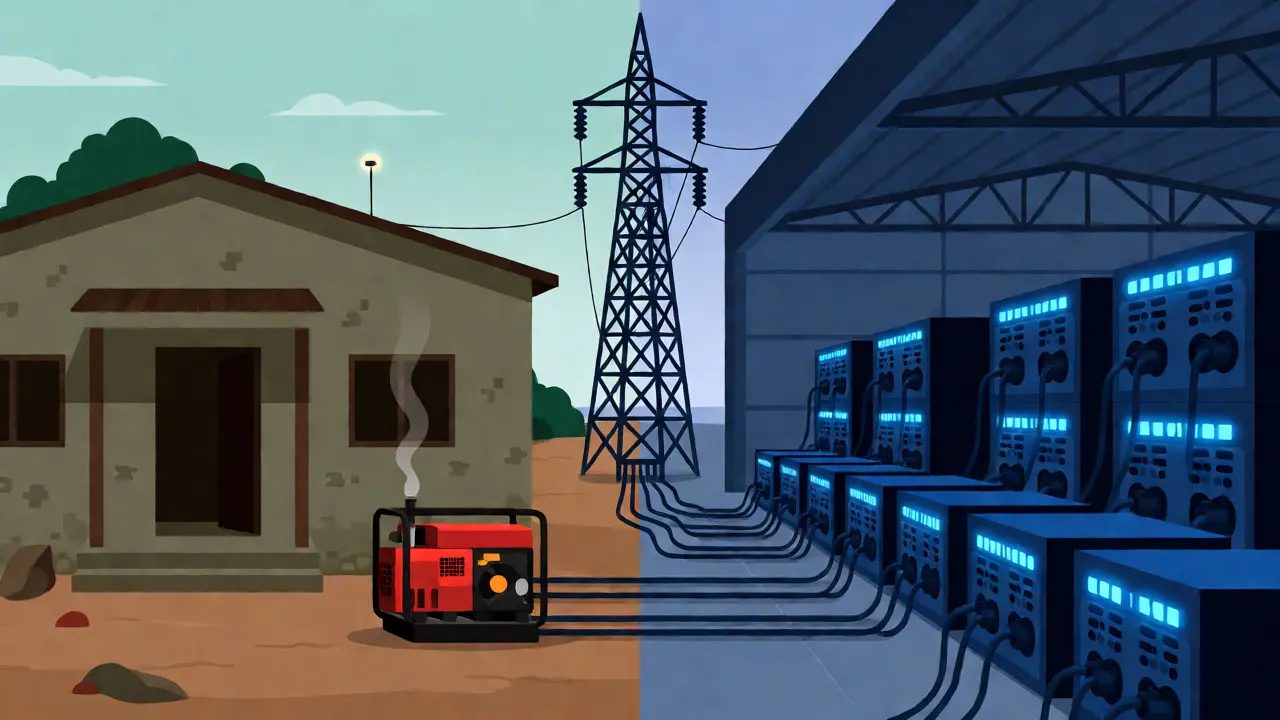
Imagine running a hospital on backup generators while a few miles away, rows of machines hum day and night, burning through the same limited power supply to solve complex math problems for digital coins. That was the reality in parts of Angola until recently. The nation didn't ban cryptocurrency mining because it hates technology or distrusts Bitcoin. It did so because its electrical grid is stretched dangerously thin, and the government decided that keeping the lights on for 39 million people mattered more than producing digital assets.
This isn't just a local policy hiccup; it's a case study in how resource scarcity shapes global tech adoption. When you look at the numbers, the decision becomes starkly logical. With national grid capacity hovering around 5,500 megawatts and per capita electricity consumption at just 420 kWh annually-less than 10% of the global average-every kilowatt-hour diverted to mining is a kilowatt-hour stolen from households and businesses. This article breaks down exactly why Angola implemented one of Africa's strictest mining bans, what happened during the massive enforcement crackdowns, and what this means for the future of crypto in emerging markets.
The Energy Deficit Driving the Ban
To understand the ban, you have to look at Angola's infrastructure. The country relies heavily on hydropower, which accounts for about 55% of its electricity generation. This creates a vulnerability to seasonal changes. During the 2023-2024 dry season, reservoir levels at key dams like Cambambe dropped to 38% capacity, reducing output by nearly 30%. Meanwhile, the population grew by 3.5% annually, putting immense pressure on a system already losing 28% of generated electricity to transmission inefficiencies.
Proof-of-work mining is incredibly energy-intensive. A single ASIC miner can consume 3,200 watts continuously. Multiply that by thousands of units, and you see the problem. Government assessments estimated that illegal mining operations were consuming between 50 and 200 megawatts collectively. To put that in perspective, 200 megawatts is enough to power roughly 300,000 households. For a country where only 47% of citizens have reliable grid access, diverting that much power to speculative digital assets felt like a luxury the nation couldn't afford.
The situation wasn't just about quantity; it was about stability. Mining rigs require constant, stable voltage. Frequent fluctuations caused by overloaded transformers led to equipment failures and, more critically, blackouts in residential areas. Residents in Luanda’s Sambizanga district reported transformer explosions that knocked out power to local hospitals for hours. When your clinic is running on diesel generators because a nearby mining farm tripped the grid, public sentiment shifts quickly against the industry.
Operation Serengeti 2.0: The Crackdown
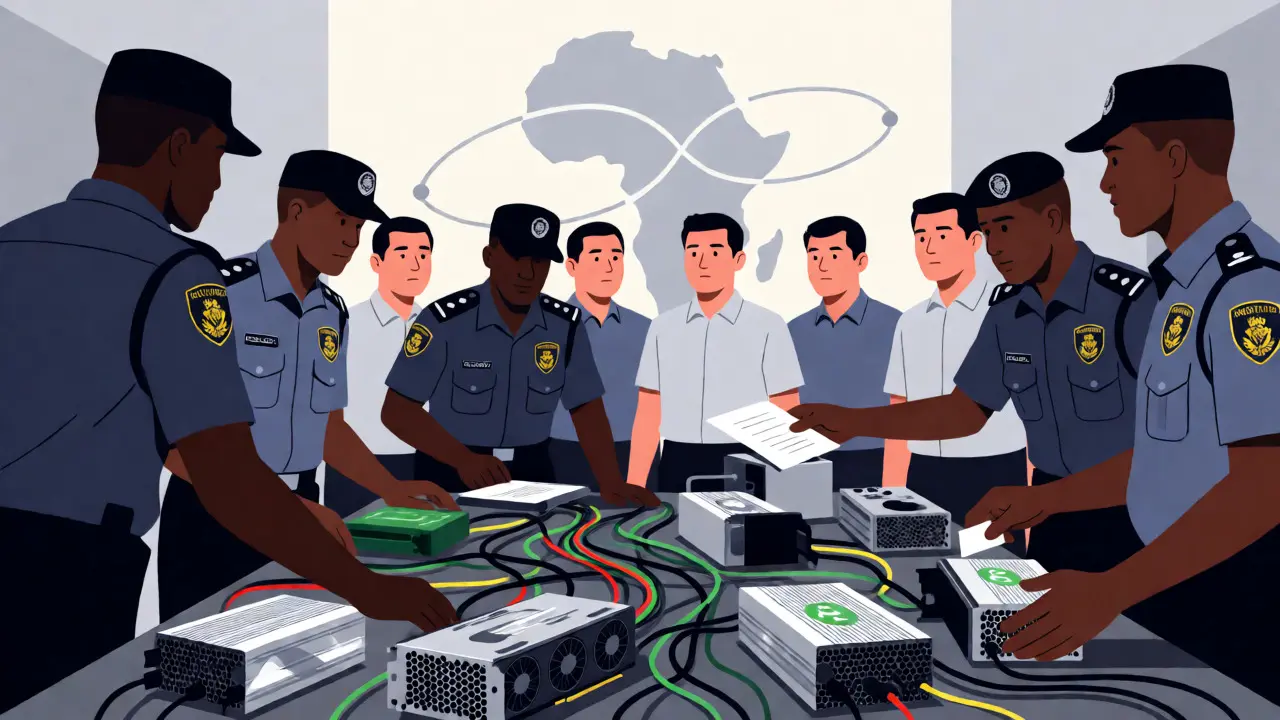
The ban, effective April 2024, criminalized both the operation of mining equipment and the possession of infrastructure used for it. Penalties included one to five years in prison and mandatory confiscation of gear. But laws mean little without enforcement. That changed in August 2025 with Interpol's Operation Serengeti 2.0, a coordinated cybercrime initiative involving law enforcement from 18 African nations and the UK.
Angolan authorities dismantled 25 illegal mining centers operated entirely by Chinese nationals. They seized equipment valued at $37.2 million, including 8,300 ASIC units and 15,000 graphics cards. Perhaps most telling was the seizure of 45 illicit power stations. These weren't just using the grid; they were bypassing meters and safety controls, creating fire hazards in densely populated neighborhoods. The operation highlighted a specific demographic trend: before the ban, cheap electricity (as low as $0.03 per kWh) attracted foreign operators who often lacked proper industrial permits. In fact, audits revealed that 40% of raided facilities had falsified documentation.
| Metric | Pre-Ban Status | Post-Crackdown (Aug 2025) |
|---|---|---|
| Grid Power Diverted | ~15% during peak demand | Negligible (Official Operations) |
| Equipment Seized Value | N/A | $37.2 Million |
| Illegal Power Stations | Unregulated/Hidden | 45 Confiscated |
| Global Hash Rate Share | 0.8% | 0.02% |
Who Was Affected? The Operator Experience
The crackdown primarily hit Chinese investors who had set up shop in provinces like Lobito and Benguela. For these operators, Angola offered some of the cheapest electricity in the world. However, the operational reality was far from smooth. Forum discussions and leaked chat logs reveal that miners faced weekly power outages lasting 18 to 24 hours during dry seasons. To keep their rigs running, many relied on expensive diesel generators, which increased operational costs by 35%.
Beyond technical issues, there were systemic hurdles. Miners reported paying bribes totaling around $500 monthly per facility to local utility inspectors just to keep their connections active. This informal tax, combined with unreliable service, made long-term planning difficult. When the ban came down hard, it wasn't just a legal shock; it was the end of a high-risk gamble that many had already been struggling to sustain.
Local Angolans had mixed but largely supportive views of the ban. Small business owners in Luanda complained about a 22% hike in electricity tariffs in 2023, directly blaming grid strain from mining farms. Community meetings documented widespread frustration with noise, heat, and power instability. A popular sentiment captured online noted that seeing local clinics run on generators while industrial transformers buzzed nearby made the government's position feel justified.
Enforcement Mechanics: How They Catch Miners
You might wonder how authorities find hidden mining rigs in a country with vast informal sectors. The answer lies in data and technology. The National Electricity Agency (INE) now conducts monthly grid anomaly scans using smart meter data. They look for facilities showing abnormal 24/7 power consumption patterns. Any site using over 100 kilowatts continuously without authorization gets flagged for investigation.
Police units received specialized training from Interpol's Digital Crime Directorate. Officers learned to identify mining equipment through thermal imaging, detecting heat signatures above 45°C, and analyzing power load profiles. This reduced the time to identify illegal operations from weeks to just 72 hours. Additionally, the government launched a whistleblower program offering 5% of the seized equipment value (capped at $50,000) for verified tips. This incentive proved highly effective; 73% of the raids in August 2025 originated from community reports.
Once seized, equipment doesn't just sit in a warehouse. Machines exceeding $10,000 in value are auctioned within 90 days. Interestingly, the government announced plans to redistribute 100% of seized computing hardware to public institutions. Sixty-five percent goes to university computer science departments, and 35% supports municipal e-government initiatives. This turns confiscated assets into educational tools, adding a layer of social value to the enforcement action.

Regional Context and Economic Ripple Effects
Angola isn't alone in grappling with energy constraints, but its approach is the most severe in the Southern African Development Community (SADC). While Nigeria and Kenya focus on regulating exchanges rather than banning mining, seven of fifteen SADC nations have implemented some form of restriction since 2022. South Africa takes a different route, permitting mining but taxing energy consumption at 15% to fund grid upgrades-a model generating $120 million annually.
The ban has inadvertently boosted neighboring Namibia's crypto sector. Windhoek saw a 200% increase in mining facility registrations from Angolan operators between April 2024 and August 2025. However, Namibia's higher electricity costs ($0.12/kWh vs. Angola's $0.03/kWh) slashed profit margins by 60%, proving that cheap power was the primary driver for locating in Angola, not just proximity to markets.
Globally, Angola's exit barely moved the needle. Its hash rate contribution fell from 0.8% to 0.02% of the global total, equivalent to losing 1.2 exahashes per second of capacity. The market absorbed this loss easily, suggesting that Angola's role in the global mining ecosystem was peripheral compared to giants like the US, Kazakhstan, or Russia.
Future Outlook: Will Mining Return?
As of late 2025, the ban remains fully enforced with no exemptions for renewable energy-powered operations. The government prioritizes grid stability over experimental solutions, despite Angola's theoretical potential for solar energy generation at 2,200 kWh/m² annually. President João Lourenço has met with solar companies to discuss pilot projects, but Energy Minister João Baptista Borges clarified that any future authorization would require 100% off-grid renewable energy with zero connection to the national grid.
Analysts remain skeptical about near-term liberalization. Standard Bank projects that Angola won't consider regulated mining until grid reliability exceeds 90%, a threshold unlikely to be reached before 2027 given current investment rates. The critical determinant is the completion of major infrastructure projects, such as the $4.5 billion Cambambe III hydropower expansion, which adds 1,150 megawatts to national capacity. Until then, the message is clear: if you want to mine in Angola, you must bring your own power.
The World Bank has committed $15 million to help develop energy allocation frameworks that could eventually accommodate high-priority industrial users. If successful, this could create designated "mining zones" near new renewable projects, allowing Angola to re-enter the market without straining the residential grid. For now, however, the lights stay on for the people, not the miners.
Is cryptocurrency mining completely illegal in Angola?
Yes, as of April 2024, cryptocurrency mining is banned nationwide. The law criminalizes operating mining equipment and possessing infrastructure for mining, carrying penalties of one to five years imprisonment and mandatory equipment confiscation. There are currently no exemptions for small-scale or home-based operations.
Why did Angola ban crypto mining specifically?
The ban was driven by a severe energy deficit. Mining operations consumed up to 15% of available electricity during peak periods, exacerbating blackouts for households and businesses. With only 47% of the population having reliable grid access, the government prioritized essential public services over energy-intensive digital asset production.
What happens to miners caught after the ban?
Caught miners face imprisonment (1-5 years) and confiscation of all equipment. During Operation Serengeti 2.0 in August 2025, authorities seized $37.2 million worth of gear and arrested 60 individuals. Seized equipment over $10,000 in value is typically auctioned, while smaller units may be redistributed to public institutions like universities.
Did the ban affect Angola's economy significantly?
The direct economic impact was minimal regarding global market share, as Angola contributed less than 1% of the global hash rate. However, it affected foreign investors who had sunk capital into infrastructure. Conversely, it saved the state money by preventing further grid degradation and reducing the need for emergency power imports during peak demand.
Can I mine crypto in Angola using solar power?
Currently, no. Even though Angola has high solar potential, the ban applies regardless of the energy source unless the operation is strictly off-grid and authorized under specific future pilot programs. As of late 2025, the government requires any future exceptions to use 100% off-grid renewable energy with no connection to the national grid.