Why Nigeria Leads the World in P2P Crypto Adoption
 Apr, 18 2026
While many people view digital assets as a speculative gamble, in Nigeria, they are a survival tool. It is a striking reality that a country facing massive inflation and currency crashes has become a global powerhouse for P2P crypto adoption. Instead of relying on traditional banks, millions of Nigerians have turned to peer-to-peer networks to save their wealth, send money home, and conduct business. This wasn't a trend started by tech bros in Silicon Valley; it was a grassroots movement born out of necessity.
| Metric | Value / Detail |
|---|---|
| Estimated Users (2025) | ~22 Million |
| Annual Transaction Volume (23-24) | Over $59 Billion |
| Population Penetration | Roughly 10% |
| Primary Trading Pair | Bitcoin/Naira |
The Banking Ban That Backfired
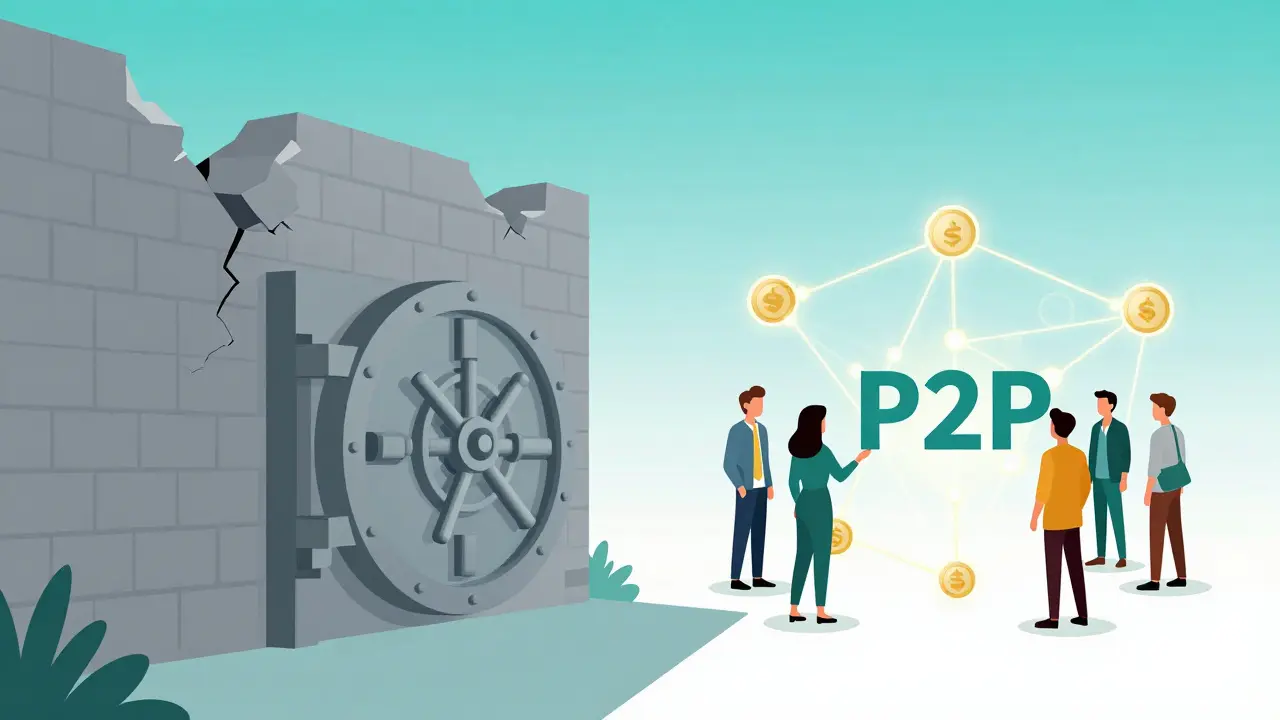
To understand why Nigeria is so obsessed with P2P, you have to look at the friction created by the government. In 2017, the Central Bank of Nigeria (CBN) the apex monetary authority responsible for maintaining price stability and the external value of the currency told commercial banks to stop processing crypto transactions. On paper, this was meant to stop the bleeding of the local currency. In reality, it just pushed the entire market underground.
When you take away the official front door, people find the side window. This regulatory push forced traders to adopt Peer-to-Peer (P2P) Trading a method of exchanging cryptocurrency directly between two parties without the need for a centralized intermediary or exchange. Instead of sending money to an exchange, Nigerians started sending Naira directly to another person's bank account and receiving crypto in their private wallets. By making the banks "off-limits," the CBN inadvertently built one of the most resilient P2P infrastructures in the world.
Fighting Inflation With Digital Gold
Why would someone risk using an "underground" system? Because the alternative is watching your savings evaporate. Since 2016, the Naira has lost more than 75% of its value against the US dollar. When inflation surged past 24% in 2023, holding cash became a losing game.
For the average Nigerian, Bitcoin a decentralized digital currency without a central authority, often used as a hedge against inflation isn't just a chart to watch-it's a digital vault. By converting Naira into stablecoins or Bitcoin, users can preserve their purchasing power. This is especially true for the 36% of adults who are completely unbanked. For them, a smartphone is their first and only bank account.
Cutting Out the Middleman in Remittances
Sending money across borders is notoriously expensive in West Africa. Traditional remittance services often slap fees as high as 8% on every transaction. For a family relying on money sent from a relative in the UK or US, that's a massive chunk of their budget gone.
P2P crypto transfers have flipped this script. By using digital assets, users report saving 60% to 80% on transaction costs compared to old-school bank transfers. It's faster, cheaper, and doesn't require a physical bank branch in a remote village. This efficiency has turned crypto from a niche hobby into a core part of the national economy.
From the Underground to the Boardroom
The tide began to turn in late 2023 when the CBN finally lifted the ban on banks servicing crypto businesses. This shift signaled a move from an informal economy to a regulated one. We're now seeing a hybrid model where grassroots P2P trading lives alongside institutional-grade infrastructure.
A great example of this evolution is the Nigeria Inter-Bank Settlement System (NIBSS) the payment system operator that provides the infrastructure for interbank settlements in Nigeria partnering with Zone's blockchain network in 2025. This isn't about trading memes; it's about using blockchain to make bank settlements faster and reduce fraud. Additionally, the 2025 Investments and Securities Act has officially recognized digital assets as financial securities, giving investors the legal cover they've wanted for years.
Practical Steps for Navigating P2P Trading
If you're looking at how this actually works on the ground, the process is relatively straightforward but requires a bit of caution. Most users start with local platforms like Quidax a prominent Nigerian cryptocurrency exchange providing trading and wallet services or Patricia.
- Verification: Users complete KYC (Know Your Customer) checks to prove their identity.
- Pair Selection: Most traders focus on the Bitcoin/Naira or USDT/Naira pairs.
- Escrow Usage: To avoid scams, traders use escrow services provided by the platform, which holds the crypto until the seller confirms they've received the Naira.
- Community Support: Newcomers often join Telegram or WhatsApp groups to find reputable traders and stay updated on current market rates.
The learning curve is usually about 2 to 4 weeks for the basics, but mastering the art of P2P arbitrage-buying low and selling high across different platforms-can take a few months of practice.
Common Pitfalls to Avoid
It's not all smooth sailing. The early days of crypto in Nigeria were plagued by Ponzi schemes like Bitconnect and MMM, which left some people scarred. Today, the risks are different but still there. Wallet security is a big one; if you lose your private keys, your money is gone forever.
There's also the issue of volatility. While Bitcoin is a great hedge over the long term, a 10% drop in a single day can be devastating for someone using it for short-term savings. The most successful users typically split their holdings between volatile assets and stablecoins that peg their value to the US dollar.
Why is P2P trading more popular than centralized exchanges in Nigeria?
Historically, the Central Bank of Nigeria banned banks from processing crypto payments. P2P trading allowed users to bypass this by sending money directly to another person's bank account, making the transaction invisible to the bank's crypto-detection systems.
Is cryptocurrency legal in Nigeria now?
Yes. The CBN lifted the banking restrictions in late 2023, and the Investments and Securities Act of 2025 officially recognizes digital assets as financial securities, providing a clearer legal framework for users and businesses.
How does crypto help with inflation in Nigeria?
When the Naira loses value, people move their wealth into assets like Bitcoin or USD-pegged stablecoins. Since these assets aren't controlled by the local government, they don't suffer from the same devaluation as the national currency.
What are the risks of using P2P platforms?
The primary risks include falling for scams (fraudulent traders), losing access to private wallets, and dealing with high price volatility. Using reputable platforms with escrow services is the best way to mitigate these risks.
How much cheaper are crypto remittances than banks?
Many users report that crypto transfers are 60% to 80% cheaper than traditional money transfer operators, which can charge fees up to 8% per transaction.
Abhinav Chaubey
April 18, 2026 AT 22:49India could easily dominate this space more than Nigeria if our regulators actually had a clue about how digital economies work. It's honestly pathetic how we lag behind in P2P infrastructure despite having a massive developer base. Nigeria is just proving that when the government fails, the people find a way, but let's be real, the scale of adoption in India would dwarf this if we weren't so bogged down by bureaucracy.
Sandeep Bhoir
April 20, 2026 AT 07:20Oh sure, because government regulators are famous for their foresight and brilliance. 🙄
Nishant Goyal
April 22, 2026 AT 00:27Interesting read. It's great to see people finding ways to protect their wealth.
Alex Long
April 22, 2026 AT 08:55This is just a glorified way of saying their economy is a dumpster fire. Using a volatile asset to fight inflation is like trying to put out a house fire with a gasoline hose. It's a joke. People are just gambling because they have no other choice and the 'survival tool' narrative is just a way to make a casino sound like a bank. I've seen this movie before and it always ends with people losing their life savings to some random guy on Telegram. Total disaster waiting to happen. Just another day in the crypto circus where everyone pretends a digital coin is a savior while the actual currency is basically toilet paper. Boring and predictable.
siddharth narula
April 22, 2026 AT 16:12One must contemplate whether the pursuit of material preservation through digital means is a true liberation or merely a different form of servitude to a nameless algorithm. 😌 The moral imperative to seek stability is understandable, yet the volatility of such assets introduces a chaotic element into the spiritual pursuit of peace. We must ask ourselves if we are solving poverty or simply digitizing the struggle. 🕊️
Gaurav Undirwade
April 23, 2026 AT 00:16It is utterly lamentable that individuals are forced to operate in the shadows due to the incompetence of their monetary authorities. However, the propensity to engage in P2P arbitrage suggests a greed that transcends mere survival. One should prioritize ethical financial planning over the speculative whims of a decentralized ledger, regardless of the Naira's devaluation.
Evan Iacoboni
April 24, 2026 AT 09:09The part about the 2025 Investments and Securities Act is the only thing that actually matters here. Without legal cover, the whole P2P scene is just a giant game of musical chairs. I want to know if this shift toward regulation is actually helping the unbanked or if it's just giving the government a way to track and tax them more efficiently now that they've been flushed out of the underground.